

Section of 2,000-year-old aqueduct uncovered in Jerusalem during excavations for a new neighborhood
The aqueduct, over 984 feet long, supplied water to Jerusalem, funneling a gentle gradient of steady water from Solomon's Pools, South of Bethlehem, to Jerusalem.
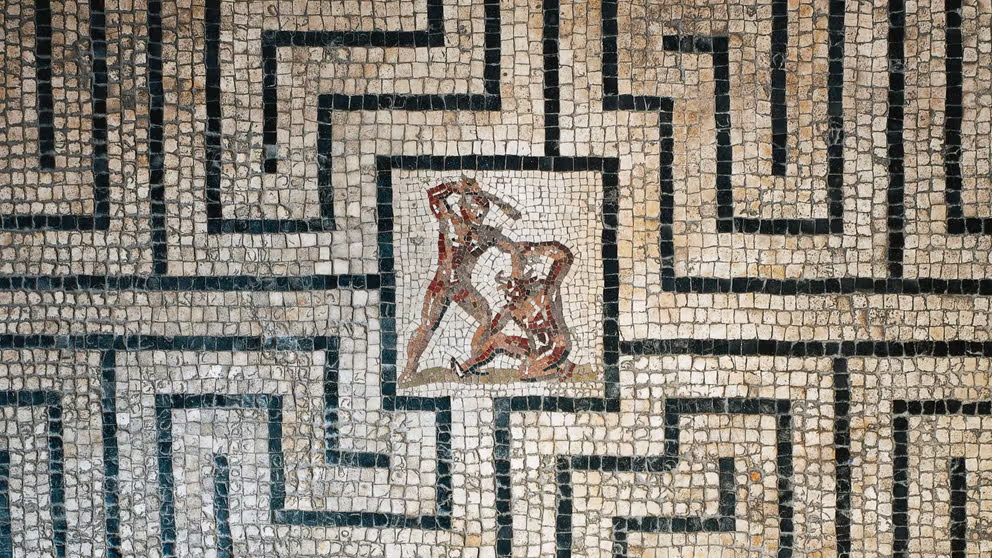
A Brief History of Mazes
Mazes and labyrinths have been found around the ancient world. One of which was made famous by ancient Greek legends, and it served as the setting for a hero's quest.
THE TAKEAWAY
- An aqueduct from 2,000 years ago was uncovered in Israel during construction on a new neighborhood.
- The 984-foot-long aqueduct will be preserved as a living part of the community.
- The aqueduct carried water from Solomon's Pools to the Temple Mount, the first temple ever constructed in Jerusalem.
ISRAEL – Excavations in a Jerusalem neighborhood uncovered an astonishing discovery dating back about 2,000 years: a long section of an aqueduct from the Hasmonean period.
According to the Israel Antiquities Authority, officials accidentally exposed a long section of Jerusalem's Lower aqueduct while excavating a new neighborhood on Sunday.
The aqueduct carries water from Solomon's Pools to the Temple Mount, the first temple ever constructed in Jerusalem.
King Solomon, the third and last king of Israel, oversaw its construction.

King Solomon. Writing Proverbs. Engraving by Gustave Doré (1832 - 1883). Proverbs I: 1- 4 . 'The proverbs of Solomon the son of David, king of Israel;2 To know wisdom and instruction; to perceive the words of understanding;3 To receive the instruction of wisdom, justice, and judgment, and equity;4 To give subtilty to the simple, to the young man knowledge and discretion.' Colourised version.
(Culture Club / Getty Images)
The Hasmonean Dynasty thrived for decades, from 140-37 BC, under the Seleucid Empire, until the Hasmonean Civil War erupted in 63 BC, forcing the Roman Republic to intervene and establish the kingdom as a client state, eager to manage Judea better and proved to do so for years to come.
The aqueduct, over 984 feet long, supplied water to Jerusalem, funneling a gentle gradient of steady water from Solomon's Pools, South of Bethlehem, to Jerusalem.
SOCCER FIELD WAS HIDING THE REMAINS OF A 770-YEAR-OLD CONVENT THOUGHT LOST FOR CENTURIES
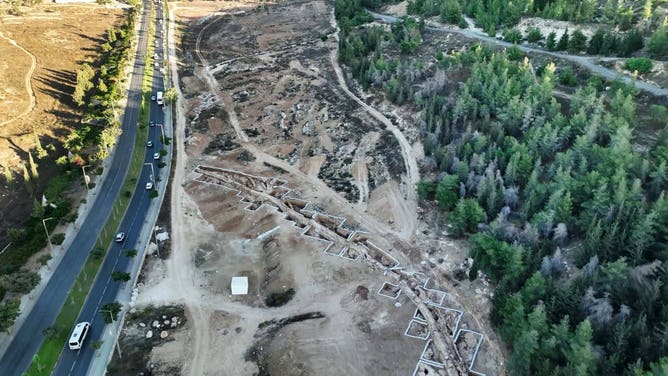
Aerial view of the extensive aqueduct found in Israel.
(Israel Antiquities Authority / Facebook)
Aqueducts are designed so water flows by gravity alone, without pumps or other mechanical means. Still, this system was strategically built to adapt to the area's route and landscape, adjusting to the hillslopes and bedrock leading up to the kingdom.
"The aqueduct is an engineering marvel," said Dr. Amit Re'em, Jerusalem District Archaeologist of the Israel Antiquities Authority. "Even today, with all our modern technology, building such a system would require extensive planning and effort."
VIDEO: ROMAN-ERA SHIPWRECK FROM OVER 2,000 YEARS AGO DISCOVERED AT BOTTOM OF OCEAN NEAR SICILY
![Crews work to further uncover the aqueduct.]() Image 1 of 3
Image 1 of 3Crews work to further uncover the aqueduct. (Israel Antiquities Authority / Facebook)
![Crews work to preserve a 2,000 year old aqueduct in Israel.]() Image 2 of 3
Image 2 of 3Crews work to preserve a 2,000 year old aqueduct in Israel. (Israel Antiquities Authority / Facebook)
![The aqueduct carries water from Solomon's Pools to the Temple Mount, the first temple ever constructed in Jerusalem.]() Image 3 of 3
Image 3 of 3The aqueduct carries water from Solomon's Pools to the Temple Mount, the first temple ever constructed in Jerusalem. (Israel Antiquities Authority / Facebook)
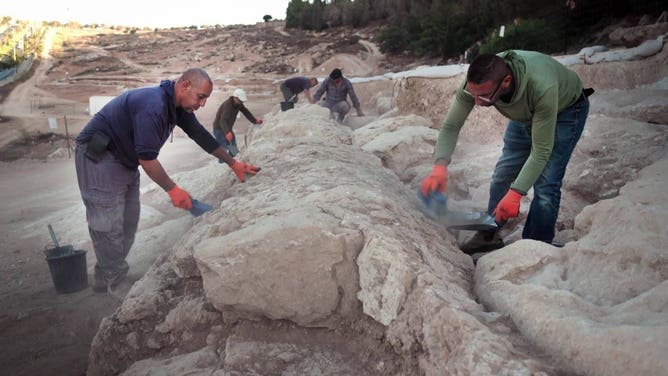
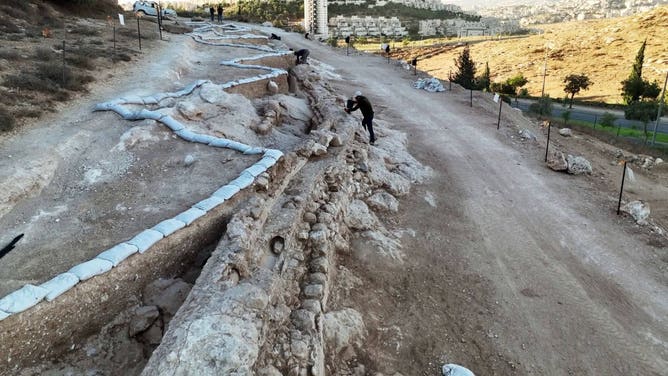
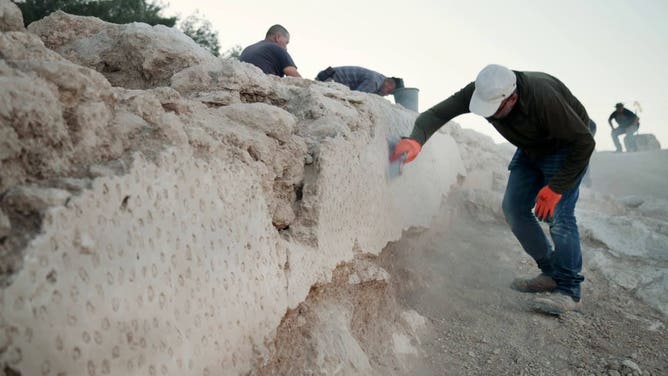
Evidence of improvements or alterations appears in a newly exposed section, around 500 years ago during the Ottoman period, when ceramic pipes were installed, shedding light on the system's vital importance to the city.
It also had clean out checkpoints along its path, giving workers access to remove blockages and perform routine maintenance.
In fact, this aqueduct system worked so well that it remained in intermittent use until around 100 years ago.
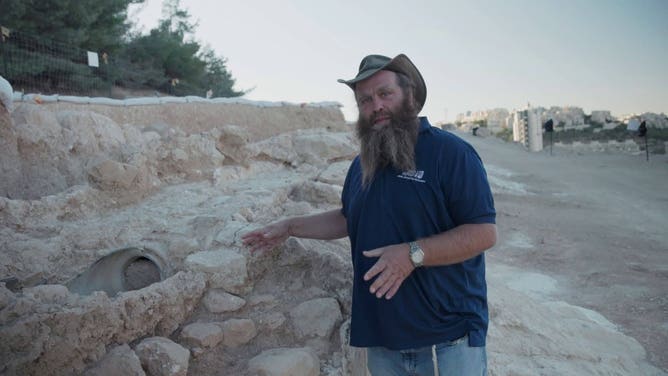
Excavations in a Jerusalem neighborhood uncover an astonishing discovery dating back about 2,000 years.
(Israel Antiquities Authority / Facebook)
Officials announced plans to preserve the aqueduct as a living part of the developing communities and region.
SEE IT: ARCHEOLOGISTS UNCOVER RESIDENTIAL CITY FROM BYZANTINE EMPIRE IN EGYPT
The aqueduct will be integrated into the new neighborhood's main entrance.