

See it: Archeologists uncover residential city from Byzantine Empire in Egypt
The Ministry of Tourism and Antiquities, part of the Egyptian government, has uncovered a residential city dating back to the Byzantine Empire, when the Eastern Roman Empire thrived for over a thousand years.
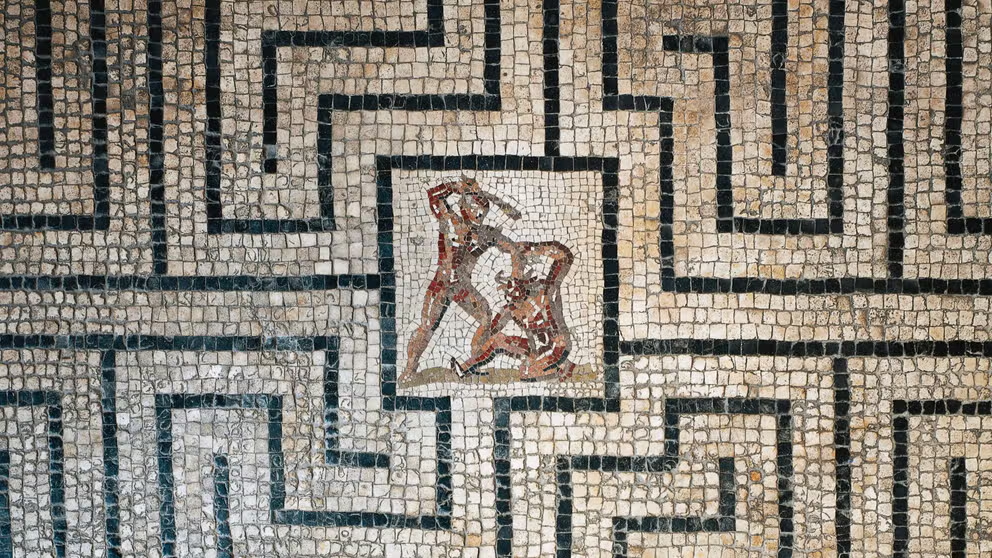
FILE: A Brief History of Mazes
Mazes and labyrinths have been found around the ancient world. One of which was made famous by ancient Greek legends, and it served as the setting for a hero's quest.
EGYPT – Archeologists have been busy over the last few months as they dig up more relics from the Eastern Roman Empire in Egypt, shedding light on the country’s rich and diverse history.
The Ministry of Tourism and Antiquities, part of the Egyptian Government, has uncovered a residential city dating back to the Byzantine Empire, when the Eastern Roman Empire thrived for over a thousand years.
ANCIENT 'LOST WORLD' COULD REWRITE HISTORY FOR HOW FIRST AMERICANS ARRIVED 13,000 YEARS AGO
Experts analyzed the residential city, noting that it followed an organized urban plan of intertwining main streets, open fields, squares and a Basilica Church overlooking one of the main streets.
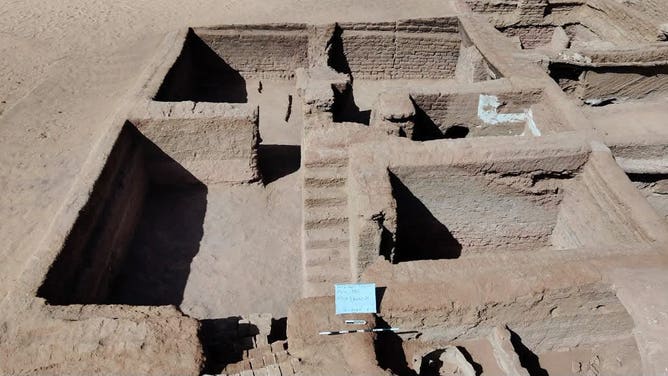
Aerial photo of the residential city of Eastern Rome found in Egypt.
(Ministry of Tourism and Antiquities / Facebook)
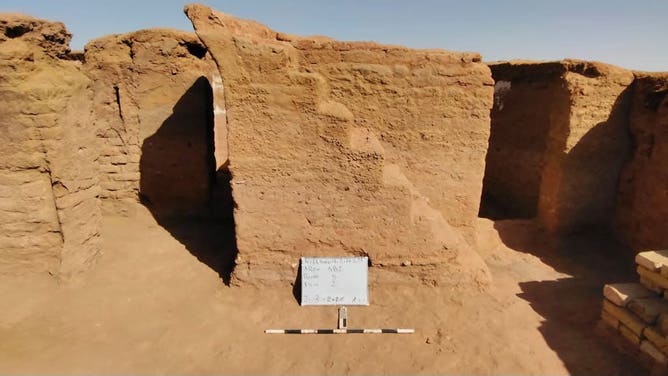
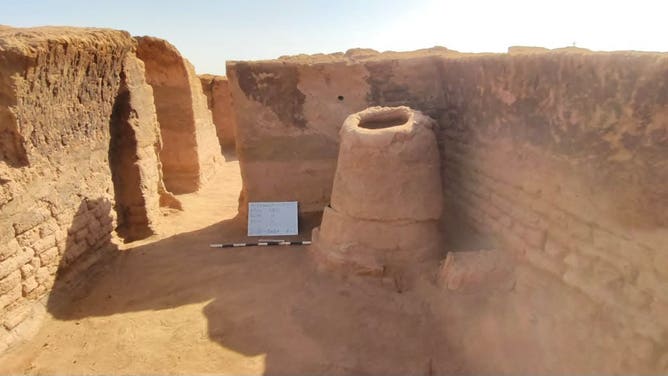
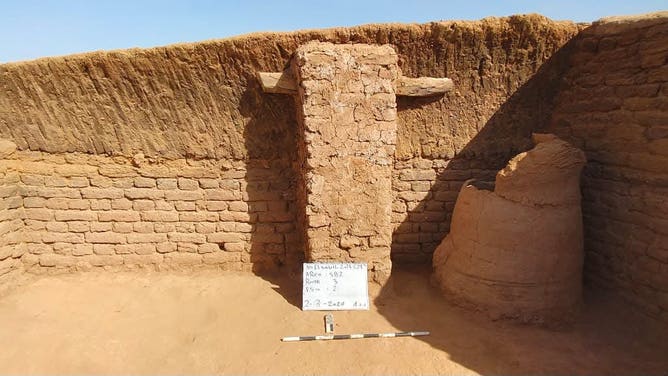
Many other features of the city make it seem more like a residential community, with two watchtowers, a thick-walled fortress and a collection of houses with spacious halls, ovens, kitchens and various tools, according to the Ministry of Tourism and Antiquities.
Along with these discoveries, officials uncovered a number of bronze and gold coins depicting Roman emperors and Latin and Christian symbols.
BRIGHT IDEA: BOLD PLAN SUGGESTS WEAKENING ONE OF EARTH'S MOST POWERFUL CLIMATE FORCES
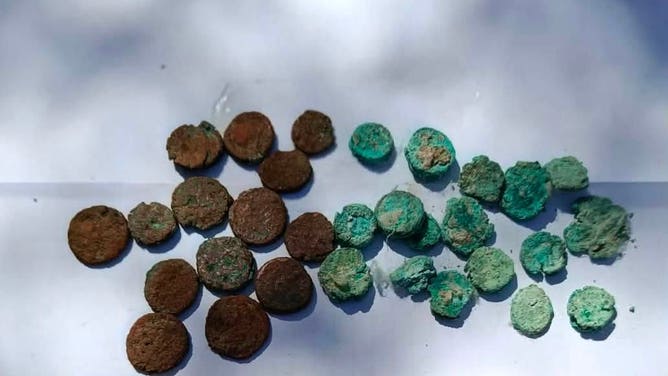
Gold and bronze coins from the Byzantine Empire.
(Ministry of Tourism and Antiquities / Facebook)
Among the most prominent discoveries was a residence that housed the city’s deacon, dating back to the 4th century, when the Western Roman Empire fell, leaving the eastern half as the last standing piece of the once-great Imperium.
The Eastern Roman Empire is very different from the rest of its unified history, as Constantine was the first Christian Emperor.
ANCIENT DISCOVERY: LOST PAGES OF THE NEW TESTAMENT REVEAL LETTERS OF THE APOSTLE ST. PAUL
![City from the Byzantine Empire.]() Image 1 of 3
Image 1 of 3City from the Byzantine Empire. (Ministry of Tourism and Antiquities / Facebook)
![Residential city from Eastern Roman Empire.]() Image 2 of 3
Image 2 of 3Residential city from Eastern Roman Empire. (Ministry of Tourism and Antiquities / Facebook)
![Home kitchen from the Eastern Roman Empire in Egypt.]() Image 3 of 3
Image 3 of 3Home kitchen from the Eastern Roman Empire in Egypt. (Ministry of Tourism and Antiquities / Facebook)
History of the Byzantine Empire in Egypt
Rome’s influence in Egypt began hundreds of years before the establishment of the Byzantine Empire. Still, this era marked a new time when Emperor Constantine established a "New Rome," which spawned a rich tradition of art, literature and learning.
This is the city of Constantinople, modern-day Istanbul, Turkey.
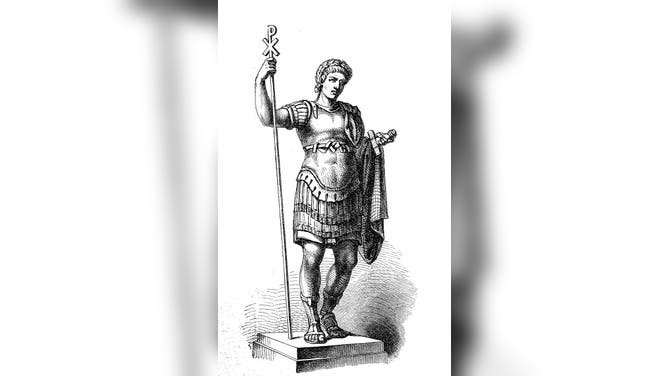
Flavius Valerius Constantinus, on a February 27 between 270 and 288 - May 22, 337, Constantine the Great, Roman emperor from 306 to 337 / Flavius Valerius Constantinus, an einem 27. Februar zwischen 270 und 288 - 22. Mai 337, Konstantin der Große, von 306 bis 337 römischer Kaiser, Historisch, historical, digital improved reproduction of an original from the 19th century / digitale Reproduktion einer Originalvorlage aus dem 19. Jahrhundert,.
(Bildagentur-online/Universal Images Group / Getty Images)
In 330 A.D., Constantine established the new city, governed by Roman law, observed by Christianity, and adopted Greek as its primary language, serving as a melting pot of various cultures due to its unique geographical location.
SEE IT: VILLA CONTAINING RUINS FROM ROMAN EMPIRE UNCOVERED IN EGYPT
Emperor Constantine would seek to quickly populate the city by offering residents full citizenship and free food rations, supported by a system of aqueducts to ensure access to water within the city walls.
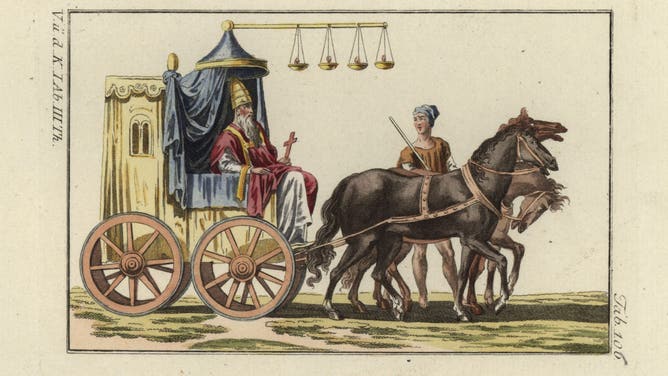
Three-horse chariot of the Byzantine Emperor Heraclius with canopy, candles, and curtains. Handcolored copperplate engraving from Robert von Spalart's 'Historical Picture of the Costumes of the Principal People of Antiquity and of the Middle Ages' (1798).
(Florilegius/Universal Images Group / Getty Images)
He brought art and other ornaments from Rome to display and more strongly influence the culture of the new land.
Eventually, Constantine built an enormous city that served as the heart of Eastern Christianity and thrived for over a thousand years, until May 29, 1453, when it fell to the Ottoman Empire.
Further discoveries from these eras, hundreds of years ago, continue to shed light on Egypt's diverse history and culture.