

Dream of going to space? NASA is searching for its next generation of astronauts
According to NASA, selected astronaut candidates will train in order to operate on the Moon and live and work in an environment beyond Earth.
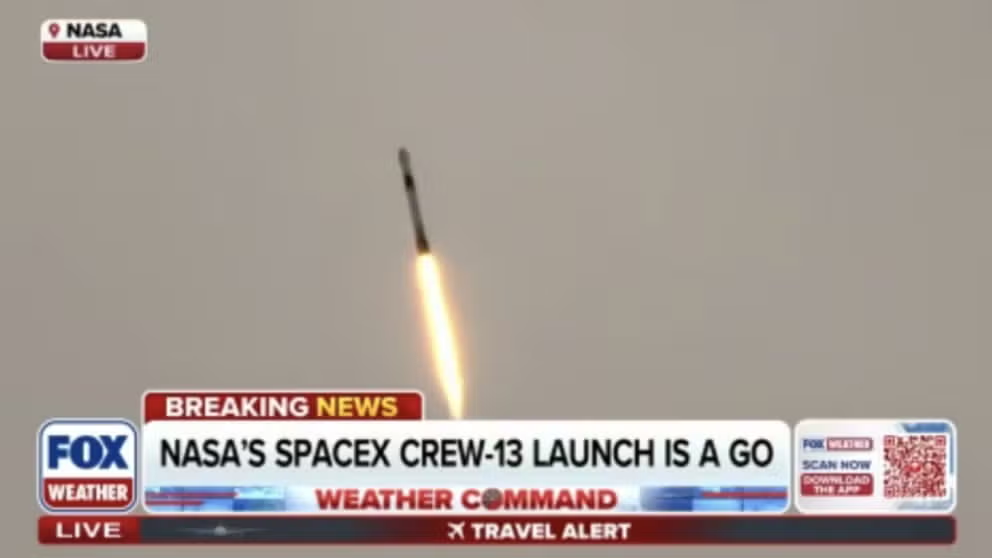
NASA's SpaceX Crew-13 heads to the ISS
We have liftoff! NASA has launched SpaceX's Crew-13 into space. The spacecraft will carry NASA astronauts Jessica Watkins and Luke Delany, Canadian Space Agency astronaut Joshua Kutryk and Roscosmos cosmonaut Sergey Teteryatnikov. The crew will carry out scientific experiments designed to advance research and technology for future missions to the Moon and Mars while improving life on Earth.
THE TAKEAWAY:
- NASA announced they are looking for their next class of astronauts.
- The selected candidates will train in order to operate on the Moon, work in an environment beyond Earth and venture to the lunar South Pole.
- Candidates will undergo extensive training in areas including spacewalking, lunar geology and operating a spacecraft.
NASA announced Saturday that it is looking for its next class of astronauts as the agency prepares to return Americans to the Moon, build a lunar base and lay the groundwork for the first crewed missions to Mars.
ARTEMIS II BRINGS PIECES OF THE PAST ON ITS HISTORIC DEEP SPACE VOYAGE
According to NASA, selected astronaut candidates will train in order to operate on the Moon and live and work in an environment beyond Earth.
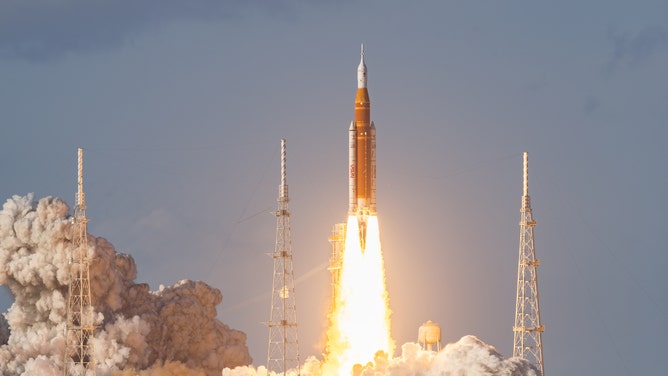
April 1, 2026: NASA's Space Launch System (SLS) rocket launches the Artemis II crew to the moon.
(Brandon Moser / Getty Images)
They could also take part in missions near the lunar South Pole, helping explore areas of the Moon that have never been visited by humans.
"This is an extraordinary time to join NASA’s astronaut corps," said NASA Administrator Jared Isaacman. "The people we select could walk on the Moon, live and work at the Moon Base, and help pioneer the systems and operations that will ultimately carry crews to Mars."
Do you want to be an astronaut? Applications are now open to join NASA's astronaut corps. Join us as we expand the frontiers of discovery in low Earth orbit, on the Moon, and beyond — apply by Dec. 3: https://t.co/laY2ExWiGO https://t.co/GzZl3yRy0i
— NASA (@NASA) November 7, 2026
Since the 1960s, NASA has selected 370 people to train as astronaut candidates. Currently, the agency has 32 active astronauts.
MASSIVE METEOR TURNS PACIFIC NORTHWEST NIGHT SKY ELECTRIC BLUE
If selected, candidates will undergo extensive training in areas including spacewalking, lunar geology and the operation of high-performance aircraft.
Applicants must be U.S. citizens and meet NASA's educational and professional experience requirements.
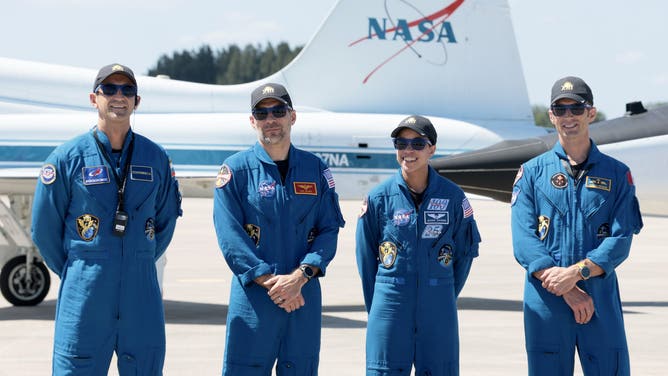
NASA’s SpaceX Crew-13 crew members (L-R) Roscosmos cosmonaut Sergey Teteryatnikov, NASA astronauts Luke Delaney and Jessica Watkins, and CSA (Canadian Space Agency) astronaut Joshua Kutryk speak to the media after arriving at Kennedy Space Center on September 26, 2026, in Cape Canaveral, Florida.
(Joe Raedle / Getty Images)
Candidates must have a master's degree in a STEM field, including engineering, biological science, physical science or computer science, from an accredited institution.
The requirement can also be met by completing at least two years of work toward a doctoral program in an appropriate technical field, including engineering, biological science, physical science, computer science or mathematics.
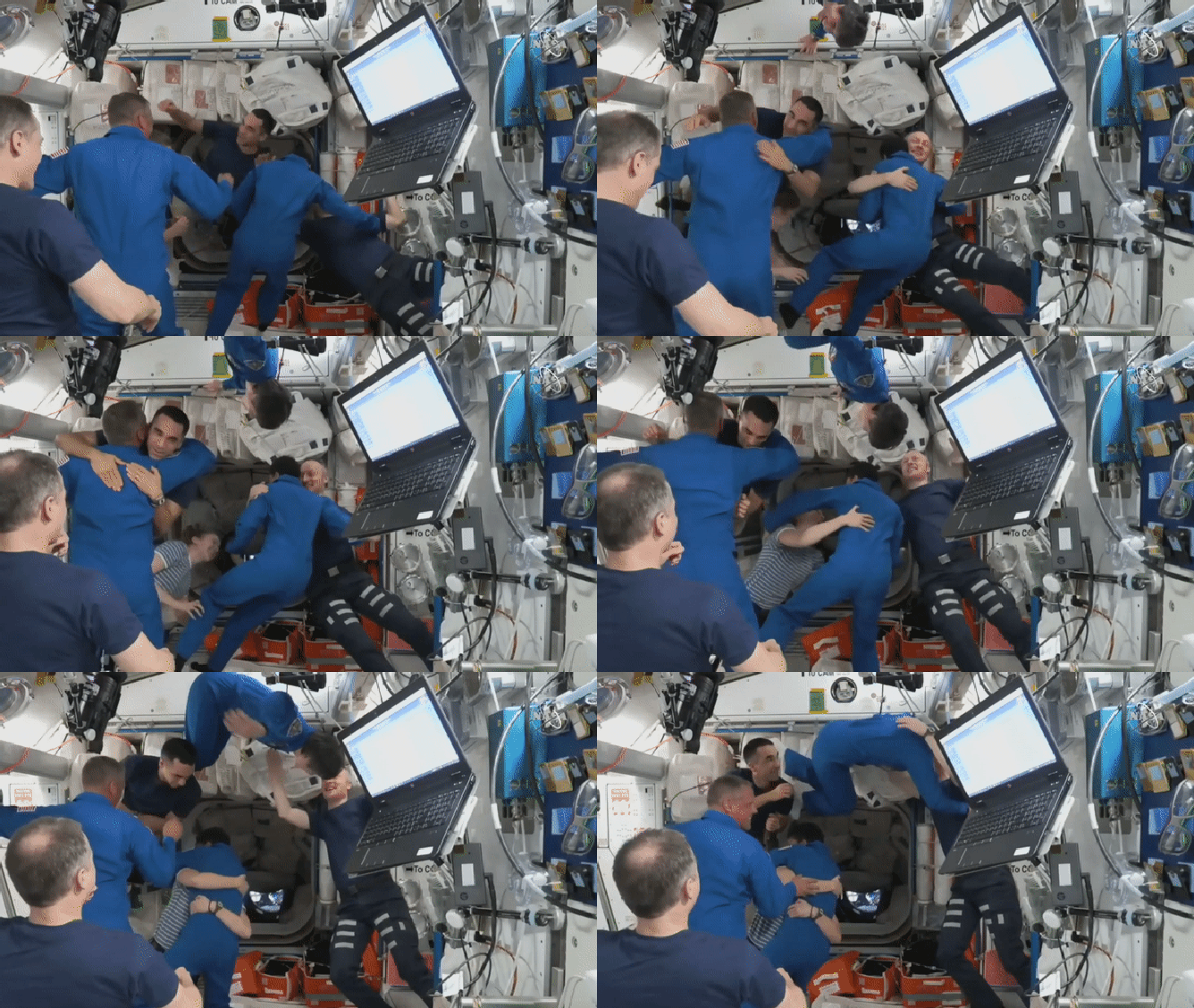
NASA's SpaceX Crew-4 astronauts arrive at the International Space Station aboard their Dragon spacecraft.
(NASA)
Completing a Doctor of Medicine, Doctor of Osteopathic Medicine, Physician Assistant, Doctor of Nursing Practice, Family Nurse Practitioner or related medical degree.
Completing, or currently enrolling in, a nationally recognized Test Pilot School program, provided the program is completed by July 2027.
NASA'S ARTEMIS PROGRAM: PAVING THE WAY FOR HUMANKIND'S RETURN TO THE MOON AND BEYOND
If Test Pilot School is the applicant's only advanced technical qualification, a bachelor's degree in a STEM field is also required.
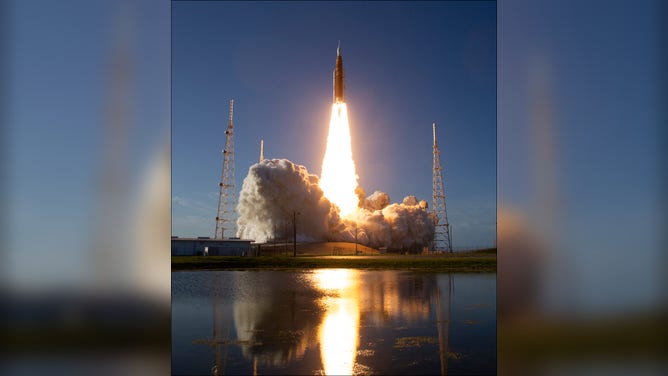
NASA's Artemis II Space Launch System rocket carrying the Orion spacecraft lifts off from Launch Complex 39B at Kennedy Space Center on April 1, 2026 in Cape Canaveral, Florida.
(@nasahqphoto / X)
In addition to the educational requirements, candidates must have at least three years of related professional experience after completing their degree.
For pilots, the professional experience requirement may be met through 750 hours of pilot-in-command time of high-performance jet aircraft, 1,500 total flight hours, including 750 hours as pilot in command of fixed-wing aircraft, or 1,000 total flight hours, including 300 hours as pilot in command or rotary-wing aircraft.
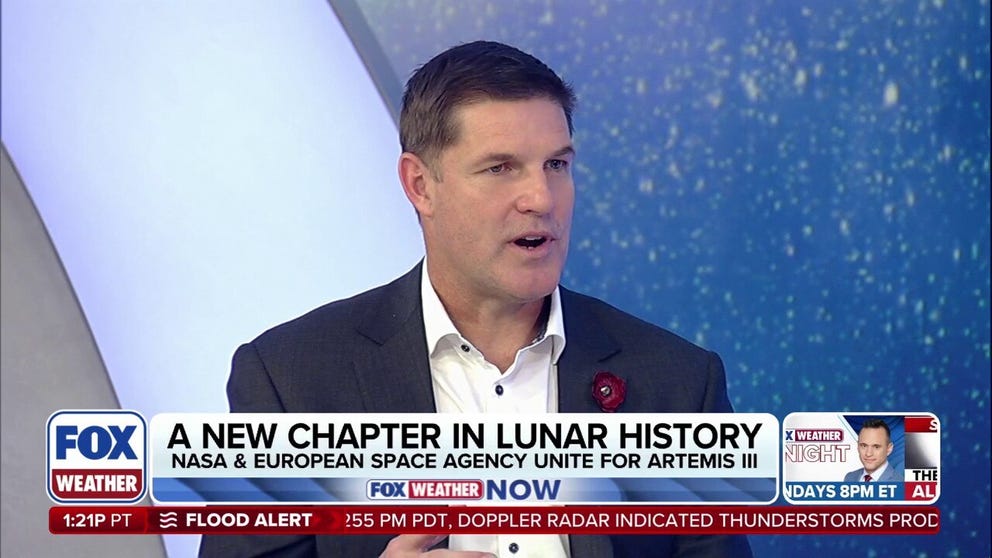
Artemis II Astronaut Jeremy Hansen sits down with FOX Weather
Artemis II Mission Specialist Jeremy Hansen sits down with FOX Weather Meteorologist Ian Oliver to discuss the crew’s historic journey farther into deep space than any humans before them, and what’s next for human spaceflight.
For medical doctors, residency training may count toward the professional experience requirement, provided it is completed by July 2027.
NASA ANNOUNCES ARTEMIS III ASTRONAUTS IN NEXT PHASE OF MISSION TO RETURN HUMANS TO THE MOON
Astronaut candidates must also pass NASA's long-duration astronaut flight physical and demonstrate strong leadership, teamwork and communication skills.

The first crewed Artemis flight.
(NASA/Kim Shiflett)
Interested applicants have until 11:59 p.m. EST Thursday, Dec. 3, to submit their applications.
"For those who apply, becoming a NASA astronaut is more than a career opportunity," said Scott Tingle, chief astronaut and chair of the Astronaut Selection Board at NASA’s Johnson Space Center in Houston. "It is a chance to join a legacy of explorers who have pushed the boundaries of discovery and play a role in the missions that will shape humanity’s future in space."