

Vernal equinox marks the official start of spring in the Northern Hemisphere
In 2026, the vernal equinox will occur on March 20 at 7:46 a.m. EDT.
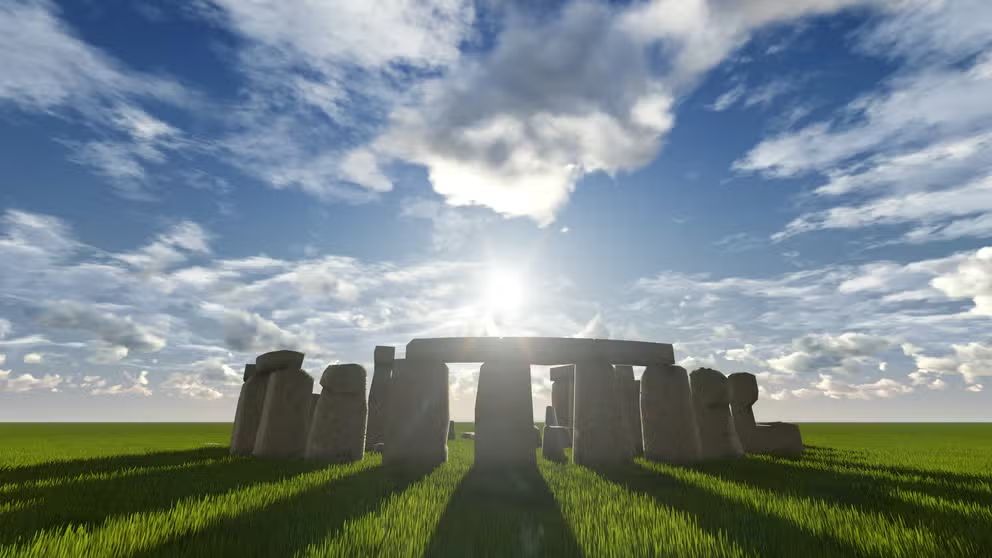
What is an equinox? The science behind the astronomical seasons explained
The vernal equinox marks the beginning of astronomical spring and occurs in the Northern Hemisphere around March 20th, whereas the autumnal equinox falls around September 22nd.
As temperatures slowly begin to warm in March, many people debate when spring actually begins.
In 2026, the spring equinox, known as the vernal equinox, will occur on March 20, at 7:46 a.m. EDT.
Spring officially begins in the Northern Hemisphere on March 20 with the vernal equinox, when the world experiences equal amounts of daylight and darkness.
WHY SPRING SHOULD ACTUALLY BEGIN ON MARCH 1
Despite this, some experts define the timing of this season differently.
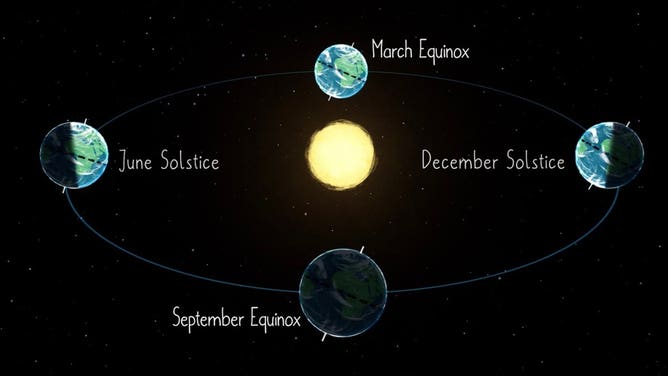
Diagram demonstrating how the tilt of Earth's axis causes variations in sunlight between the Northern and Southern Hemispheres throughout the year. During the equinoxes, the axis is not tilted toward or away from the Sun, resulting in roughly equal sunlight for both hemispheres.
(NASA/JPL-Caltech / NASA)
Astronomical seasons occur because of the tilt of the Earth's axis and the positions of the planets during their orbits around the sun, according to NASA.
Meteorological seasons follow the changes of the calendar from month to month and are based on the annual temperature cycle.
WHY SPRING EQUINOX AURORAS SHINE BRIGHTEST IN MARCH AND WHERE TO CATCH THEM
Only two times in the year, the Earth's axis is tilted neither toward nor away from the sun, resulting in a nearly equal amount of daylight and darkness at all latitudes, according to the National Weather Service (NWS).
This sort of event is called an equinox, derived from the Latin words aequus (equal) and nox (night).
EXTREME HEAT SAFETY: RECOGNIZING SIGNS OF HEAT ILLNESS AND HOW TO TREAT IT
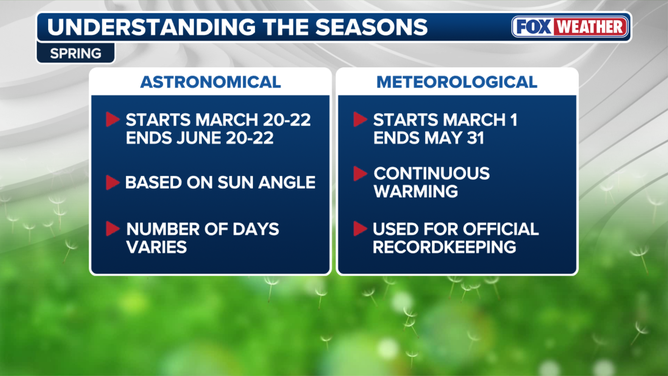
The difference between Meteorological and Astronomical spring.
The vernal equinox is the astronomical beginning of spring in the Northern Hemisphere. Seasons are reversed in the Southern Hemisphere, where it would be autumn for locations such as Australia.
During the vernal equinox, the sun passes directly above the equator, which would entail 12 hours of daylight and 12 hours of night, according to NASA.
This will last for several days before and after the equinox.
![NEW YORK, UNITED STATES - APRIL 29: New Yorkers flock to the 'Cherry Blossom Festival' at Brooklyn Botanic Garden in New York, United States on April 29, 2025.]() Image 1 of 4
Image 1 of 4NEW YORK, UNITED STATES - APRIL 29: New Yorkers flock to the 'Cherry Blossom Festival' at Brooklyn Botanic Garden in New York, United States on April 29, 2025. (Lokman Vural Elibol/Anadolu)
![WASHINGTON, DC MAY 27: The Smithsonian Pollinator Garden in full spring bloom in Washington, D.C., United States, on May 27, 2025]() Image 2 of 4
Image 2 of 4WASHINGTON, DC MAY 27: The Smithsonian Pollinator Garden in full spring bloom in Washington, D.C., United States, on May 27, 2025. ( STR/NurPhoto)
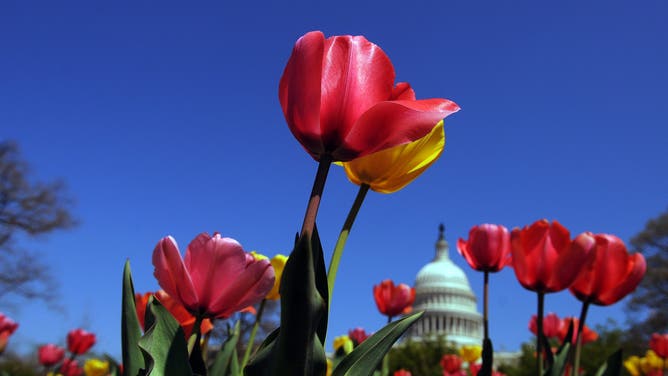
![Tulips bloom near the U.S. Capitol building signaling spring has finally arrived in the nation's capital, Thursday, April 14, 2011 in Washington, D.C.]() Image 3 of 4
Image 3 of 4Tulips bloom near the U.S. Capitol building signaling spring has finally arrived in the nation's capital, Thursday, April 14, 2011 in Washington, D.C. (Astrid Riecken/Tribune News Service)
![The walk to Crystal Cave in Sequoia National Park requires a half-mile hike but the views are quite pleasant and include sites of waterfalls along the way.]() Image 4 of 4
Image 4 of 4The walk to Crystal Cave in Sequoia National Park requires a half-mile hike but the views are quite pleasant and include sites of waterfalls along the way. (Fresno Bee)
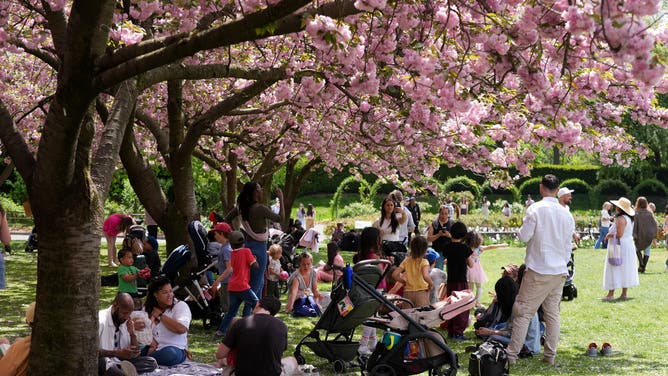


Of course, we all know that Earth rotates around the sun once every 365 days, which helps determine seasons based on the planet's tilt.
Seasons are caused by the fact that the Earth is tilted on its vertical axis by 23.5 degrees, and because of this tilt, most sunlight is aimed at the Southern Hemisphere during astronomical winter and at the Northern Hemisphere during our astronomical summer.
On the vernal equinox in March and the autumnal equinox in September, the equator (0 degrees latitude) is aligned directly with the sun, which gives us those near-perfect 12 hours of day and night.
Simply put, the two solstices and two equinoxes are precise moments in time when the sun is in direct alignment with a distinct band of latitude.
FIRST DAY OF SPRING IS MARCH 20: HERE'S THE SCIENCE BEHIND THE VERNAL EQUINOX
Following the March equinox, observers anywhere on Earth can see the sun’s path in the sky continue to move farther north every day until the June solstice.