

Here's what to do if you encounter a grizzly bear as first one emerges from hibernation at Yellowstone
Biologists at Yellowstone have reported the first sighting of a grizzly bear for the spring season. Here's what to do if you encounter one.
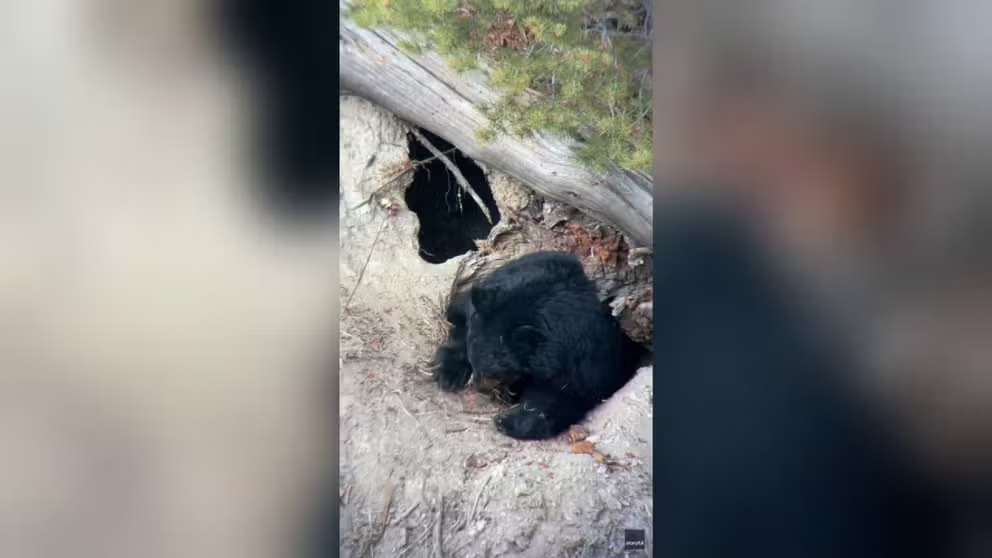
Watch: Bear snuggles in for hibernation at Yellowstone National Park
A black bear was caught on video climbing into a den for hibernation season at Yellowstone National Park. In the video, the bear nestles into its den, scooping dirt and grass to help cushion its hibernation place.
MAMMOTH HOT SPRINGS, Wyo. – As meteorological spring is upon us, the emergence of beautiful colors and large slumbering animals comes with it.
Biologists at Yellowstone National Park have reported the first sighting of a grizzly bear for the spring. According to a press release from the National Park Service (NPS), the bear was observed in the backcountry of the northern part of the park scavenging on a bull bison carcass.
BEAR FALLS THROUGH CEILING OF KENTUCKY HOME AFTER CLIMBING LADDER, SQUEEZING INTO ATTIC
Officials are warning people not to get too close to these giant creatures, as they look for food sources once emerging from hibernation.
The first grizzly bear sighting of 2025 occurred on March 14.
![A large grizzly bear moves through the wilderness in Yellowstone National Park.]() Image 1 of 3
Image 1 of 3A large grizzly bear moves through the wilderness in Yellowstone National Park. (NPS/Jim Peaco)
![A large grizzly bear looks in the distance at Yellowstone National Park.]() Image 2 of 3
Image 2 of 3A large grizzly bear looks in the distance at Yellowstone National Park. (NPS/Jim Peaco)
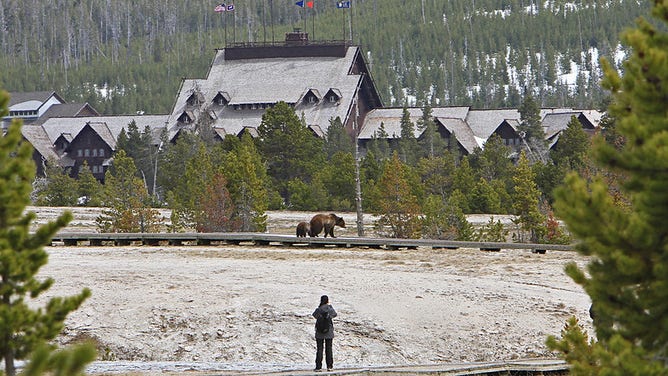
![A visitor in Yellowstone National Park keeps her distance while taking pictures of two grizzly bears.]() Image 3 of 3
Image 3 of 3A visitor in Yellowstone National Park keeps her distance while taking pictures of two grizzly bears. (Jim Peaco / NPS)
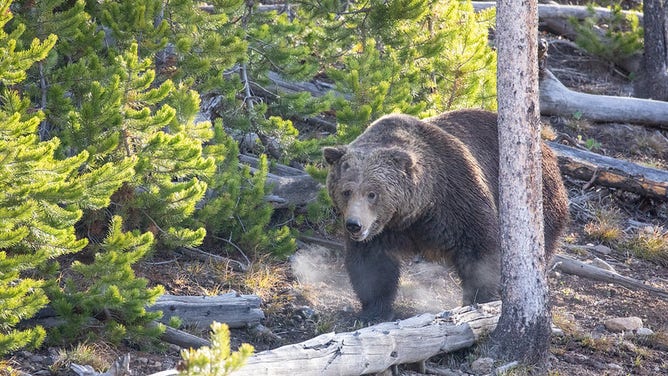
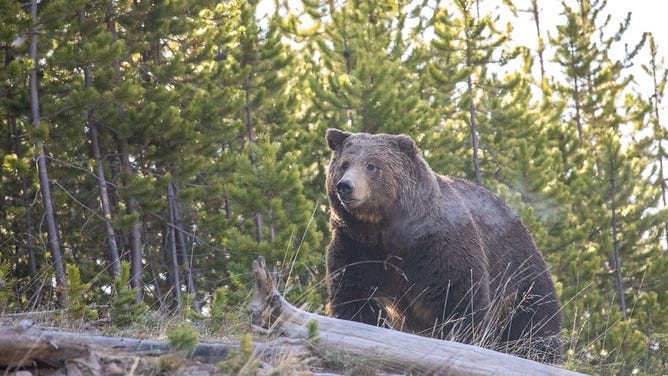
"Bears may react aggressively to encounters with people when feeding on carcasses. Male grizzlies come out of hibernation in early March," a statement from the NPS reads. "Females with cubs emerge in April and early May."
When bears emerge from hibernation, they look for food, often elk and bison that have already died over the winter.
WATCH: NEARLY 10-FOOT ENDANGERED DUSKY SHARK PINGS OFF THE GULF COAST NEAR ST. PETERSBURG, FLORIDA
Experts state that most bears will avoid humans if they hear them coming, but must always pay attention to their surroundings, especially if they are in an area with a good food source, such as berry bushes.
Despite this, all of Yellowstone is grizzly country, so it is important to come prepared with bear spray. Firearms are allowed in the park, but their discharge by visitors is a violation of park regulations.
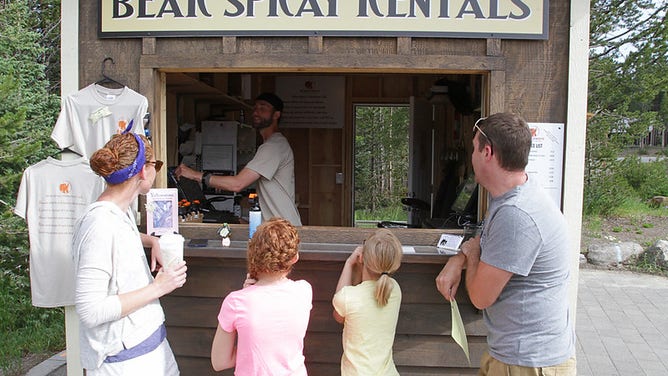
A family rents bear spray before exploring Yellowstone National Park.
(Jim Peaco / NPS)
BIOLOGISTS TO BEGIN CAPTURE OF GRIZZLY BEARS FOR RESEARCH IN YELLOWSTONE NATIONAL PARK
What to do if you see a grizzly bear
Experts suggest the following safety tips to protect yourself and bears:
- Prepare for a bear encounter by carrying bear spray, knowing how to use it and keeping it accessible.
- Stay alert.
- Hike or ski in groups of three or more, stay on maintained trails and make noise. Avoid hiking at dusk, dawn or at night.
- Do not run if you encounter a bear.
- Stay 100 yards away from black and grizzly bears. Approaching bears within 100 yards is prohibited. Use binoculars, a telescope or a telephoto lens to get a closer look.
- Store food, garbage, barbecue grills and other attractants in hard-sided vehicles or bear-proof food storage boxes.
- Report bear sightings and encounters to a park ranger immediately.
- Learn more about bear safety.
WORLD’S LARGEST ACIDIC GEYSER ERUPTS FOR FIRST TIME SINCE 2020 IN YELLOWSTONE NATIONAL PARK
If a brown or grizzly bear attacks you, leave your backpack on and play dead. The NPS suggests lying flat on your stomach with your hands clasped behind your neck and spreading your legs to make it harder for the bear to turn you over.
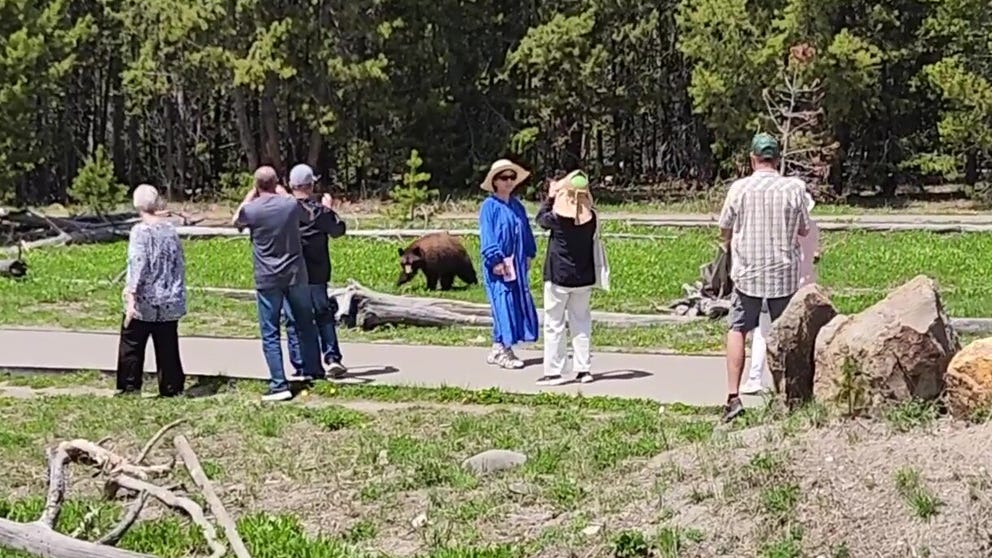
Group gets way too close to wild bear inside Yellowstone National Park
A group of tourists got dangerously close to a bear in Yellowstone National Park, taking photos as the bear snacked on a patch of grass just a few feet away, a video from late May shows.
If a black bear attacks you, the NPS states that you should not play dead and try to escape to a secure place, such as a car or building.
If escape is impossible, try to fight by concentrating your kicks and blows on the bear’s face and muzzle.