

This SpaceX test could pave the way for NASA's return to the moon
Let's take a look at what prediction market traders think about when two SpaceX Starships will successfully dock together in orbit.
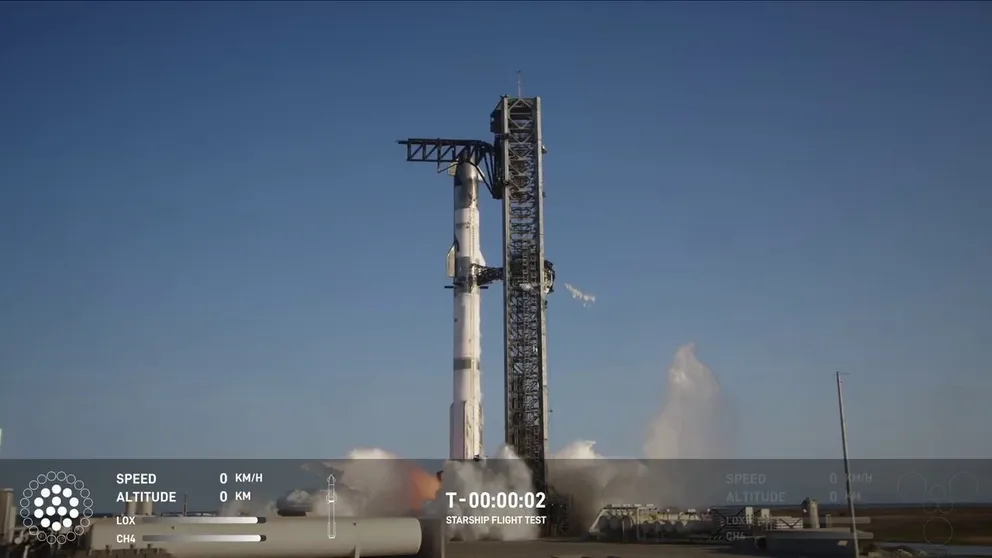
WATCH: SpaceX launches sixth Starship flight from Texas
SpaceX launched its sixth Starship flight from Texas on Tuesday. Both the booster and spacecraft splashed down in oceans across the world, in what the private space company called a success.
The race back to the moon is well underway, but for commercial companies like SpaceX hoping to play a key role in NASA's Artemis program, several critical milestones must still be cleared before the historic missions can begin.
SpaceX's Starship has already achieved a series of modern spaceflight milestones as the world's largest rocket prepares for its role in NASA's Artemis program.
AUGUST SKYWATCHING GUIDE: FROM A PLANETARY PARADE AND ECLIPSES TO A METEOR SHOWER
Looking to the future, one of its most critical tests still lies ahead: successfully docking in Earth orbit.
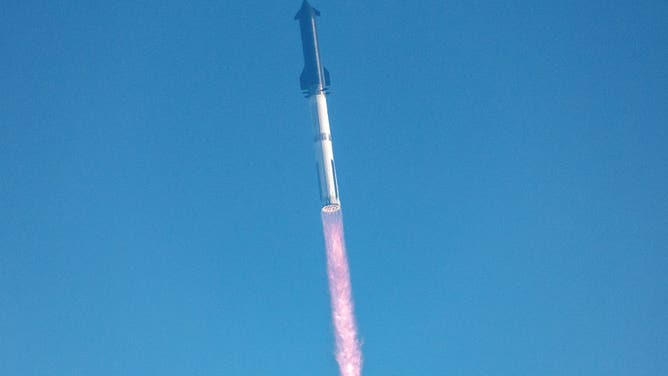
The SpaceX Starship rocket launches from Starbase, Texas, as seen from South Padre Island on May 27, 2025.
(SERGIO FLORES/AFP via Getty Images)
One of the most important milestones on Starship's road to Artemis is demonstrating an orbital docking maneuver, a key step that would pave the way for in-space refueling—a capability NASA is relying on for future missions to the moon.
With NASA's ambitious timeline drawing closer, the pressure is on to prove the technologies that will make those missions possible.
NASA'S ARTEMIS PROGRAM: PAVING THE WAY FOR HUMANKIND'S RETURN TO THE MOON AND BEYOND
Let's take a look at what prediction market traders think about when two SpaceX Starships will successfully dock together in orbit.
The pivotal chapter in NASA's Artemis program is fast approaching. Artemis III, targeted for 2027, will test critical lunar landing technologies in space, while Artemis IV, planned for early 2028, aims to return astronauts to the moon's surface.
With those milestones on the horizon, the countdown is on for SpaceX and other commercial partners to prove the technologies that will shape the next era of human spaceflight.
WILL SPACEX LAND ANYTHING ON MARS BEFORE 2030?
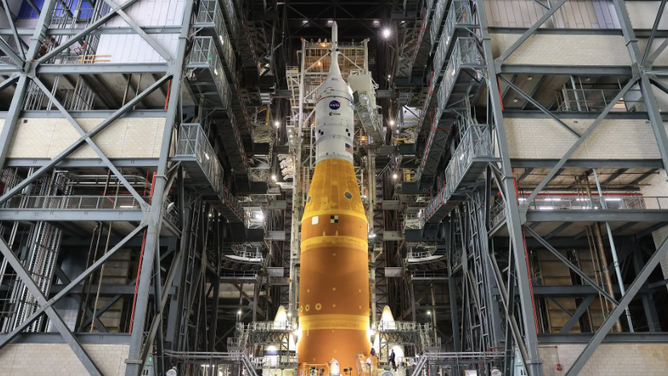
NASA’s Artemis II SLS rocket and Orion spacecraft, secured to the mobile launcher, stands vertical inside the Vehicle Assembly building on March 17, 2026, as preparations continue for rollout to Launch Complex 39B at NASA’s Kennedy Space Center in Florida.
(NASA/Kim Shifflett / NASA)
Successfully docking two Starships in orbit would mark the first step toward refueling the spacecraft in space — a capability NASA is counting on to land astronauts on the moon during future Artemis missions.