

Will SpaceX land anything on Mars before 2030?
As we inch closer day by day, prediction markets at Kalshi are expecting a 27% chance that SpaceX will successfully land anything on Mars before 2030.
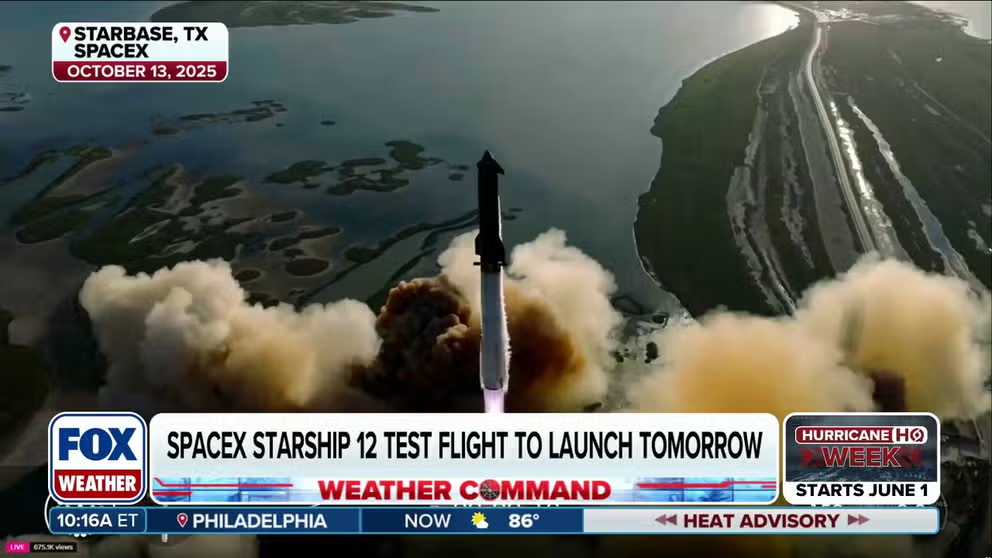
FILE: NASA prepares to launch the newest and most advanced version of SpaceX Starship
NASA plans on launching the newest and most advanced version of SpaceX Starship, marking the first time we see the upgraded rocket. Former NASA astronaut and President of Leading Edge Enterprises, Charles Camarda, joins FOX Weather to discuss the mission and the newest technology NASA is using during the flight.
The race to Mars continues as officials from NASA and SpaceX work toward the greater goal of sending humans to the planet for colonization.
As officials at SpaceX continue to test the Starship spacecraft, confidence grows as the ship is designed to carry both crew and cargo to Earth orbit, the moon, Mars and beyond.
MAN VS MACHINE: WHO WILL WALK ON MARS FIRST?
Flight tests for the reusable rocket continue to achieve new milestones, as the 13th flight test is scheduled for Tuesday evening in Texas.
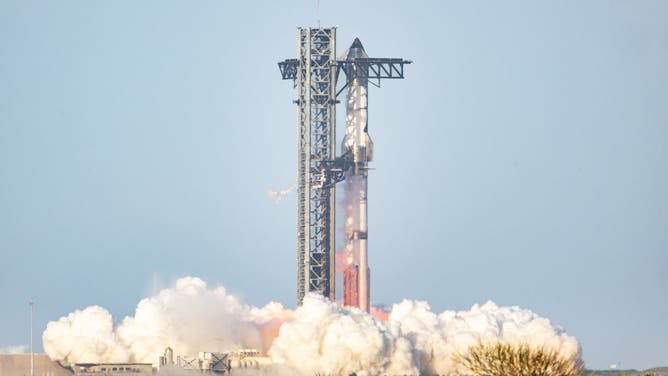
SpaceX Starship Flight 8 takes off from Orbital Launch Pad A at Boca Chica beach on March 06, 2025 in Boca Chica Beach, Texas. The SpaceX Starship Flight 8 test launched and successfully caught its booster upon descent.
(Brandon Bell/Getty Images / Getty Images)
SpaceX’s Starship is a fully reusable rocket that, like the Falcon 9 spacecraft, is vital for the transportation of supplies, but can travel much farther.
As more tests are conducted and confidence grows, SpaceX announced that Starship cargo flights to the Martian surface for research, development and exploratory missions will start no later than 2028.
SCIENTISTS DISCOVER NEW METHOD OF DEFENSE AGAINST SOLAR STORMS TO HELP PROTECT EARTH
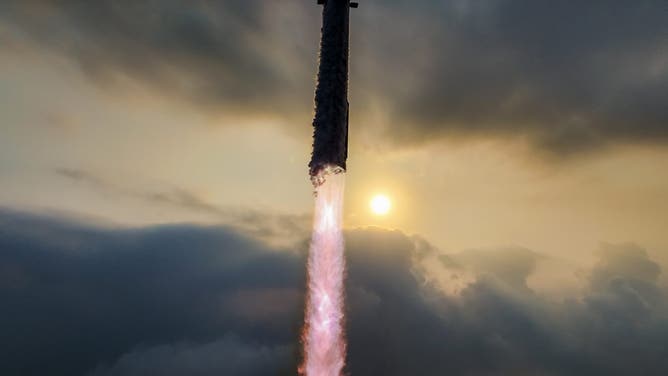
SpaceX Starship launches from Boca Chica, Texas on June 6, 2024 marking the fourth flight test for the company's reusable mega rocket.
(SpaceX)
As we are halfway through 2026, people wonder whether SpaceX will be able to achieve this feat by landing on Mars before 2030.
As we inch closer day by day, prediction markets at Kalshi are expecting a 27% chance that SpaceX will successfully land anything on Mars before 2030.
NASA SEEKS RESEARCH VOLUNTEERS TO SPEND A YEAR ON A SIMULATED MISSION TO MARS OR THE MOON
There are still a plethora of tests that must be completed outside the Starship for SpaceX and NASA before we can send humans to Mars as part of the next Artemis III mission, which will complete a series of objectives in Earth's low orbit to demonstrate the critical systems needed for future moon landings.
WHICH COUNTRY WILL LAND ON THE MOON NEXT AS THE SPACE RACE ENTERS A CRITICAL PHASE
It's a necessary first step before humans land on the moon. Experts from NASA, SpaceX and Blue Origin are on track to meet these goals before 2030 and beyond.