

Which country will land on the moon next as the space race enters a critical phase
Sponsored by Kalshi
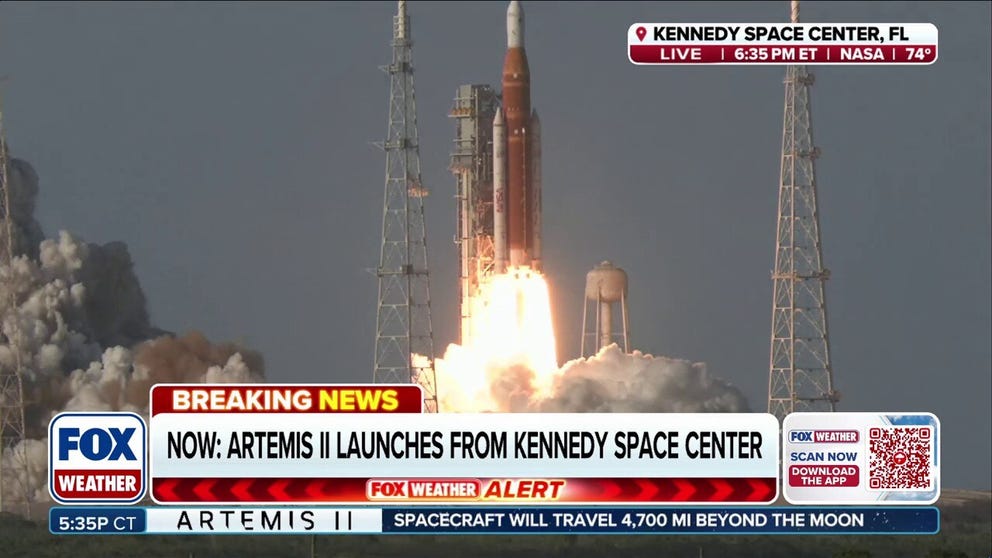
Artemis II lifts off from Kennedy Space Center
NEXT STOP, SPACE 🚀: Artemis II is roaring into space on a mission to make history after liftoff from Kennedy Space Center in Florida. This is humanity’s return to deep space, and a the beginning of a bold journey around the Moon. Stay locked with FOX Weather for every second of this historic mission.
The moon may be Earth's closest celestial neighbor, but more than 50 years have passed since humans last walked on its surface. Today, the race to return astronauts to the moon is underway once again.
This time around, however, the goal extends beyond planting a flag. The next era of lunar exploration is focused on establishing a sustained human presence, with two nations leading the effort: the United States and China.
NASA WANTS TO LIGHT THE FIRST FIRE ON THE MOON. HERE'S WHY
In April, NASA's Artemis II mission around the moon captured the world's attention, but the historic test flight was only the beginning of a broader effort to return humans to the lunar surface.
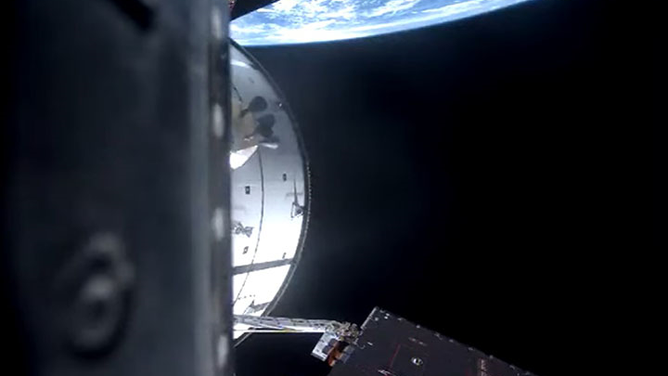
![Camera mounted to Orion spacecraft.]() Image 1 of 4
Image 1 of 4Camera mounted to Orion spacecraft.
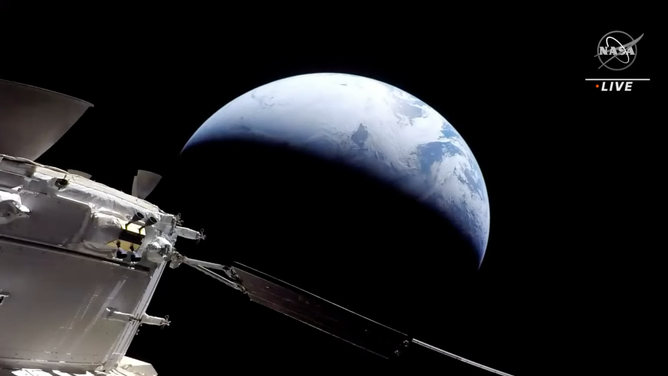
![Orion's view of Earth as the spacecraft returns on Dec. 11, 2022.]() Image 2 of 4
Image 2 of 4Orion's view of Earth grows larger as the spacecraft returns on Dec. 11, 2022. (Image: NASA)
![NASA's Orion spacecraft takes a "selfie" with the moon on Nov. 21, 2022 during the Artemis 1 test flight.]() Image 3 of 4
Image 3 of 4NASA's Orion spacecraft takes a "selfie" with the moon on Nov. 21, 2022 during the Artemis 1 test flight. (Image: NASA)
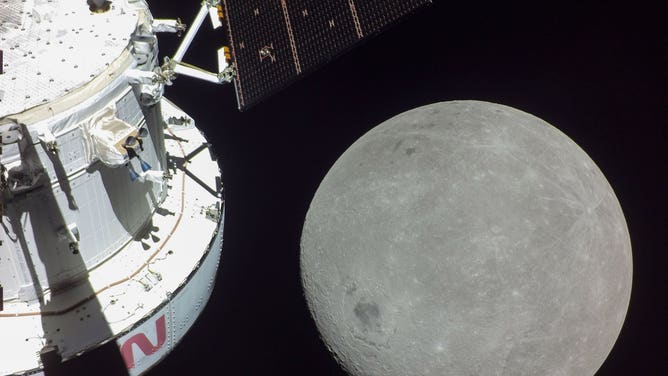
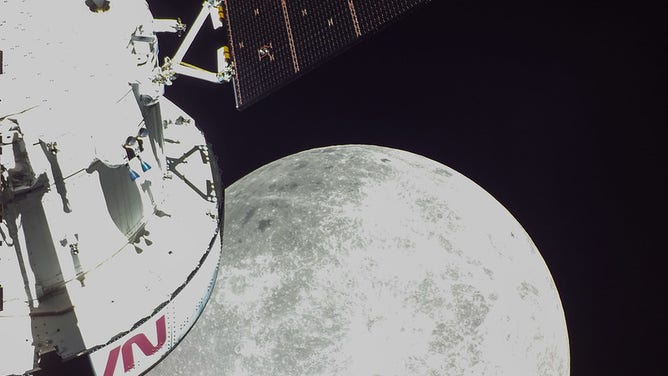
![A portion of the far side of the moon looms large just beyond the Orion spacecraft in this image taken on the sixth day of the Artemis I mission by a camera on the tip of one of Orion s solar arrays The spacecraft entered the lunar sphere of influence Sunday, Nov. 20 making the Moon instead of Earth the main gravitational force acting on the spacecraft.]() Image 4 of 4
Image 4 of 4A portion of the far side of the moon looms large just beyond the Orion spacecraft in this image taken on the sixth day of the Artemis I mission by a camera on the tip of one of Orion s solar arrays The spacecraft entered the lunar sphere of influence Sunday, Nov. 20 making the Moon instead of Earth the main gravitational force acting on the spacecraft. On Monday, Nov. 21, 2022 it came within 80 miles of the lunar surface the closest approach of the uncrewed Artemis I mission before moving into a distant retrograde orbit around the moon. (Image: NASA)
Let's take a look at how prediction markets assess the leading contenders in the race to bring humanity back to the moon.
"The Chinese will land their taikonauts on the moon, there’s no question. The question is will the United States return before them… I think the answer is yes," NASA Administrator Jared Isaacman said on CBS Face the Nation.
The Artemis program is off to a successful start, with its first two missions laying the foundation for America's return to the Moon. In 2022, Artemis I successfully demonstrated NASA's Space Launch System (SLS) and Orion spacecraft on an uncrewed journey around the Moon.
This past April, Artemis II carried four astronauts on the first crewed lunar mission since Apollo, validating Orion for deep-space human exploration and returning humans to deep space for the first time since the Apollo missions.
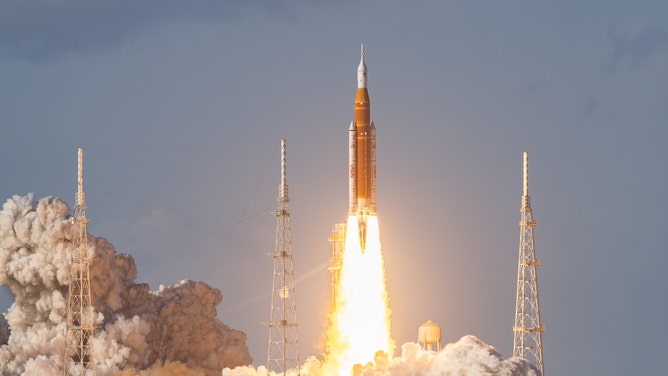
April 1, 2026: NASA's Space Launch System (SLS) rocket launches the Artemis II crew to the moon.
(Brandon Moser / Getty Images)
NASA plans to launch Artemis III in 2027, and the mission will use four astronauts to test the integrated lunar landing architecture in preparation for sustained surface operations.
All of this sets the stage for the biggest milestone yet: Artemis IV, planned for 2028, which will return astronauts to the lunar surface near the moon's South Pole for the first time since Apollo 17.
NASA'S ARTEMIS PROGRAM: PAVING THE WAY FOR HUMANKIND'S RETURN TO THE MOON AND BEYOND
Beyond 2030, future Artemis missions will establish a sustained human presence on the Moon through a base, surface systems, and scientific infrastructure, while laying the foundation for future human missions to Mars.
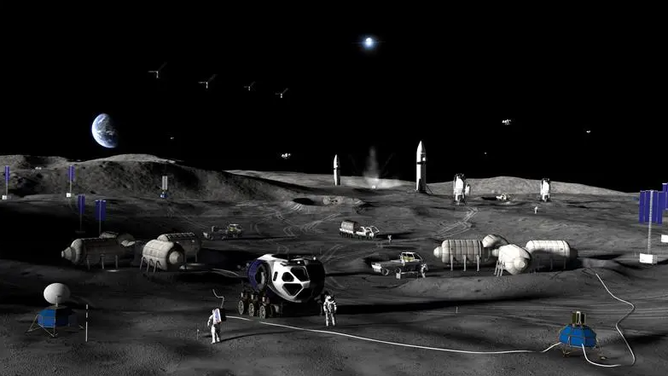
Artistic concept of Phase 3 of NASA’s Moon Base.
(NASA)
Across the globe, China has also been working towards returning to the Moon through their version of Artemis: Chang'e.
Building on the previous missions of the Chang'e program, China plans to return astronauts to the Moon before 2030. Similar to the United States, its longer-term plans focus on establishing a sustained human presence on the Moon and expanding long-term lunar exploration.
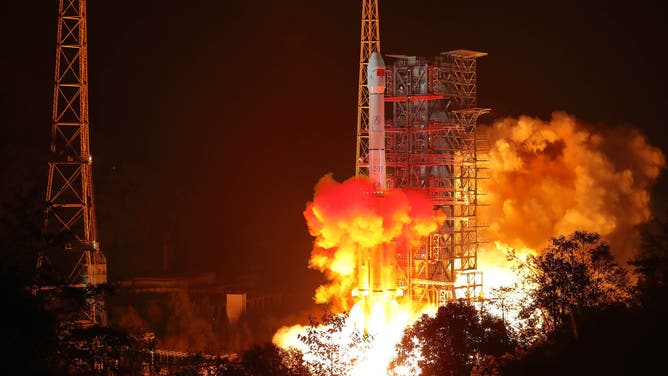
China launches Chang'e-4 lunar probe in the Xichang Satellite Launch Center in southwest China's Sichuan Province, Dec. 8, 2018.
((Xinhua/Jiang Hongjing via Getty Images) / Getty Images)
While the United States and China are pursuing different paths, their long-term objectives are remarkably similar: returning humans to the Moon, establishing a sustained lunar presence and using the Moon as a stepping stone for deeper space exploration.