

Scientists discover new method of defense against solar storms to help protect Earth
Solar flares are powerful bursts of energy that can impact radio communications, electric power grids and navigation signals, and they pose a risk to spacecraft and astronauts.
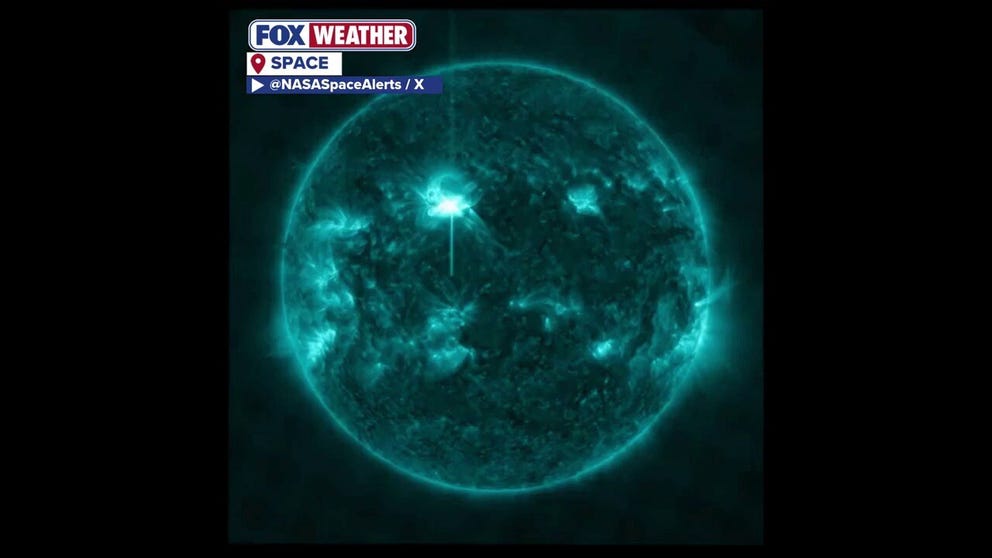
FILE: NASA’s Solar Dynamics Observatory captures strong solar flare released by the Sun
NASA’s Solar Dynamics Observatory captured a strong solar flare released by the Sun on Tuesday, Feb. 3. Following several eruptions in preceding days, this activity could trigger geomagnetic disturbances and enhance the Northern Lights.
A recent study is shedding light on how we handle geomagnetic storms, offering a way to reduce their severity.
Experts at Advancing Earth and Space Sciences (AGU) have dug into the essentials of solar storms and how they can affect our planet.
Solar storms occur when the sun creates an entangled mess of magnetic fields, similar to a messy head of hair after a long night of sleep.
VIBRANT DISCOVERY: UNIQUE, SALTY CLOUDS FOUND ON ICONIC 'PINK PLANET'
Solar flares are powerful bursts of energy that can impact radio communications, electric power grids and navigation signals, and they pose a risk to spacecraft and astronauts, according to NASA.
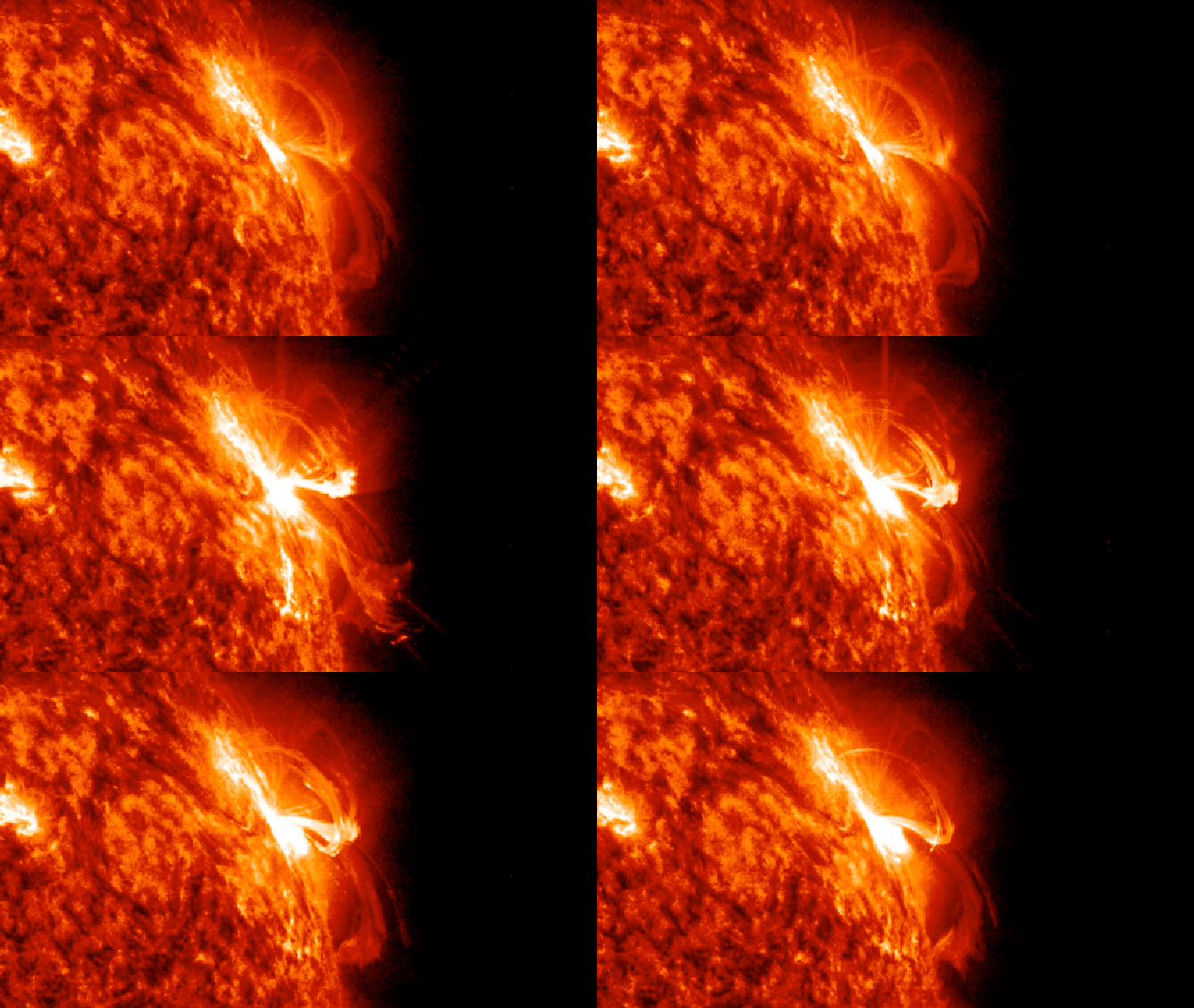
A solar flare erupting on March 3, 2023. The image shows a subset of extreme ultraviolet light that highlights the extremely hot material in flares, and which is colorized in orange.
(Solar Dynamics Observatory / NASA)
These geomagnetic storms can impact technology in space and on Earth's surface, including spacecraft communication and more.
A new approach from experts would be to create an artificial mass-loading system in Earth's dayside magnetosphere to strengthen our planet's atmospheric defenses against solar storms.
THESE ARE THE 5 CATEGORIES THAT MEASURE GEOMAGNETIC STORMS
This would be performed by a set of Earth-orbiting spacecraft launched into space, each carrying a storage canister containing mass-loading material, according to AGU.
The material released would reduce the impact of a solar wind structure, such as an extreme coronal mass ejection, which is a large expulsion of plasma and magnetic field from the sun's corona.
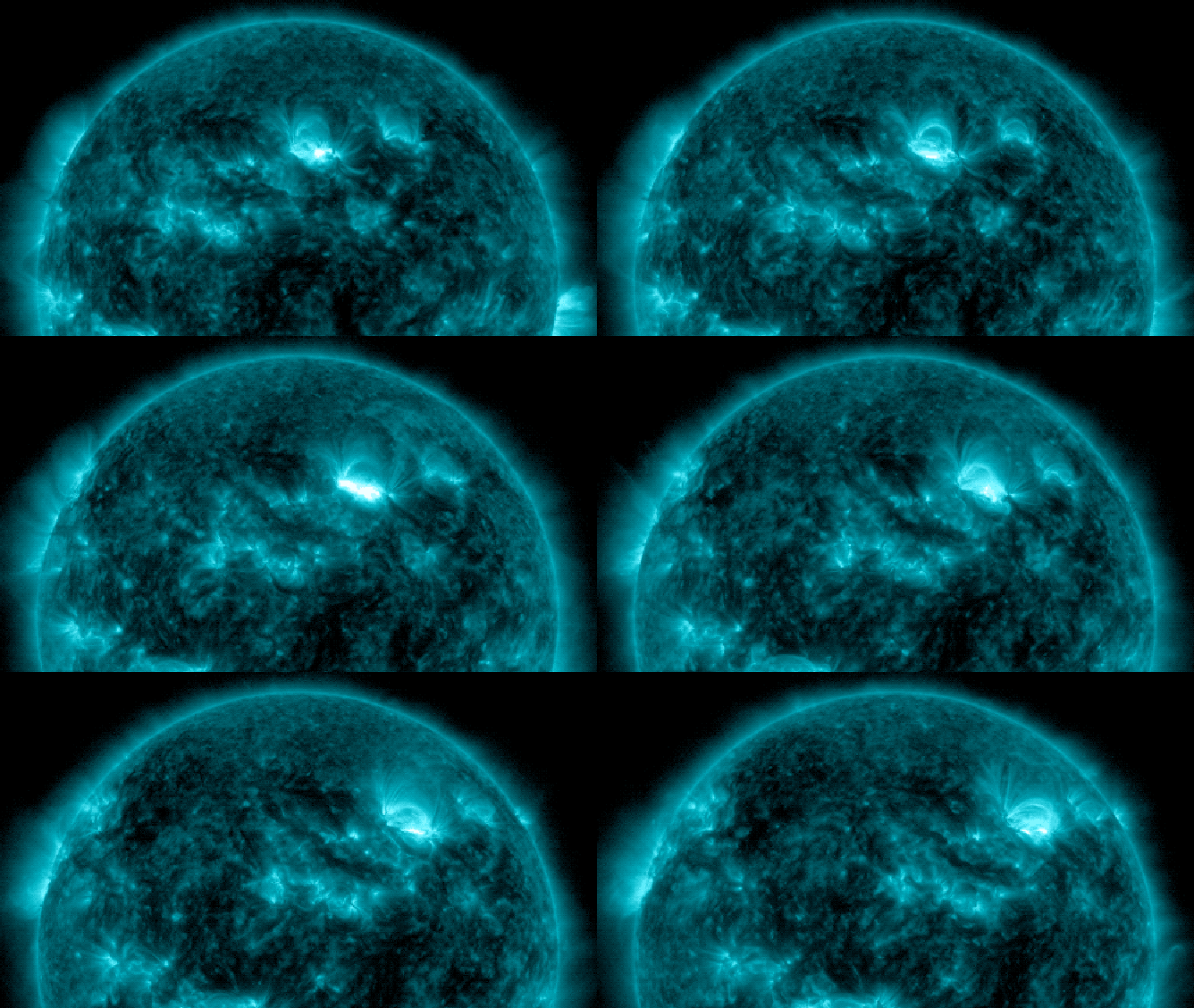
NASA’s Solar Dynamics Observatory captured these images of the solar flares — as seen in the bright flashes in the upper right — on May 5 and May 6, 2024. The image shows a subset of extreme ultraviolet light that highlights the extremely hot material in flares and which is colorized in teal.
(NASA/SDO / NASA)
As a result, the material and technology can now significantly reduce the effects of solar storms by 50% or more, according to AGU.
Once the spacecraft releases the mass-loading material from the canisters, it would rapidly photoionize, seeding the magnetosphere with plasma.
SEE IT: STRONG SOLAR FLARE CAUGHT ON CAMERA ERUPTING FROM THE SUN
The magnetosphere is a comet-shaped region around Earth that shields it from solar and cosmic particle radiation, as well as from atmospheric erosion by the solar wind during these storms, according to NASA.
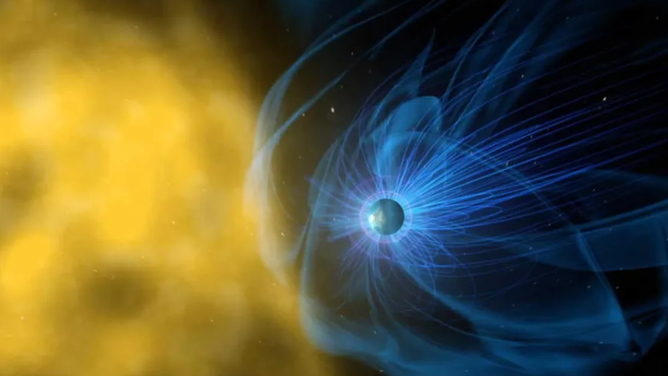
Earth is surrounded by a magnetosphere.
(NASA)
Once released into the magnetosphere, the plasma acts as an artificial shield, protecting the planet and significantly reducing the effects.
This would be perfect for real-time response to solar storms to protect satellites and spacecraft and prevent widespread outages on the planet.
JUNE SKYWATCHING GUIDE: FROM PLANET CONJUNCTIONS TO NEW MOONS, HERE IS WHAT TO LOOK UP FOR
Once installed, these mass-loading materials can be launched into orbit around the planet and stored there for years until needed.
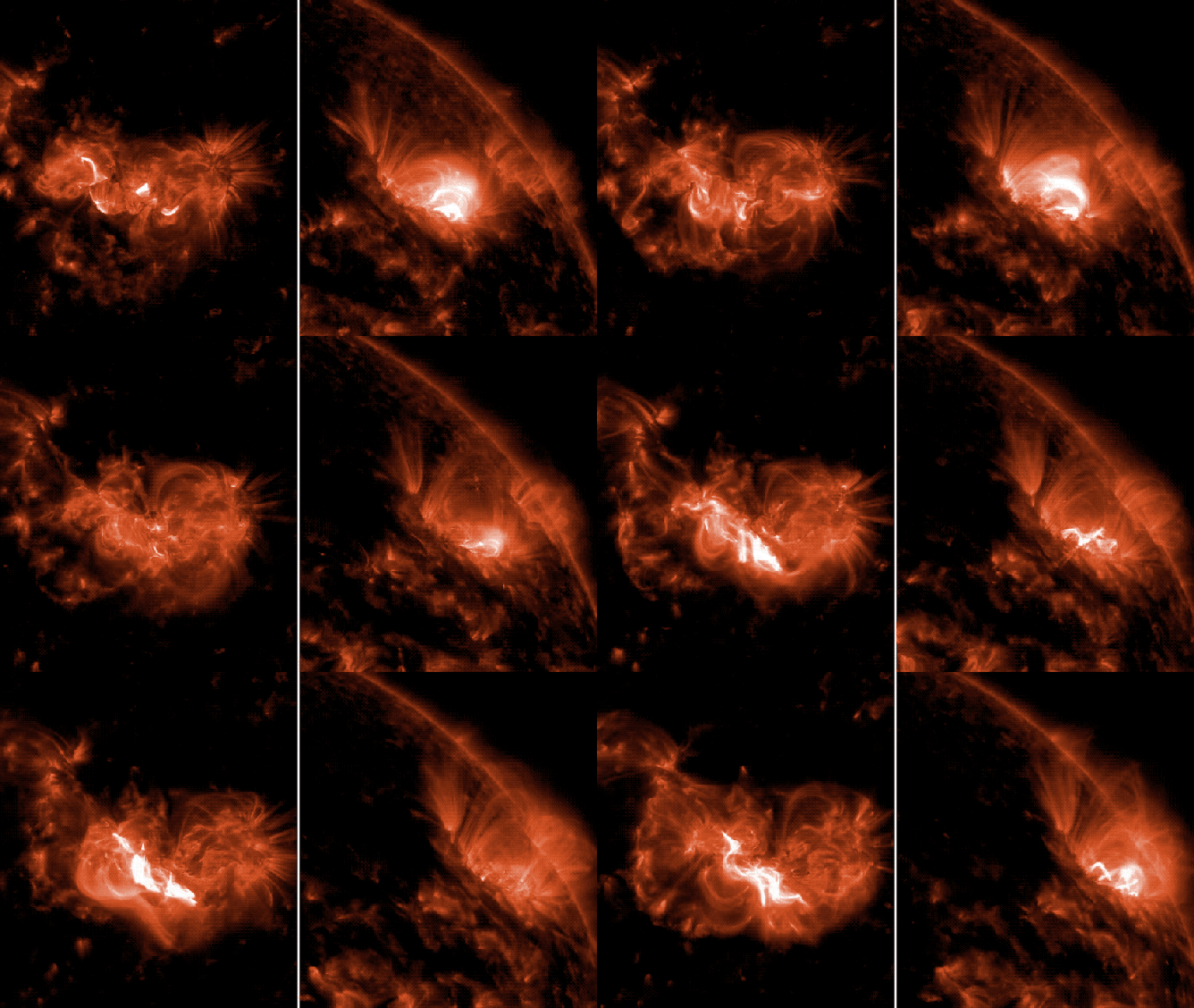
NASA’s Solar Dynamics Observatory captured these images of the solar flares — as seen in the bright flashes in the left image (May 8 flare) and the right image (May 7 flare). The image shows a subset of extreme ultraviolet light that highlights the extremely hot material in flares and which is colorized in orange.
(NASA/SDO / NOAA)
This could change how we, as a planet, protect our technology and enhance our safety measures as we push the boundaries of interplanetary travel in the future.
THE BEST CELESTIAL EVENTS IN 2026 YOU WON'T WANT TO MISS
With modern technology, this is a feasible future with further testing and simulations, and this could change the way we protect our planet.