

California declares state of emergency as potentially historic Super El Niño looms
The emerging Super El Niño is already breaking records, with forecasters expecting it to continue strengthening.
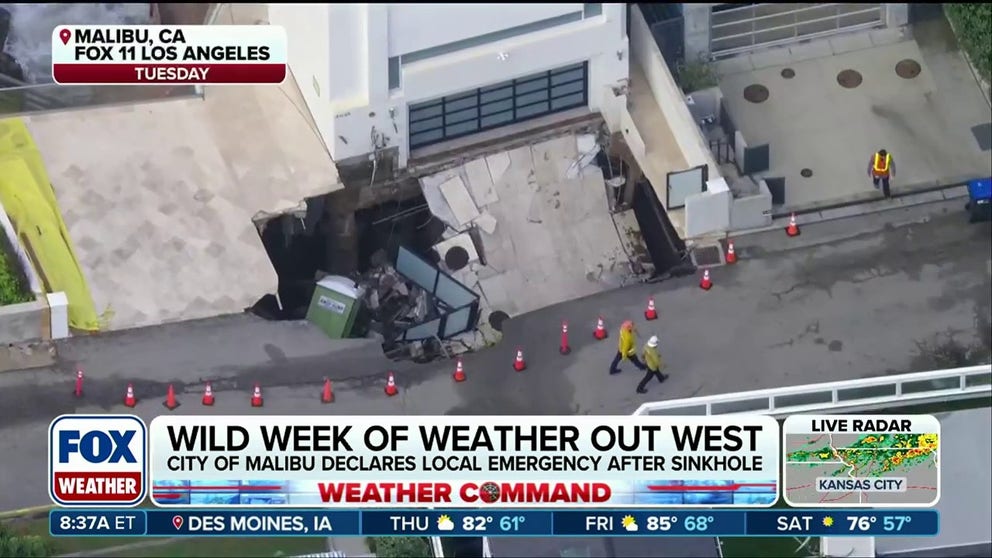
FILE: Marie overwhelms Southern California coast as heat wave impacts millions
Meteorologist in Charge for the NWS Los Angeles/Oxnard Dr. Ariel Cohen joins FOX Weather to discuss the wild week of weather out West. From massive waves in Southern California to the ongoing heat wave, Cohen breaks down what you need to know.
THE TAKEAWAY
- California declared a state of emergency to begin mobilizing state resources ahead of an anticipated historic El Niño.
- The emergency proclamation states that California will prepare for anticipated impacts, including strong storms and coastal flooding.
- This comes as the emerging El Niño event is already breaking records, with forecasters expecting it to continue strengthening.
California declared a state of emergency Monday to begin mobilizing state resources ahead of an anticipated historic El Niño storm season this winter.
POWERFUL WAVES BATTER SOUTHERN CALIFORNIA COAST, DAMAGING HOMES AND TRIGGERING SINKHOLE
"We are preparing for this El Niño early because every Californian deserves to be safe in their home, connected to their community and protected when severe weather comes," Gov. Gavin Newsom said in a press release.
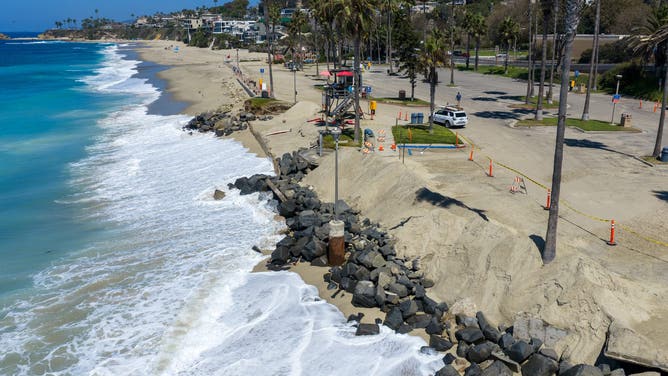
An aerial view of the incoming tide and swell at Aliso Beach in Laguna Beach, where recent storm surges caused damage to the parking lot area and erosion, on Tuesday, Sept. 1, 2026, ahead of the impacts of Hurricane Marie.
(Allen J. Schaben / Los Angeles Times via Getty Images / Getty Images)
The emergency proclamation states that California will prepare for anticipated impacts, including strong storms and coastal flooding.
The action also directs state agencies to lead the state’s flood-risk reduction efforts, stage flood-fighting supplies such as sandbags and pumps and pre-position other critical equipment.
The California Department of Transportation, known as Caltrans, will also stage traffic-control, road-closure and snow-removal equipment along highways most at risk.
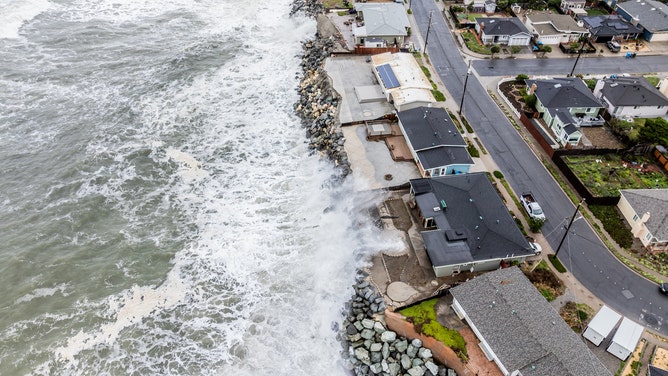
In the San Francisco Bay Area a Coastal Flood Advisory was issued for high astronomical tides potentially causing flooding for flood-prone, low-lying areas around the bay.
(JasonDoiy / Getty Images)
In addition, the proclamation prepares the California National Guard to support flood response, search and rescue, engineering and logistics missions.
It also gives state environmental and natural resource agencies additional resources to support local efforts to prepare for flooding, landslides and debris flows by fast-tracking permits and identifying other ways to cut red tape.
7 THINGS TO KNOW ABOUT MUDSLIDES
"We are not waiting for this season’s storms to be on our doorstep," Cal OES Director Caroline Thomas Jacobs said. "By planning early and coordinating resources ahead of El Niño, we are working to ensure communities and first responders have the personnel, equipment and support they need to prepare for severe weather, respond quickly when conditions change and protect lives and property across California."
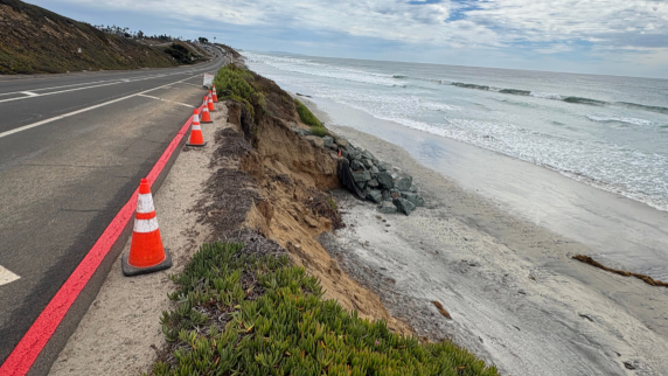
Carlsbad declared a local emergency as officials work to stabilize coastal bluffs threatened by ongoing erosion.
(City of Carlsbad / FOX Weather)
This comes as the emerging El Niño event is already breaking records, with forecasters expecting it to continue strengthening and potentially become the strongest on record.
WHAT IS COASTAL EROSION AND WHY IS IT DANGEROUS?
El Niño is a natural climate pattern in which trade winds are typically weaker, allowing warm water to build up in parts of the eastern and central Pacific, per the FOX Forecast Center.
This can lead to wetter and more intense winters in California.
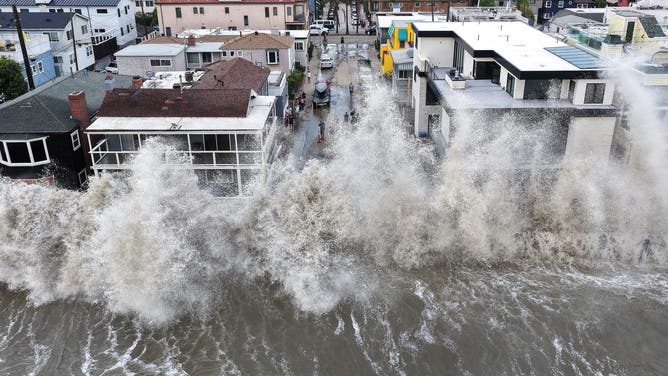
In an aerial view, a Pacific Ocean wave crashes into a seawall protecting beachside homes on September 7, 2026 in Long Beach, California. Heavy surf generated by offshore Hurricane Marie, amid a record-breaking ocean heat and an emerging El Niño, caused minor coastal flooding and forced the evacuation of roughly 20 beachfront homes along the Long Beach Peninsula.
(Mario Tama/Getty Images / Getty Images)
According to the press release, federal forecasters said El Niño is strengthening, with a greater than 90% chance of a very strong event this fall and winter and a 75% chance it could reach historic strength.
This means much of California could experience repeated rounds of heavy rain, strong winds, mountain snow, flooding, landslides, debris flows, large waves and coastal flooding.
WHERE DO ANIMALS GO WHEN FALL ARRIVES? INSIDE THE INCREDIBLE MIGRATIONS HAPPENING ACROSS THE US
Impacts were already seen earlier this month when rough surf began threatening oceanfront homes along Long Beach, causing 20 homes to be evacuated.
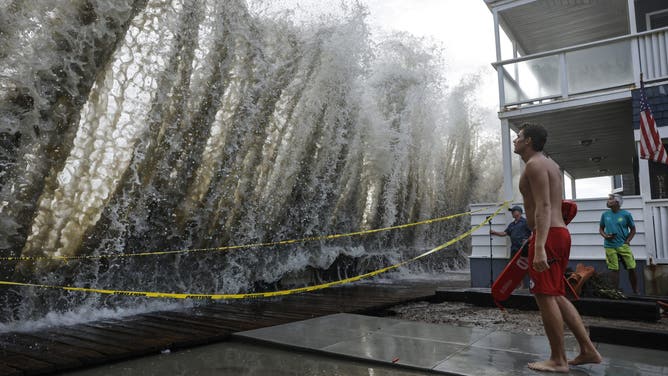
A lifeguard keeps watch along a closed boardwalk as a Pacific Ocean wave crashes over a seawall protecting homes on September 7, 2026 in Long Beach, California. Heavy surf generated by offshore Hurricane Marie, amid a record-breaking ocean heat and an emerging El Niño, caused minor coastal flooding and forced the evacuation of roughly 20 beachfront homes along the Long Beach Peninsula.
(Mario Tama/Getty Images / Getty Images)
Officials reported damage to the boardwalk and cracked concrete between several at-risk oceanfront homes, while sand driven inland by pounding surf clogged storm drains and triggered localized street flooding.
Farther north in Carlsbad, coastal erosion is threatening the bluffs along South Carlsbad Boulevard.
WATCH: SAND PUMPING UNDERWAY AS BUXTON’S MAJOR BEACH NOURISHMENT PROJECT FIGHTS COSTAL EROSION
The city declared a local emergency on Sept. 9, warning that additional erosion could threaten the stability of the bluff and nearby roadway.
Experts say the situation could become even more challenging as a strong El Niño develops this winter.