

Unprecedented January tropical disturbance possible in Eastern Pacific for first time in recorded history
According to the FOX Forecast Center, no tropical development of any kind has ever been noted in the month of January in the Eastern Pacific basin.
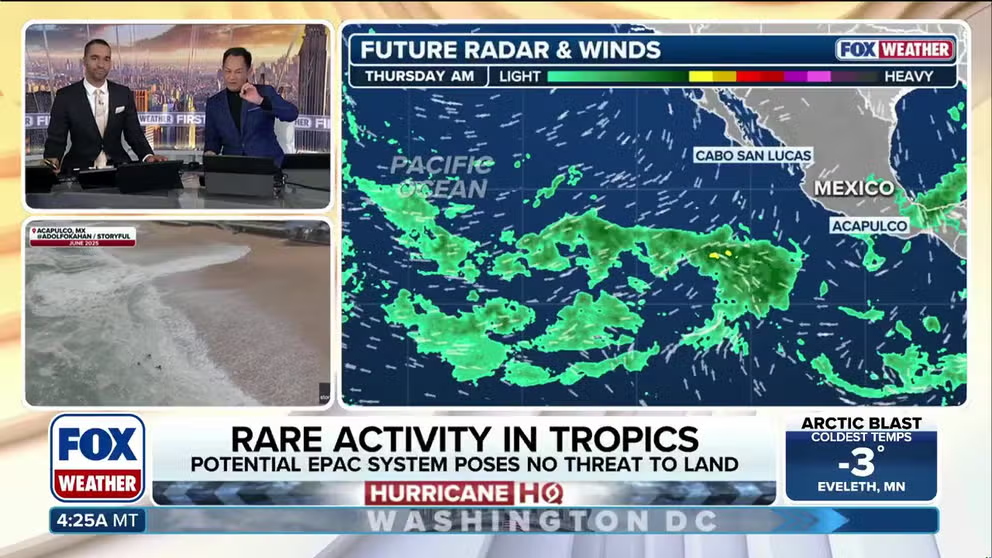
Rare tropical activity possible in eastern Pacific early next week
The FOX Forecast Center is monitoring the rare potential for tropical activity in the eastern Pacific. While the system is unlikely to intensify beyond a depression and poses no threat to land, its formation would be historic. Since record-keeping began in 1850, there has never been a tropical cyclone recorded in this basin during January.
MIAMI, Fla. – From raging winter storms to tracking tropical weather in the U.S., experts are turning their attention to the tropics over the next few days for increased activity.
This is typically a time in which the tropics take a nap during the winter months, so it is rare to see potential activity develop at this point in January.
While the system is unlikely to intensify beyond a depression and poses no threat to land, its formation would be historic.
According to the FOX Forecast Center, no tropical development of any kind has ever been noted in the month of January in the Eastern Pacific basin. The earliest recorded tropical system was Tropical Depression One-E that developed in late April 2020.
And while the National Hurricane Center is not yet officially monitoring the area, forecast models have consistently shown the possibility of a system organizing.
An area of low pressure is forecast to develop over the weekend, as there is low wind shear due to the large-scale ridge of high pressure over the West Coast, where just enough activity could cause storms to develop.

(FOX Weather)
According to the National Weather Service, wind shear is the change in wind speed and/or direction with height.
Other factors that will play a role in the development of the system include ample low-to-mid-level moisture and warmer-than-average sea surface temperatures.
"The Exclusive FOX Weather Tropical Threat product shows possible development as early as Friday, well to the southwest of Baja California," said a statement from the FOX Forecast Center, and if anything were to develop, the peak window would be Saturday into Sunday.
However, should it develop, there are no indications that this system would become anything more than a weak tropical depression or storm.
And luckily, there is no immediate threat to land with this system, and it is not expected to develop over the next seven days, but that could change.
WHAT'S THE DIFFERENCE BETWEEN A TROPICAL DEPRESSION, TROPICAL STORM AND HURRICANE?
A potential tropical cyclone is designated by the NHC so that they can issue routine advisories on a system that has not yet developed into a tropical depression or tropical storm but brings a threat of 39-plus-mph winds to land within 72 hours.
This follows an active 2025 hurricane season in the Eastern Pacific Ocean, which produced 18 named storms and 10 hurricanes, three of which were major (Category 3+) hurricanes on the Saffir-Simpson Hurricane Wind Scale.
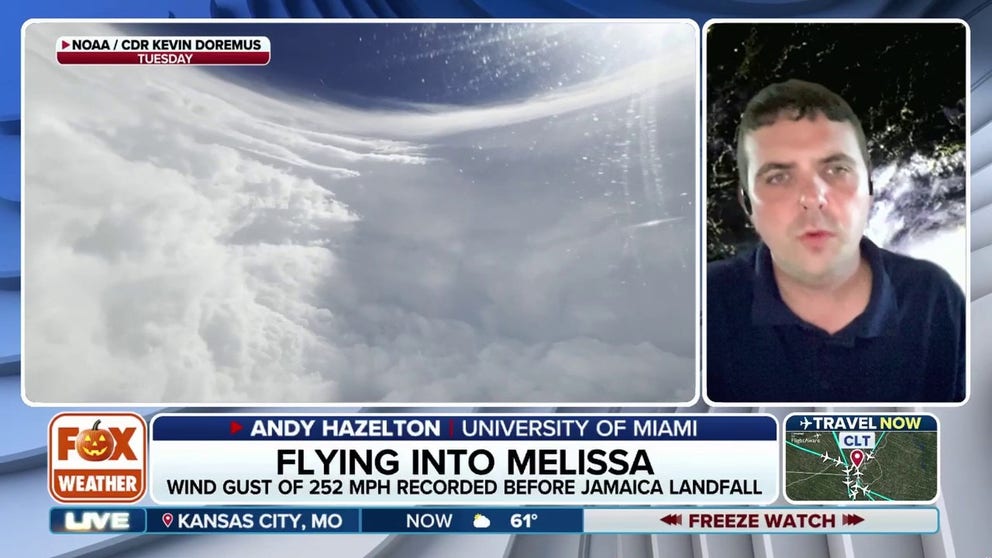
Scientist recalls harrowing flights into the monstrous Category 5 Hurricane Melissa
Dr. Andy Hazelton was onboard five flights with the National Oceanic and Atmospheric Administration Hurricane Hunters into Hurricane Melissa, calling the storm that was clocked 250 mph winds at flight height "another level."
Meanwhile, FOX Weather Hurricane Specialist Bryan Norcross described the Atlantic hurricane season as "unusual."
The 2025 season produced 13 named storms, with five hurricanes and four of which were rated Category 3 or higher.
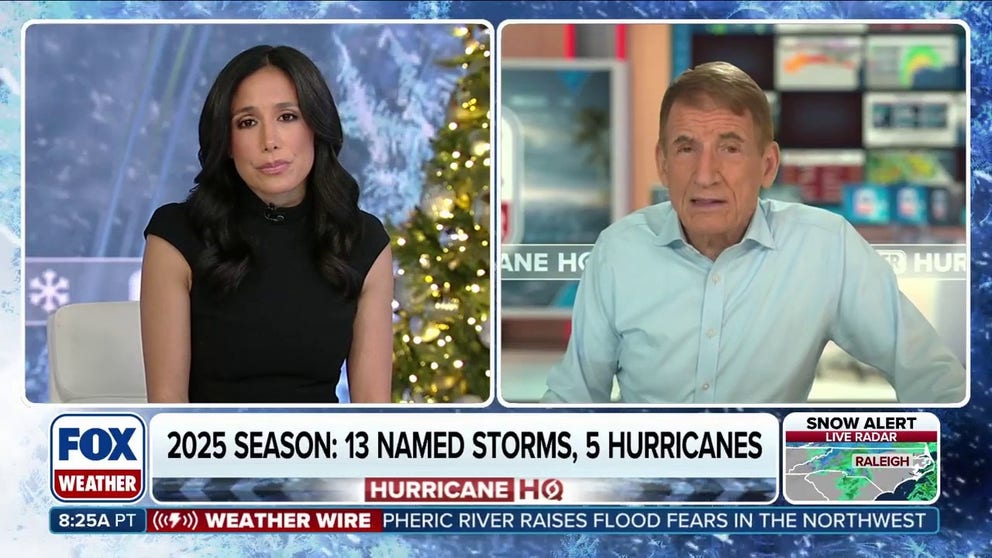
Looking back at the 2025 Hurricane Season
HURRICANE SEASON WRAP: Hurricane Specialist Bryan Norcross joins FOX Weather to officially wrap up hurricane season, as we look back at how the extreme weather impacted various areas around the world.
Hurricanes Erin and Humberto reached wind speeds of 160 mph in August and September. Hurricane Melissa rounded out the season as a deadly Category 5 hurricane in Jamaica with winds of 185 mph.
EXPERTS RECAP 2025 HURRICANE IMPACTS, TAKEAWAYS AS SEASON DRAWS TO A CLOSE
No hurricanes made landfall in the U.S. this season, a rare occurrence in recent history.
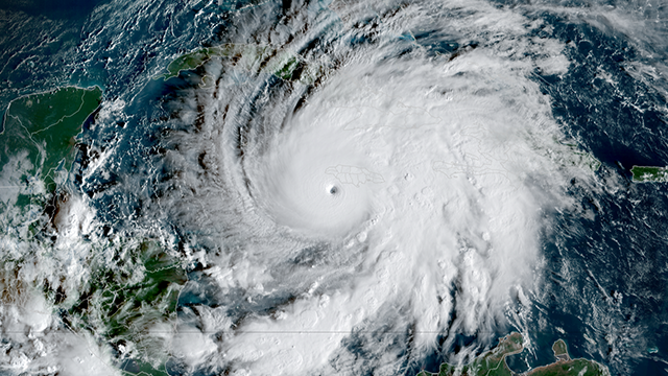
This satellite image shows Hurricane Melissa just south of Jamaica on the morning of Tuesday, Oct. 28, 2025.
(NOAA)
The last hurricane season without a U.S. landfalling hurricane was a decade ago in 2015.
Check back for updates on this developing story.