

What happens when a hurricane collides with Hawaii’s massive volcanoes?
If an eruption were to occur during Hurricane Lala, it could lead to catastrophic events such as deadly flooding from rain and strong winds.

Hawaii couple details how they survived Hurricane Lala's wrath
Hurricane Lala left a heartbreaking toll on several communities in Hawaii. Carol Parrish and Beth Fuller, a couple who had their home destroyed during the storm spoke to FOX Weather about the harrowing experience and how they are moving forward.
HAWAII – As any hurricane barrels toward Hawaii, it poses a threat to Mount Kilauea and the rest of the islands.
With a second tropical storm expected to impact Hawaii in the span of a week, there is a lingering threat to Mount Kilauea, which has erupted 53rd times in less than two years.
The 54th eruptive episode is imminent, and is expected to happen any time between now and Aug. 27, according to the USGS.
During the latest eruption, lava fountains peaked at 500 feet, and the ash plume reached over 18,000 feet above sea level.
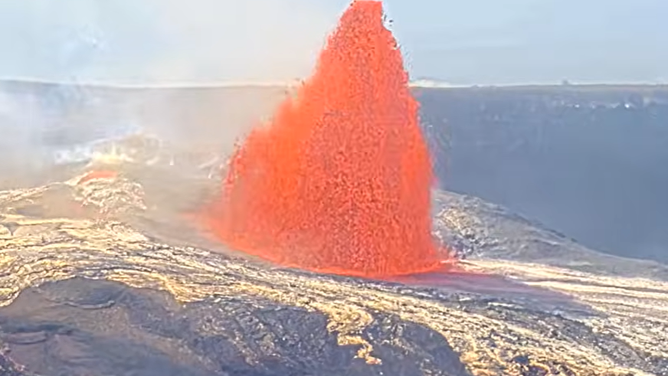
Kilauea's 53rd eruptive episode on Aug. 12, 2026.
(USGS / FOX Weather)
If an eruption were to occur during a hurricane, it could lead to catastrophic events such as deadly flooding from rain and strong winds.
When volcanic ash mixes with enough water, it can erode, be transported and eventually move downslope.
UNDERSTANDING THE PACIFIC RING OF FIRE: WHERE EARTHQUAKES AND VOLCANOES MEET
According to the United States Geological Survey, when this occurs, it can look like a mass of wet concrete flowing down violently.
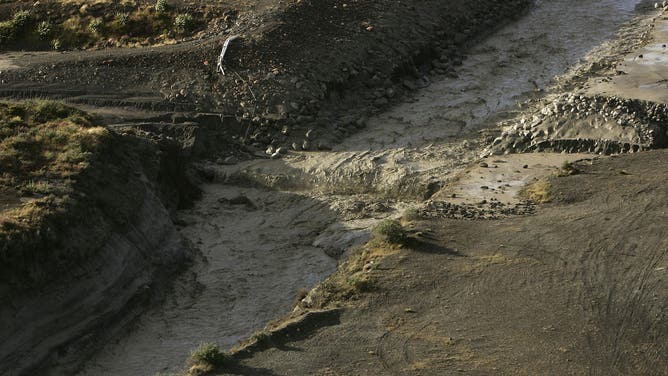
WANGANUI, NEW ZEALAND - MARCH 18: A road has been washed away as the Lahar makes its way along the path of the Whangaehu River after breaking the crater wall on Mount Ruapehu on March 18, 2007 in the National Park, New Zealand. The lake levels rose, causing the crater rim to collapse to send the mudflow (Lahar) down the mountain.
(Phil Walter / Getty Images)
These are known as secondary lahars, which can vary in size and speed.
Lahars can form when high-volume or long-duration rainfall occurs during or after an eruption; in areas with steep slopes, rainfall can easily erode and transport fine-grained, loose volcanic sediment, forming a slurry.
RAIN, WIND AND… SNOW? TROPICAL STORM LALA BRINGS A WINTRY SURPRISE TO HAWAII
"Some of the largest lahars begin as landslides of wet, hydrothermally altered rock on the steep flanks of volcanoes," the USGS said.
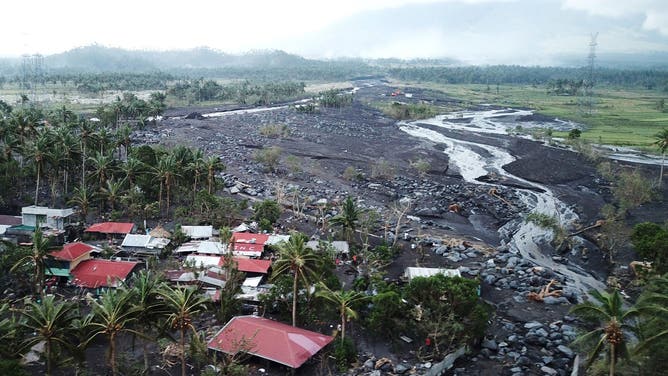
This aerial photo taken on November 2, 2020, shows houses buried by boulders and lahar washed from the slopes of nearby Mayon Volcano in Guinobatan town, Albay province, south of Manila, after super Typhoon Goni made landfall in the Philippines on November 1.
(CHARISM SAYAT/AFP / Getty Images)
Lahars rapidly flow downslope, picking up anything in their path, such as rocks, soil, vegetation, buildings and even bridges.
In steep areas, lahar flows can move as fast as 200 mph and grow up to 10 times their original size.
THE BIGGEST HURRICANES AND TROPICAL STORMS TO THREATEN HAWAII IN THE LAST 10 YEARS
Lahars can occur without volcanic eruptions, which is why forecasters monitor Mauna Loa and Mauna Kea closely.
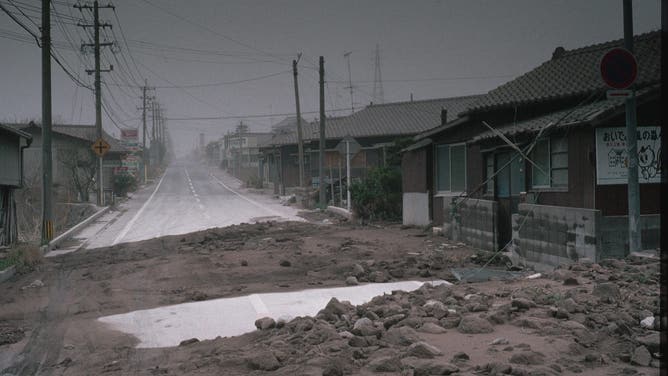
A lahar from Unzen Volcano tore through this street in Shimabara, destroying cars and homes in the process.
(© Roger Ressmeyer/CORBIS/VCG / Getty Images)
WHY ARE HURRICANES SO RARE IN HAWAII?
What to do if you're near a lahar event
Experts suggest these actions if near lahars in a downstream area:
- Stay out of valleys and low-lying areas that lead from the mountain.
- Consult the simplified hazards maps to determine whether you are in a lahar hazard zone.
- Prepare as you would for floods. You might need to evacuate people, pets and valuables quickly.
- Become familiar with evacuation routes in your community.
- Listen carefully to official reports via emergency broadcasts, NOAA weather radio or local notification systems such as 'reverse 911' or sirens.
- If officials detect a lahar, seek high ground off the valley floor as quickly as possible, such as moving up a hillside. Then, shelter in place.
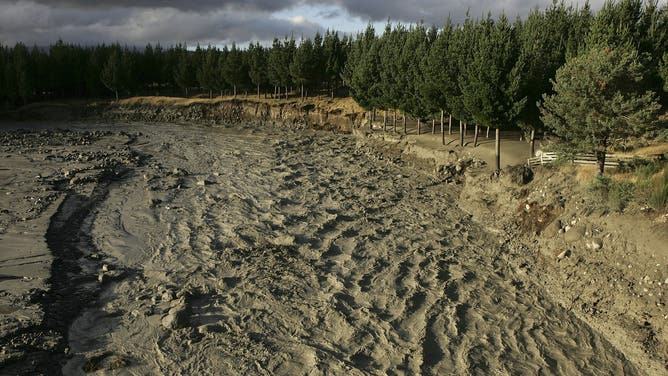
WANGANUI, NEW ZEALAND - MARCH 18: The Lahar makes its way along the path of the Whangaehu River after breaking the crater wall on Mount Ruapehu on March 18, 2007 in the National Park, New Zealand. The lake levels rose, causing the crater rim to collapse to send the mudflow (Lahar) down the mountain.
( Phil Walter / Getty Images)
"Volcanoes are a perfect setting for these events because of an abundance of steep, rocky rubble and a ready source of water in the form of rain, snow or ice," the USGS said.