

Popular Michigan bridge destroyed as river hits historic flood level
A popular bridge in Grand Traverse County that sees thousands of vehicles a day has been swallowed by historic flooding on Tuesday.

Flood damage reported across northern Michigan as rain contributes to rapid snowmelt
Cities across northern Michigan are reporting severe flooding as rain fuels snow melt across the Great Lakes. FOX Weather Correspondent Katie Byrne reports from Traverse City, where flooding washed out a local bridge that sees thousands of vehicles per day. Officials say it could take months to repair.
TRAVERSE CITY, Mich. – What was once a heavily traveled bridge in Michigan is now gone, after the Boardman River crested at historic levels, tearing the concrete structure apart.
The popular bridge in Traverse City was overtaken by dangerous flooding as the Boardman River surged over the bridge barrier, submerged the roadway and eventually destroyed it completely.
Local officials said the popular bridge in Grand Traverse County that sees thousands of vehicles a day failed Tuesday night.
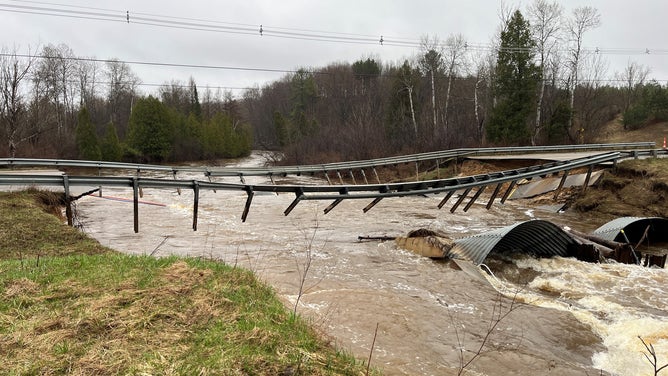
According to local officials, the popular bridge on Beitner Road sees thousands of travelers a day.
(Grand Traverse County Road Commission)
The dangerous combination of days of persistent, heavy rain and rapid spring snow melt across the Great Lakes region has triggered dangerous river flooding across Michigan and Wisconsin, resulting in significant infrastructure damage.
IMMINENT THREAT: RISING WATER LEVELS COULD CAUSE COLLAPSE OF CHEBOYGAN DAM IN MICHIGAN
Grand Traverse County officials declared a local state of emergency amid widespread flooding that has closed numerous roads and overwhelmed infrastructure, evident in the bridge failure on Beitner Road.
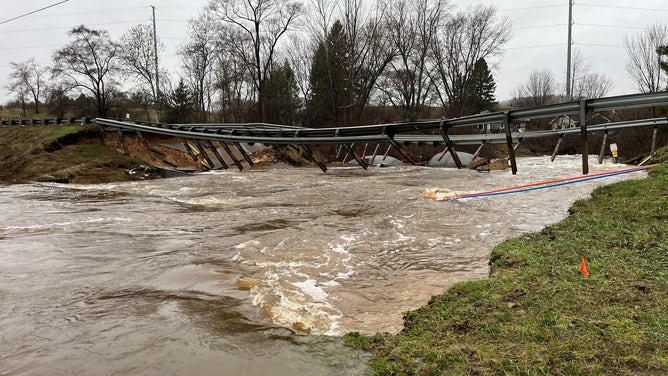
The Boardman River at Beitner Road in Traverse City crested at historic levels on April 14, according to the National Weather Service.
(Grand Traverse County Road Commission)
"We will have a long road of repairs ahead of us," Traverse County Road Commission said on social media, adding areas in the county located near creeks and rivers "will more than likely have water on the roadway."
According to the National Weather Service, the previous crest record at the Boardman River at Beitner Road near Traverse City was set in September 2023 at 7.03 feet. On April 14 at 2:15 p.m., the river crested at 7.91 feet.
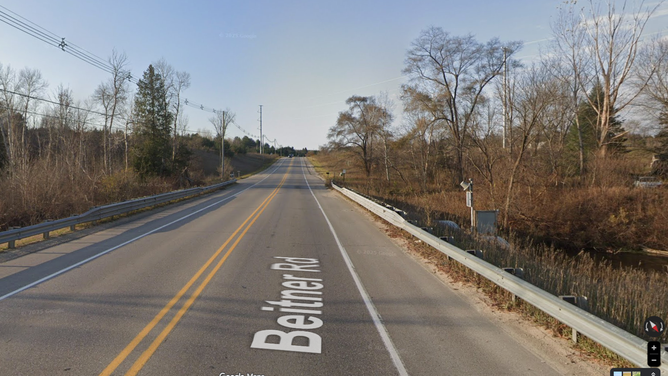
![]() Image 1 of 2
Image 1 of 2BEFORE the Boardman River swallowed a bridge on Beitner Road near Traverse City on April 14. (Google Maps)
![]() Image 2 of 2
Image 2 of 2AFTER the Boardman River swallowed a bridge on Beitner Road near Traverse City on April 14. (Grand Traverse County Road Commission)
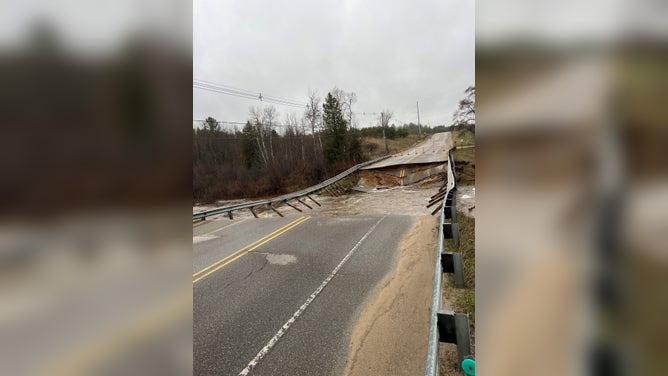
Officials said the bridge at Beitner Park failed on the night of April 14, and, as seen in striking photographs of the destruction, the road is no longer passable.
The Grand Traverse County Road Commission has put barricades at Chums Corners and at Keystone and River Road, directing traffic away from the destroyed bridge.
DEADLY WATERS: SPRING RIP CURRENTS CLAIM 2 LIVES AT POPULAR FLORIDA BEACH DESTINATION
Traverse City is among several locations in northern Michigan experiencing their wettest spring on record since March 1, with rainfall totals nearly 10 inches above average.
ROAD TO RECOVERY HALTED AS THREAT CONTINUES THROUGH THE WEEKEND
Evidently, widespread damage is already underway, and recovery efforts will likely be delayed as the dangerous threat persists through the weekend.
Widespread Flood Warnings are in place across northern Michigan, including Antrim, Benzie, Crawford, Grand Traverse, Kalkaska, Leelanau, Manistee, Missaukee, Roscommon and Wexford counties through Sunday, April 19.
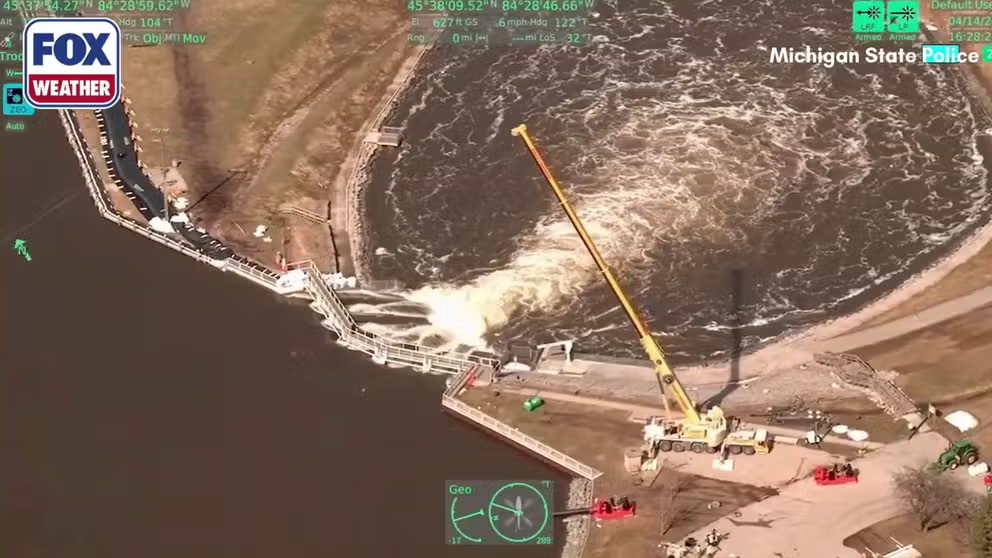
See it: Aerial footage highlights severe flooding in Cheboygan, Michigan amid critical dam levels
Aerial footage highlights the severe flooding in Cheboygan, Michigan, on Tuesday as continued rapid rain and snowmelt sent water levels surging in the Cheboygan Dam, forcing evacuations.
According to the FOX Forecast Center, the primary driver behind this week’s flash flood potential is a stagnant area of high pressure anchored off the Southeast coast of the U.S., acting as a "moisture pump" that is funneling moisture-rich air from the Gulf northward into southern Canada.
This persistent stream of moisture will set the stage for repeated rounds of heavy rain through the weekend, with multiple storm systems serving as triggers for intense thunderstorms across the Great Lakes region.