

Archaeologists uncover nearly 200-year-old cannonballs from the Battle of the Alamo
Archaeologists with the Alamo Trust unearthed the battle-era relics during an 18-month excavation along the perimeter of the iconic Alamo Church.

Recreating History
Battle reenactments bring military and weather history to life.
THE TAKEAWAY
- Four cannonballs were discovered beneath the grounds outside the Alamo Church during an 18-month excavation.
- The bronze and iron artifacts may reveal which side fired the weapons during the 13-day siege.
- Archaeologists estimate that between a total of 500,000 and 750,000 artifacts were unearthed during the project
SAN ANTONIO, Texas – Everyone remembers the Alamo, but hidden relics from the legendary battle remained buried beneath the historic battleground for nearly 200 years, until archaeologists dug them up.
Archaeologists with The Alamo Trust unearthed four battle-era cannonballs during an 18-month excavation along the perimeter of the iconic Alamo Church.
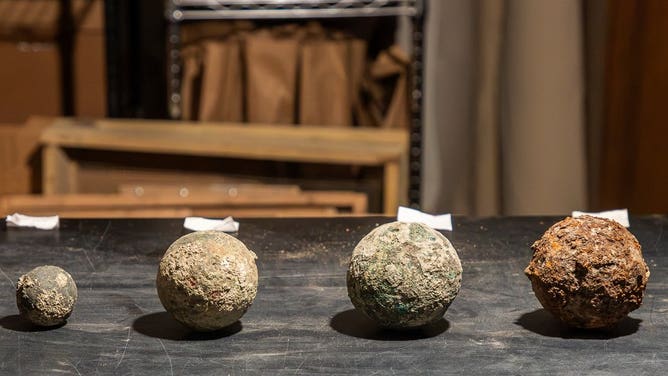
The three cannonballs on the left are made of bronze, and the one on the right is made from iron.
(The Alamo Trust )
The church is one of two surviving structures from the world-famous 1836 Battle of the Alamo and the site of a large-scale excavation aimed at uncovering more of its history.
Alamo experts link all four projectiles to the pivotal 13-day Siege and Battle of the Alamo in 1836, according to The Alamo Trust.
"Having a piece of history and holding it in your hand, when the last person who touched this possibly died during the Battle, that carries a lot of emotional weight to it," The Alamo's Director of Archaeology, Dr. Tiffany Lindley, said in a press release.
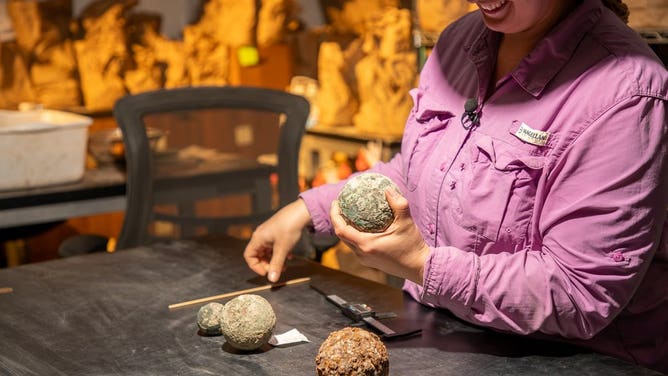
The Alamo's archaeology team is celebrating the rare discoveries of four solid-shot cannonballs unearthed during a year-and-a-half-long excavation project along the perimeter of the iconic Alamo Church, one of the two surviving structures from the world-famous Battle of the Alamo.
(The Alamo Trust )
Do you remember the Alamo?
The pivotal battle is remembered through the famous rallying cry, but the 13-day siege was part of a much larger struggle over the future of Texas.
In 1835, the Texas Revolution began, with Mexican President and Gen. Antonio López de Santa Anna sending troops to crush the uprising and retake San Antonio, where Texian forces occupied the Alamo.
CELEBRATING WEATHER HISTORY: HOW FOG HELPED GEORGE WASHINGTON SAVE AMERICAN INDEPENDENCE
Mexican forces surrounded the mission on Feb. 23, 1836, and for 13 days, roughly 200 Texian defenders held out before Santa Anna’s army stormed the Alamo on March 6, culminating in the Battle of the Alamo.
Nearly all the defenders were killed, but their resistance became a rallying cry for Texas independence: "Remember the Alamo!"
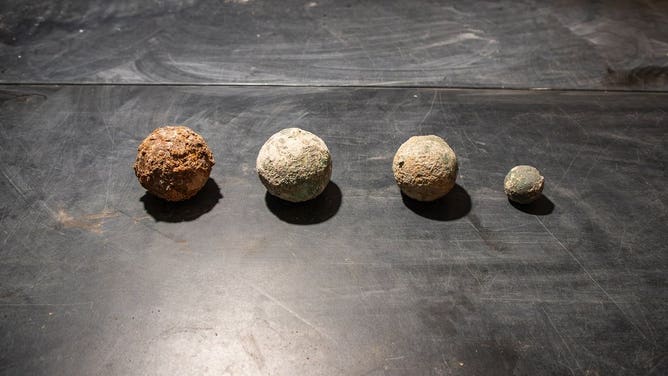
The four solid-shot cannonballs, arranged from largest to smallest.
(The Alamo Trust )
ARCHAEOLOGISTS IN TURKEY MAY HAVE FOUND THE WORLD’S OLDEST SHIPWRECK
A cannonball time machine
According to the Alamo Trust, all four cannonballs were discovered outside the northeast corner of the Alamo Church, approximately 2½ to 3 feet below the surface.
Based on the surrounding soil layers, the types of cannonballs and the sizes of cannons known to have been present during the Battle of the Alamo, Alamo historians believe the artifacts date to the 13-day siege and battle.
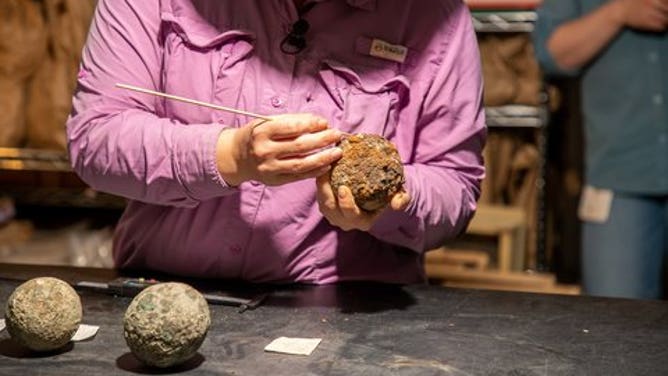
Dr. Lindley uses a bamboo stick to gently clean an iron cannonball.
(The Alamo Trust )
Using historical context, the cannonballs offer clues about who fired them, and who might have been ducking for cover.
According to Alamo Trust historians, bronze cannonballs were typically used by the Mexican army, while the iron cannonball is associated with the Texan side.
HURRICANE SWELLS REVEAL FORGOTTEN HISTORY BENEATH ICONIC CALIFORNIA BEACH
The first cannonball was found on March 5, 2026 — one day before the 190th anniversary of the battle. Made of bronze, it measures 2.97 inches in diameter and corresponds to a 4-pounder cannon.
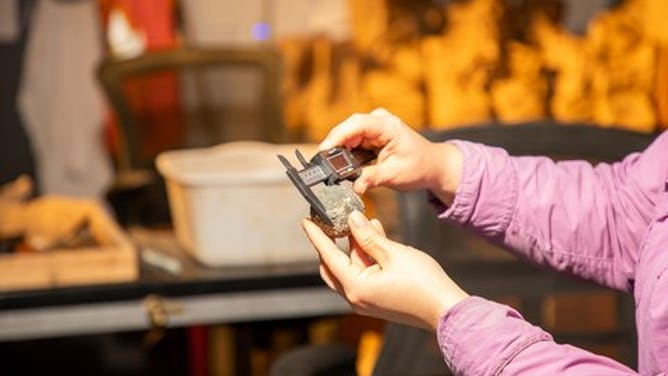
Dr. Lindley uses a pair of digital calipers to measure the smallest cannonball.
(The Alamo Trust )
A second cannonball, discovered in June, is made of iron, measures 3.28 inches in diameter and corresponds to a 6-pounder cannon.
The third cannonball is bronze, measures 1.8 inches in diameter and corresponds to a 1-pounder cannon. The fourth is also bronze, measures 3.26 inches in diameter and corresponds to a 6-pounder cannon.
Bringing back history
The Alamo team has been digging deep to bring the legendary battle’s history back to life at the iconic Texas landmark.
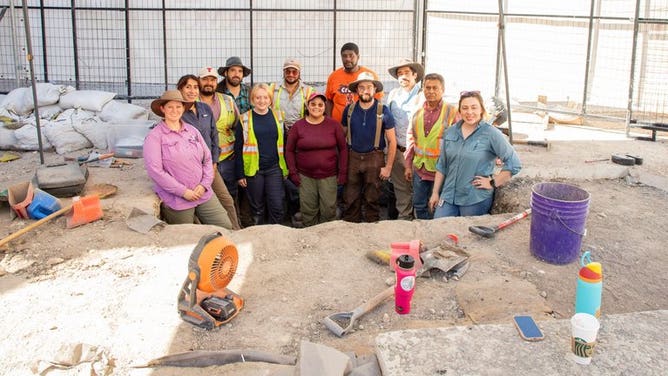
Members of the Alamo's archaeology team on the final day of digging this month.
(The Alamo Trust )
The excavation around the Alamo Church began in March 2025 and concluded in October.
Dr. Lindley said the archaeology team is still processing the discoveries but estimates that between 500,000 and 750,000 artifacts were unearthed during the project.
HOW BATTLE REENACTMENTS BRING MILITARY AND WEATHER HISTORY TO LIFE
In addition to the cannonballs, archaeologists found everyday items, including a tea kettle, forks, spoons and bottles, offering a broader glimpse into the lives of the people connected to one of the defining moments in Texas history.
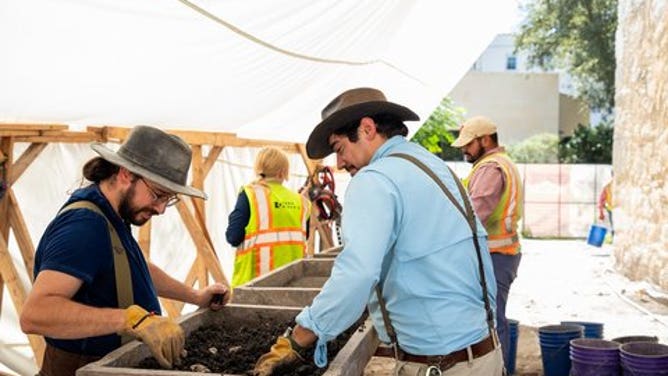
The Alamo's archaeology team sifts through soil.
(The Alamo Trust )
"The Battle was not just an event," Dr. Lindley said. "These were people. They were individuals. They had lives before they came to the Battle. They had families that lived after them. And remembering those individuals, that’s what important."