

How the weather predicts when you see fireflies
Hot and humid conditions allow lightning bugs to thrive.
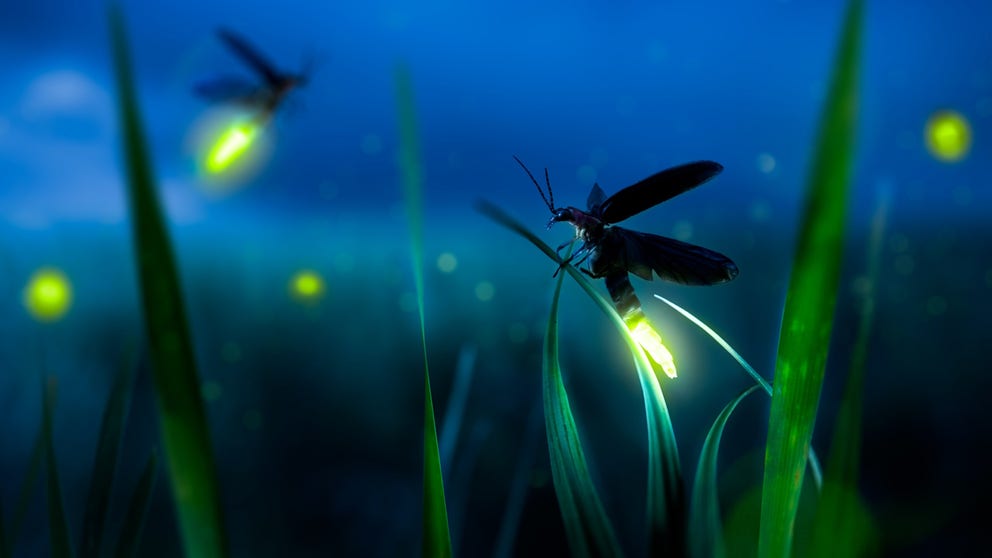
FILE: Why thousands of fireflies put on a magical light show each year
For the synchronous firefly, what appears as a dazzling spring and summertime spectacle is largely a courtship ritual.
While the intense summer heat over the Northeast and Ohio Valley has many people feeling uncomfortable and unable to seek relief, it could bring something good: fireflies.
Fireflies, also known as lightning bugs, are known for their bright displays at night. The glow they give off comes from a chemical reaction that occurs in their organs called bioluminescence.
NOT ALL BAD: CYBORG COCKROACHES COULD ONE DAY HELP SAVE LIVES
In the United States alone, there are over 150 species with more in areas like Central and South America, and, in contrast to the name, fireflies are actually beetles.
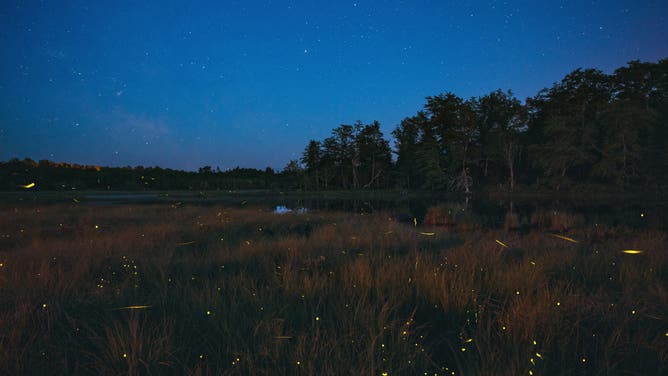
Fireflies dance above a marsh during the 'Blue Hour' under clear Summer skies. Long exposure.
(Getty Images)
Fireflies don’t just glow to light up the night sky, but as a part of a mating display. Fireflies with the longest and brightest flashes are the ones that attract the most mates.
But how does weather contribute to when these radiant bugs make an appearance? Humid and hot conditions allow lightning bugs to thrive.
DEW POINT VS. HUMIDITY: WHICH ONE IS A BETTER MEASURE OF HOW MUGGY THE AIR FEELS?
When temperatures are warm and the air is saturated, firefly larvae can stay moist, which is necessary for their survival. Warm temperatures and rain also bring out fireflies’ primary source of food, slugs and snails.
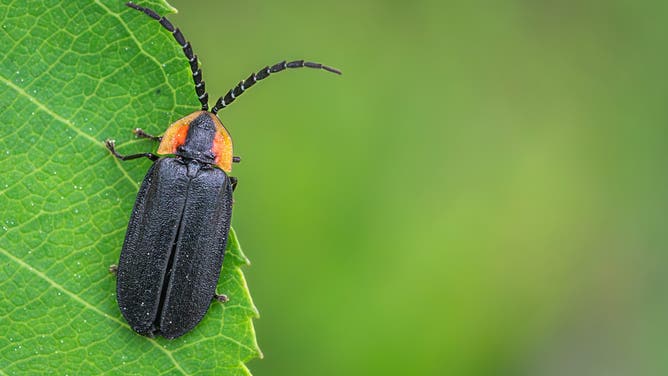
Black Firefly pauses on a leaf in the Canadian boreal forest.
(Getty Images)
In terms of flashing, hot weather increases firefly activity because they are cold-blooded insects that rely on warmth to function.
The best chance to see fireflies is on a warm humid night around and after sunset in areas with greenery.
YOUR GUIDE TO IDENTIFYING SOME OF THE MOST COMMON TICKS FOUND IN THE US
According to the Farmers’ Almanac, the best time during the summer months to see fireflies is dependent on region.
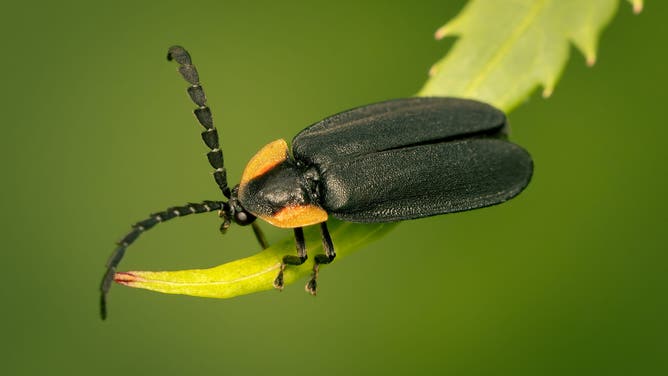
Lucidota atra firefly isoled on green blurred background and copy space.
WHAT IS YOUR STATE ANIMAL? SEE THE OFFICIAL LIST FEATURING ALL 50 STATES
Here's what you can expect in your area:
- Deep South and Gulf Coast: Late April to mid-May
- Mid-Atlantic and Southeast: Mid-May to early June
- Midwest and Great Lakes: Late May to mid-June
- New England: Mid-June to early July
- Plains and Pacific coast: Lightning bug flashes limited