

Crews work to clean up debris following 200 million gallon sewage overflow into Potomac River
Drinking water was not affected, and nearly six weeks after the collapse, DC Health lifted the recreational advisory for the Potomac River effective immediately.
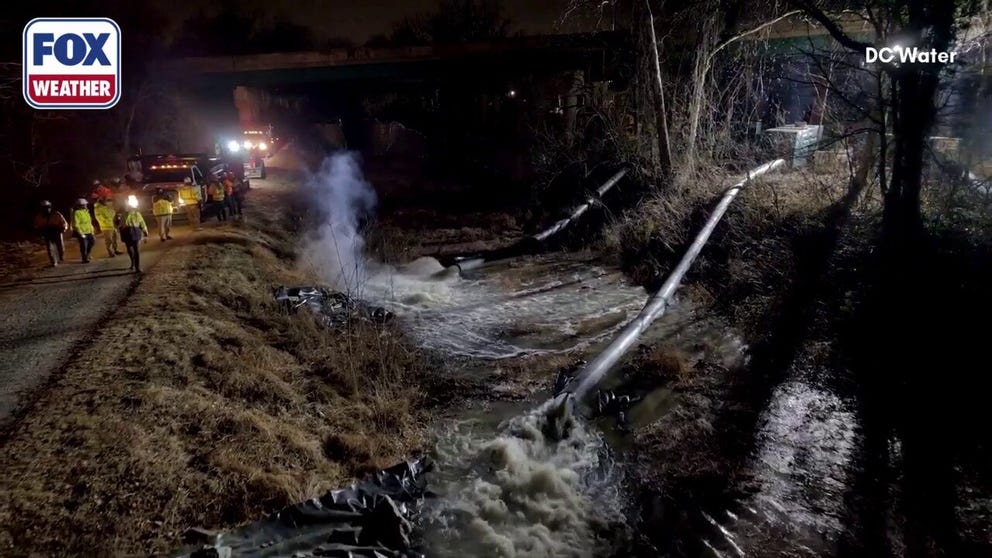
Watch: Crews divert sewer water, clean up after wastewater break into Potomac River
A section of Potomac Interceptor sewer line pipe collapsed on Jan. 19, 2026, in Montgomery County, Maryland, causing more than 200 million gallons of wastewater to flow into the Potomac River. Crews have been working to clear debris and clean up so repairs can begin.
WASHINGTON, D.C. - Crews are working tirelessly to clean up debris and clear out pipes from a broken section of sewage line that dumped more than 200 million gallons of wastewater into the Potomac River in Washington, D.C., in mid-January.
A piece of the Potomac Intercepter sewer line collapsed in Montgomery County on Jan. 19, resulting in a significant overflow of sewage water into the Chesapeake and Ohio Canal National Historic Park, leading to wastewater in the Potomac River, according to DC Water.
DC Water crews got to work immediately after the collapse to construct a bypass to divert and contain the overflow of wastewater from the river.
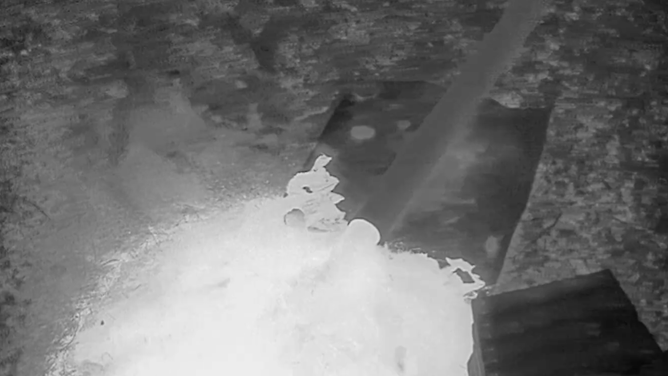
The bypass actively diverting wastewater away from the Potomac River.
(DC Water / FOX Weather)
On Jan. 24, the bypass was completed and activated.
DC Water said the bypass utilizes powerful pumps and the C&O Canal to reroute wastewater around the collapsed section of pipe and back into the sewer system.
Since then, crews have been working to haul away contaminated material and work is underway to clear trees, brush and contaminated debris in and around the collapse site as part of the National Park Service-approved environmental restoration plan.
WORLD’S LARGEST ACIDIC GEYSER ERUPTS FOR FIRST TIME SINCE 2020 IN YELLOWSTONE NATIONAL PARK
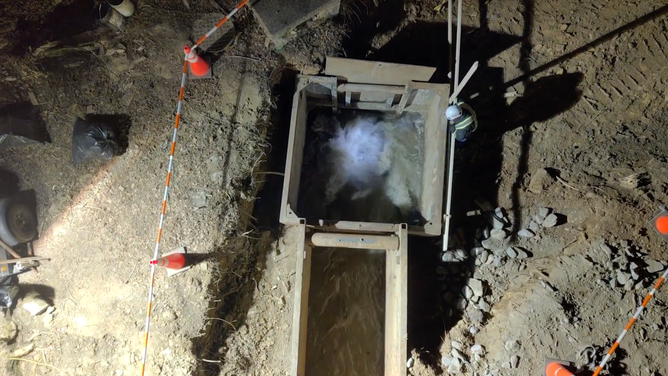
Crews are working around the clock to make sure the bypass continues working and to continue cleaning up the collapse site.
(DC Water / FOX Weather)
DC Water hasn't reported any wastewater spills in the Potomac since Feb. 9, according to DC's Department of Energy and Environment.
Drinking water was not affected by the collapse, multiple government agencies confirmed.
Bacteria concerns
One of the main concerns with the collapse was the presence of E. Coli in the river.
A recreational advisory was put into place for the Potomac River after the collapse for the risk of E. Coli in the water.
DC Water said it has been maintaining daily tests of E. Coli in the water since Jan. 29, with reports of decreasing E. Coli levels since the start of sampling.
"It’s important to note that historically, the E. coli levels in the Potomac and Anacostia rivers vary widely from day to day," DC Water said.
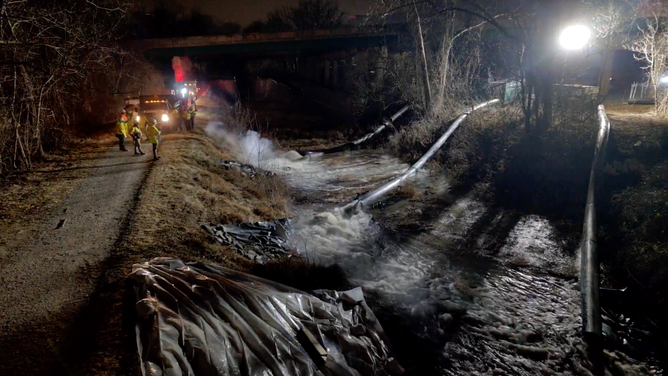
Three pipes pump wastewater into a bypass instead of the Potomac River.
(DC Water / FOX Weather)
DC Water noted that fluctuations in the river's water quality can be influenced by a number of factors, including weather conditions and wildlife.
On Monday, six weeks after the collapse, the District Department of Health (DC Health) lifted the recreational advisory for the Potomac River in Washington, D.C., effective immediately.
"Protecting the health and safety of District residents is our top priority," Dr. Ayanna Bennett, director of DC Health, said. "After careful review of the last three weeks of water quality data, we are confident that conditions in the District’s portion of the Potomac River no longer pose an elevated public health risk. This advisory applies only to waters within the District of Columbia, and we encourage residents to follow guidance from neighboring jurisdictions for areas outside the District’s boundaries."
Swimming is illegal in the river to begin with, but recreational activities can resume.
The public is asked to avoid the wastewater overflow area.