

What is a glacial collapse? How collapsing ice can trigger deadly floods, landslides and tsunamis
A glacial collapse occurs when a large section of a glacier suddenly breaks apart, falls or slides downslope.
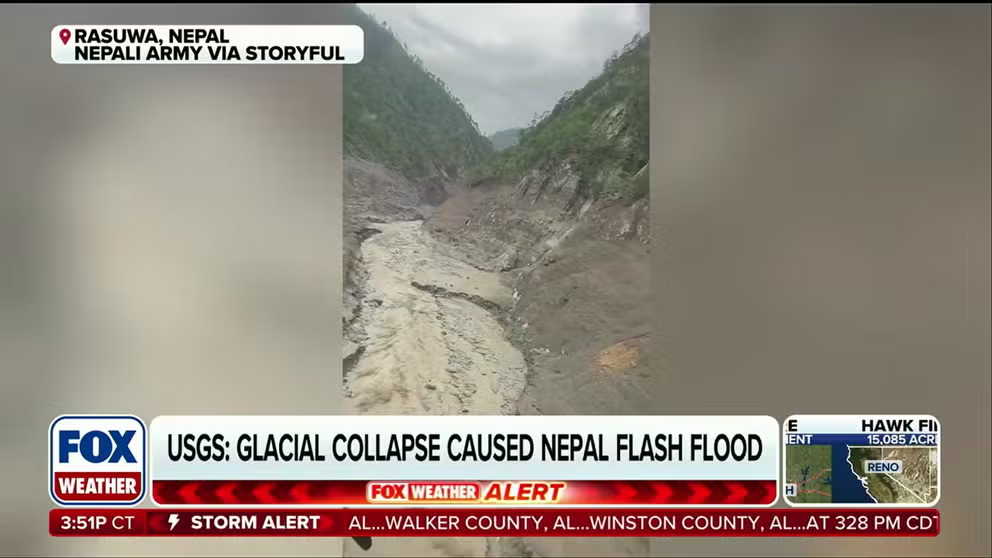
Glacial collapse causes devastating flash flooding in Nepal, killing at least 157 and leaving hundreds missing
Hundreds of people are missing, including nearly 50 American tourists, after a destructive glacial collapse triggered catastrophic flash flooding across Nepal. Geoscientist and Senior Lecturer at the University of Dundee, Dr. Simon Cook, joins FOX Weather to discuss the horrific disaster and what may have triggered the collapse.
THE TAKEAWAY
- More than 157 people were killed and at least 400 are missing after a glacial collapse in Nepal.
- A similar event occurred last year when an avalanche of rocks and ice from the Birch Glacier in southwestern Switzerland.
- It also happened in Alaska when a landslide sent debris into the water below, unleashing a massive wave.
More than 157 people were killed and at least 400 are missing, including nearly 50 American tourists, after a glacial collapse triggered deadly flash flooding and landslides in Nepal’s Himalayan region.
ALASKA LANDSLIDE UNLEASHED ONE OF THE LARGEST TSUNAMIS EVER RECORDED, NEW STUDY SHOWS
At approximately 8:30 a.m. local time Tuesday (around 10:45 p.m. ET Monday), catastrophic flooding swept through the Bhote Koshi River, destroying buildings and damaging roads, bridges, electricity infrastructure and communications.
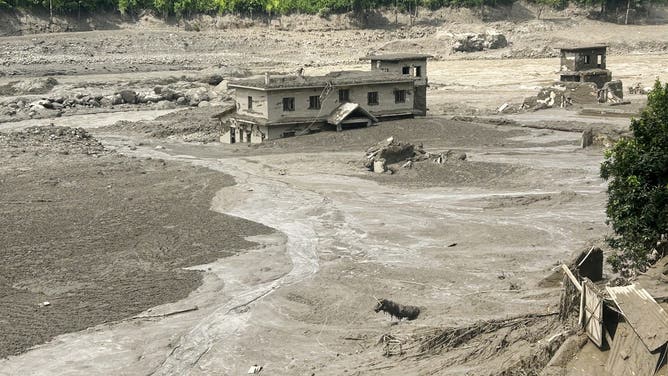
TOPSHOT - A house lies partially submerged in muddy water after flash floods at Trishuli Bazar in Nepal's Nuwakot district on August 26, 2026. A massive flood swept through Nepal's northern Rasuwa district on August 26, damaging roads and power infrastructure as authorities scrambled to assess the scale of the destruction.
(Photo by Prakash MATHEMA / AFP via Getty Images / Getty Images)
According to the U.S. Geological Survey (USGS), the event was initially reported as an earthquake. However, after additional analysis, the USGS determined that the seismic energy was generated by a landslide.
"Additional analysis of long period seismic waves indicate that the seismic energy was instead generated by a landslide," the USGS said. "The shaking caused by the landslide was equal to a magnitude 5.2 earthquake."
A glacial collapse occurs when a large section of a glacier suddenly breaks apart, falls or slides downslope. Several factors can contribute to a collapse, including melting ice, cracks within the glacier and unstable terrain, according to the National Oceanic and Atmospheric Administration (NOAA).
Events involving collapsing ice, rock and debris can have devastating consequences in mountain regions.
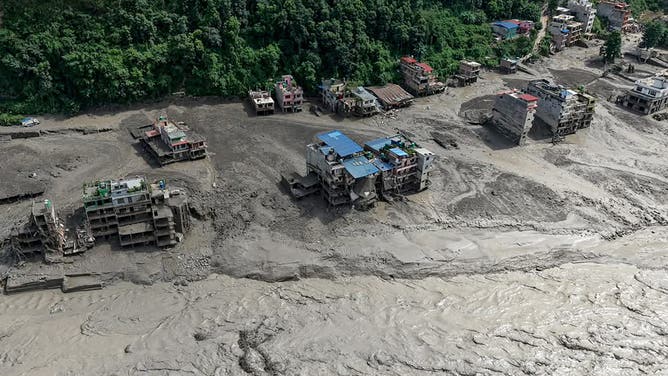
Houses lie partially submerged in muddy water along a riverside after flash floods at Trishuli Bazar in Nepal's Nuwakot district on August 26, 2026. A massive flood swept through Nepal's northern Rasuwa district on August 26, damaging roads and power infrastructure as authorities scrambled to assess the scale of the destruction.
(Photo by Prabin RANABHAT / AFP via Getty Images / Getty Images)
A similar event occurred last year when an avalanche of rocks and ice from the Birch Glacier in southwestern Switzerland barreled into a valley below, nearly burying the village of Blatten and damming the Lonza River.
MEET THREEHALVES: THE VIRAL ROBOT DESIGNED FOR EARTH'S MOST DANGEROUS ENVIRONMENTS
According to NASA, the event occurred after rocks from a crumbling mountain peak accumulated on the glacier. The debris then descended the southern side of the valley from a peak called Kleiner Nesthorn toward Blatten.
Everyone in the village was evacuated, but one man died after remaining outside the evacuation zone.
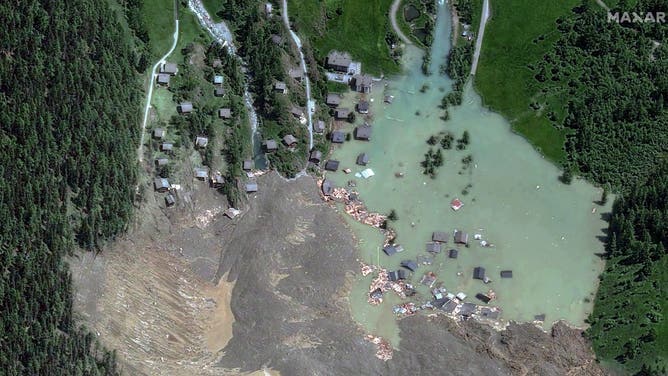
Satellite imagery from over Blatten, Switzerland, showing the aftermath of a large glacier collapse that buried the village under mud and debris on Wednesday.
(Satellite image ©2025 Maxar Technologies / FOX Weather)
"In particular cases where we know there is a danger, you can set up early warning systems," University of Dundee geoscientist Dr. Simon Cook told FOX Weather. "So that involves, for example, the use of time-lapse cameras. You might see seismometers. You need to have a system by which people can get warnings about those things through a cellphone. And, of course, we know in remote mountain regions there isn’t always cellphone coverage."
In another example, a landslide from a mountainside above a softening glacier in Alaska’s Tracy Arm fjord sent debris into the water below, unleashing a massive wave that reached more than 1,500 feet high.
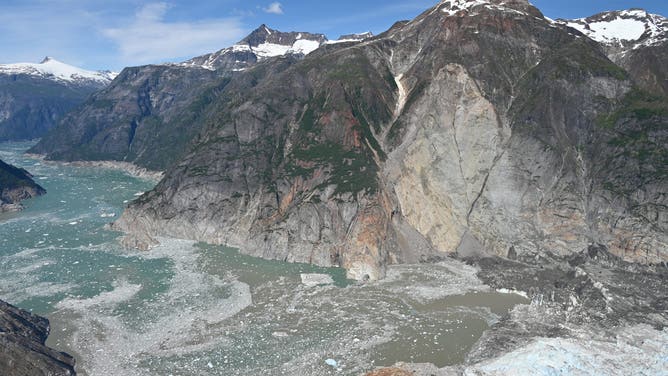
Oblique aerial photo of the August 10, 2025 landslide, terminus of South Sawyer Glacier, and Tracy Arm taken from across the fjord during a U.S. Geological Survey field reconnaissance overflight on August 13, 2025.
( Photo by Cyrus Read/U.S. Geological Survey.)
The 481-meter (1,578-foot) megatsunami tore through the scenic Alaskan waterway about 45 miles south of Juneau.
The debris fall triggered what researchers described as the second-largest tsunami wave ever recorded.
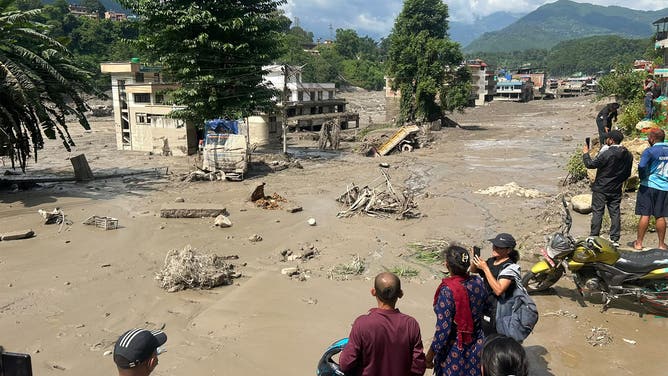
TOPSHOT - Residents look at houses partially submerged in muddy water after flash floods at Trishuli Bazar in Nepal's Nuwakot district on August 26, 2026. A massive flood swept through Nepal's northern Rasuwa district on August 26, damaging roads and power infrastructure as authorities scrambled to assess the scale of the destruction.
(Photo by Prakash MATHEMA / AFP via Getty Images / Getty Images)
As climate change continues to reshape environments, scientists are monitoring glaciers, slopes and surrounding terrain for signs of instability.
While early warning systems can help communities prepare, experts say the remote locations can make detecting and responding to sudden collapses challenging.