

3 Americans rescued after catastrophic flooding in Nepal leaves hundreds dead, thousands missing
The USGS determined that the seismic event was a glacial collapse and debris flow that caused subsequent catastrophic impacts downstream.
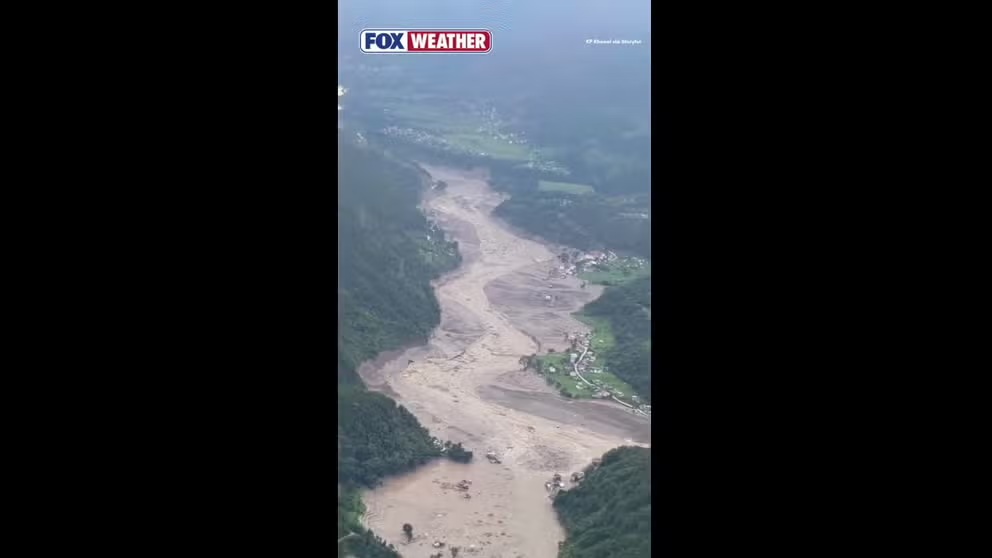
Flash flooding leaves path of destruction in Nepal
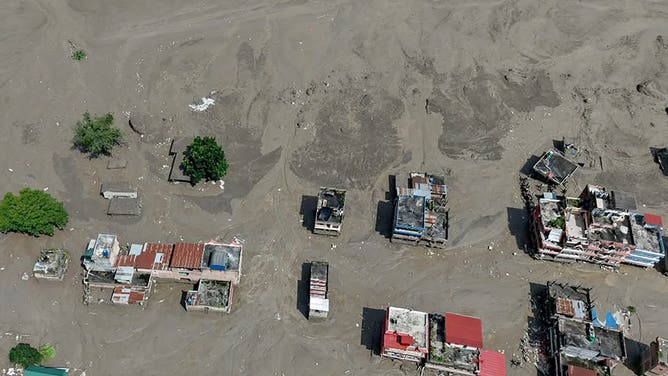
A new aerial video shows the trail of destruction as major flash flooding in Nepal on Wednesday.
THE TAKEAWAY
- At least 644 people have been reported missing, including 65 Americans.
- Nepal Police say 270 bodies have been recovered.
- USGS determined a glacial collapse triggered a massive debris flow.
RASUWA, Nepal - Hundreds of people are missing, including 65 American tourists, after a destructive glacial collapse triggered catastrophic flash flooding that devastated the Rasuwa District in the Himalayan Region of Nepal on Wednesday.
Nearly 360 people have died, according to Nepal's Ministry of Foreign Affairs.
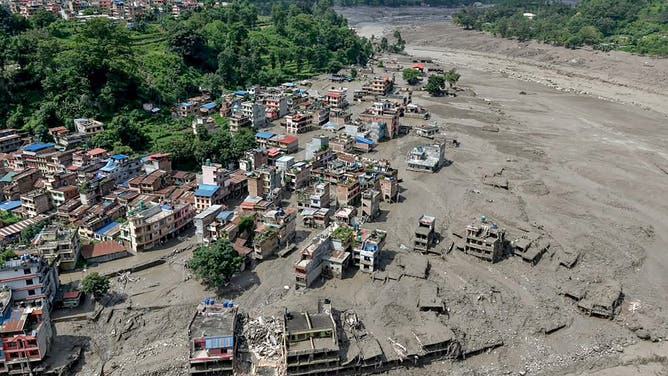
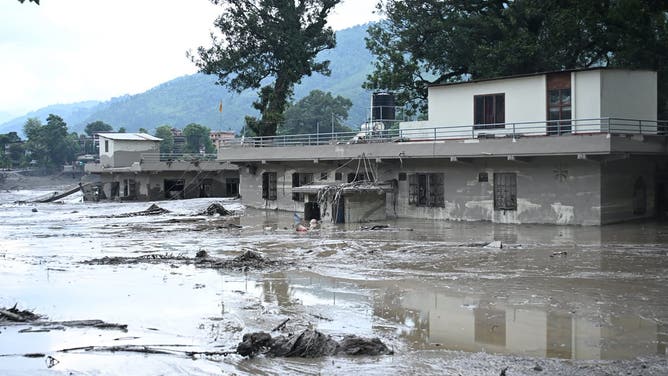
Houses lie partially submerged in muddy water along a riverside after flash floods at Trishuli Bazar in Nepal's Nuwakot district on August 26, 2026. A massive flood swept through Nepal's northern Rasuwa district on August 26, damaging roads and power infrastructure as authorities scrambled to assess the scale of the destruction.
(Photo by Prabin RANABHAT / AFP via Getty Images / Getty Images)
According to Reuters, over 1,000 people remain missing, with the Nepal Ministry of Foreign Affairs saying this includes 66 Americans, 35 Australians, 25 Canadians, and 33 British.
The U.S. State Department says three Americans have been rescued, with the Nepal Tourism Board reporting that two of those individuals are 52-year-old Anjana Raja and 55-year-old Pattabiraman Venkatesan.
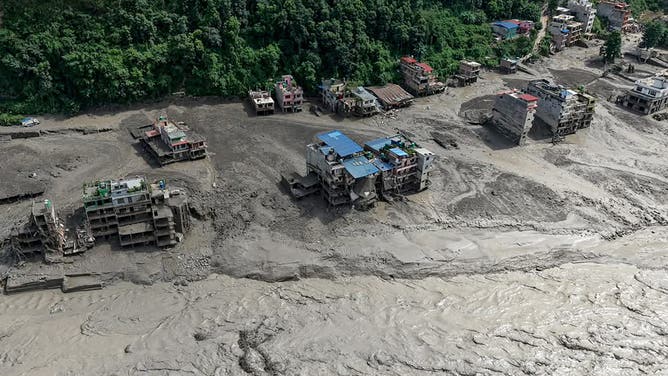
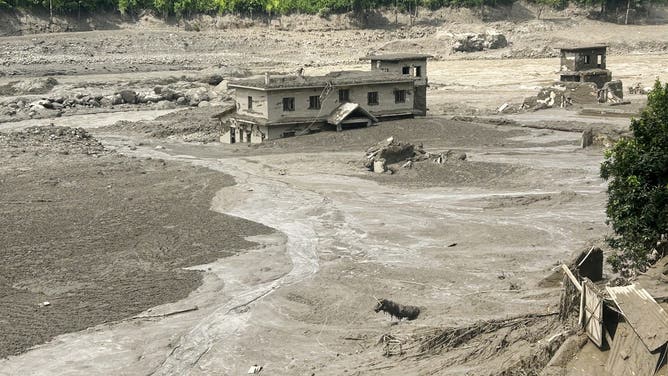
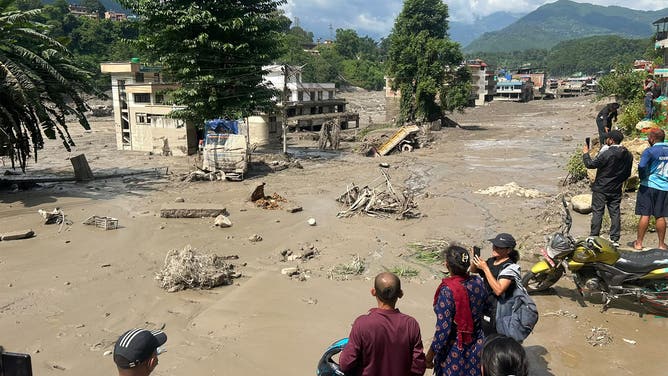
At approximately 8:30 a.m. local time (around 10:45 p.m. ET Tuesday), catastrophic flash flooding swept through the Bhote Koshi River, destroyed buildings and damaged roads, bridges, electricity infrastructure and communications.
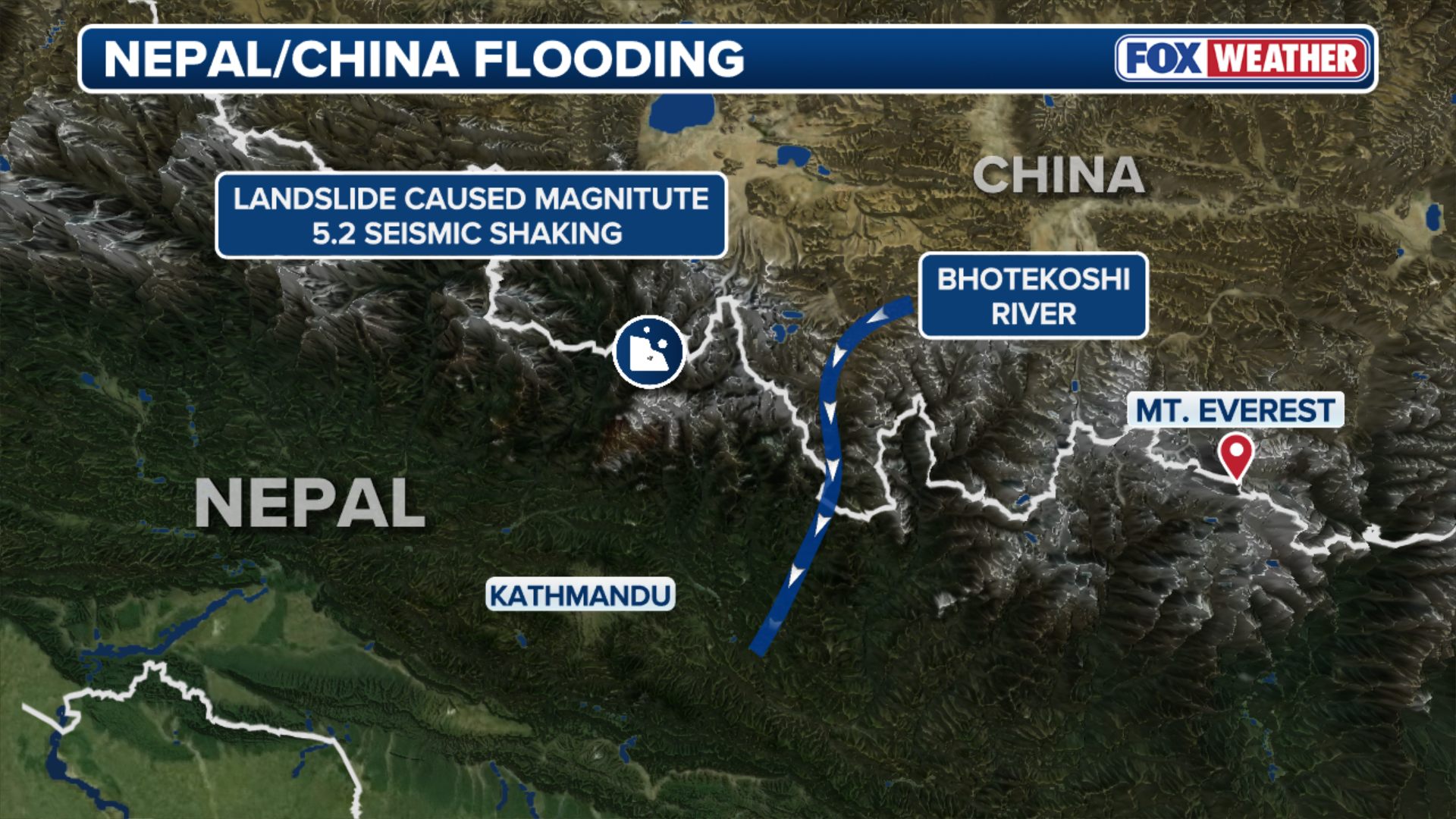 Aerial analysis of the Nepal flood.
(FOX Weather)
The flood entered Nepal from Tibet and struck Rasuwagadhi, Timure, Syafrubesi and surrounding areas of Rasuwa District, the U.S. Department of State said.
Nepal's National Disaster Risk Reduction and Management Authority (NDRRMA) said, "An initial study based on the analysis of satellite images by Planet Labs indicates that a glacier-inclusive flood occurred in the Lhende River due to a snow-rock landslide that took place on the Nepal-China border approximately 20 kilometers northeast of the Nepal-China Rasuwagadhi border crossing."
U.S. Secretary of State Marco Rubio said in a post on X, "We express our solidarity and are united in prayer for the Nepali people following the devastating floods," adding that the State Department stands ready to support Nepal’s government with needed humanitarian assistance.
In a press release, the NTB said, "Nepal Tourism Board, Tourist Police and tourism stakeholders are working to verify the whereabouts and safety status of tourists and travelers who were in or traveling through the affected areas."
![]() Image 1 of 9
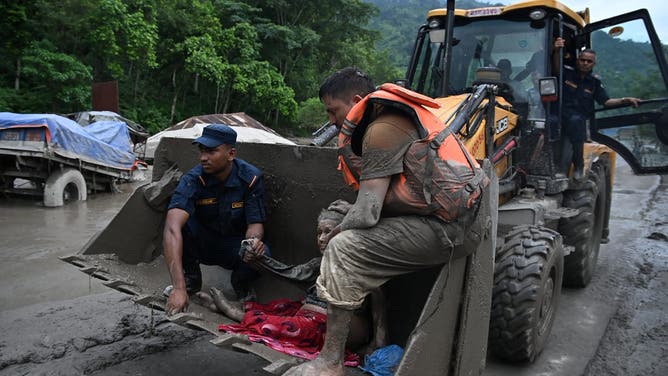
Image 1 of 9TOPSHOT - Rescue personnel carry a person affected by flash floods at Devghat in Nepal's Nuwakot district on August 26, 2026. Massive flooding killed eight people in Nepal on August 26, as Chinese state media reported "major casualties" from a mudslide at a Tibet trade hub on China's side of the nations' shared border. (Photo by Prakash MATHEMA / AFP via Getty Images)
![]() Image 2 of 9
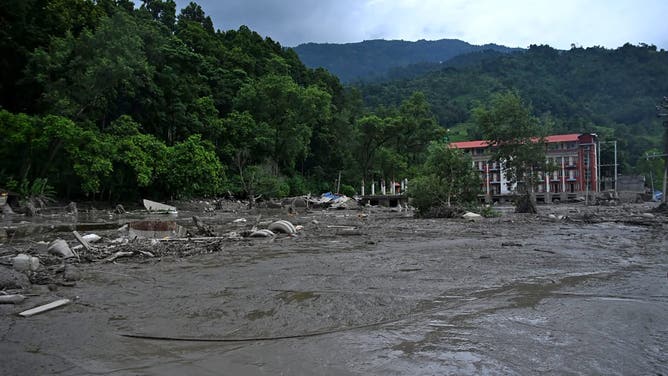
Image 2 of 9Houses lie deluged in sludge after flash floods at Devghat in Nepal's Nuwakot district on August 26, 2026. Massive flooding killed eight people in Nepal on August 26, as Chinese state media reported "major casualties" from a mudslide at a Tibet trade hub on China's side of the nations' shared border. (Photo by Prakash MATHEMA / AFP via Getty Images)
![]() Image 3 of 9
Image 3 of 9Rescue personnel use an excavator to carry a person affected by flash floods at Devghat in Nepal's Nuwakot district on August 26, 2026. Massive flooding killed eight people in Nepal on August 26, as Chinese state media reported "major casualties" from a mudslide at a Tibet trade hub on China's side of the nations' shared border. (Photo by Prakash MATHEMA / AFP via Getty Images)
![]() Image 4 of 9
Image 4 of 9A house lies deluged in sludge after flash floods at Devghat in Nepal's Nuwakot district on August 26, 2026. Massive flooding killed eight people in Nepal on August 26, as Chinese state media reported "major casualties" from a mudslide at a Tibet trade hub on China's side of the nations' shared border. (Photo by Prabin RANABHAT / AFP via Getty Images)
![]() Image 5 of 9
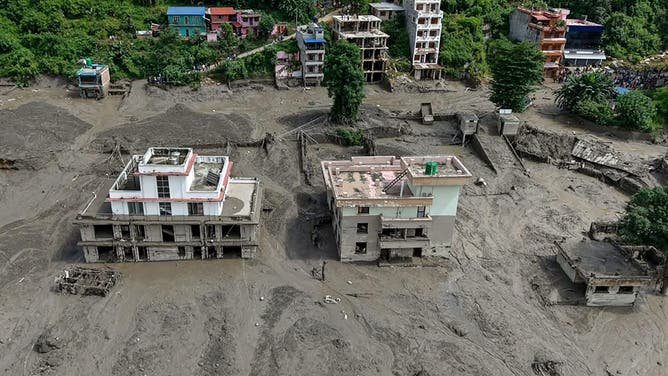
Image 5 of 9Houses lie partially submerged in muddy water along a riverside after flash floods at Trishuli Bazar in Nepal's Nuwakot district on August 26, 2026. A massive flood swept through Nepal's northern Rasuwa district on August 26, damaging roads and power infrastructure as authorities scrambled to assess the scale of the destruction. (Photo by Prabin RANABHAT / AFP via Getty Images)
![]() Image 6 of 9
Image 6 of 9Houses lie partially submerged in muddy water along a riverside after flash floods at Trishuli Bazar in Nepal's Nuwakot district on August 26, 2026. Massive flooding killed eight people in Nepal on August 26 as Chinese state media reported "major casualties" from a mudslide at a Tibet trade hub on China's side of the nations' shared border. (Photo by Prabin RANABHAT / AFP via Getty Images)
![]() Image 7 of 9
Image 7 of 9TOPSHOT - A house lies partially submerged in muddy water after flash floods at Trishuli Bazar in Nepal's Nuwakot district on August 26, 2026. A massive flood swept through Nepal's northern Rasuwa district on August 26, damaging roads and power infrastructure as authorities scrambled to assess the scale of the destruction. (Photo by Prakash MATHEMA / AFP via Getty Images)
![]() Image 8 of 9
Image 8 of 9TOPSHOT - Residents look at houses partially submerged in muddy water after flash floods at Trishuli Bazar in Nepal's Nuwakot district on August 26, 2026. A massive flood swept through Nepal's northern Rasuwa district on August 26, damaging roads and power infrastructure as authorities scrambled to assess the scale of the destruction. (Photo by Prakash MATHEMA / AFP via Getty Images)
![]() Image 9 of 9
Image 9 of 9Houses lie partially submerged in muddy water along a riverside after flash floods at Trishuli Bazar in Nepal's Nuwakot district on August 26, 2026. A massive flood swept through Nepal's northern Rasuwa district on August 26, damaging roads and power infrastructure as authorities scrambled to assess the scale of the destruction. (Photo by Prabin RANABHAT / AFP via Getty Images)
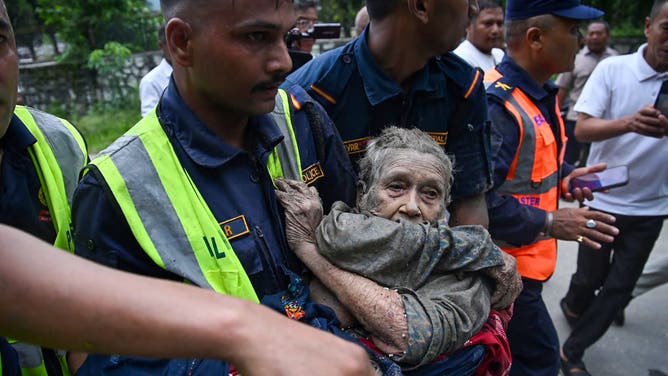
According to the U.S. Geological Survey (USGS), there was an initial report of a magnitude 4.4 earthquake. However, that has since been changed.
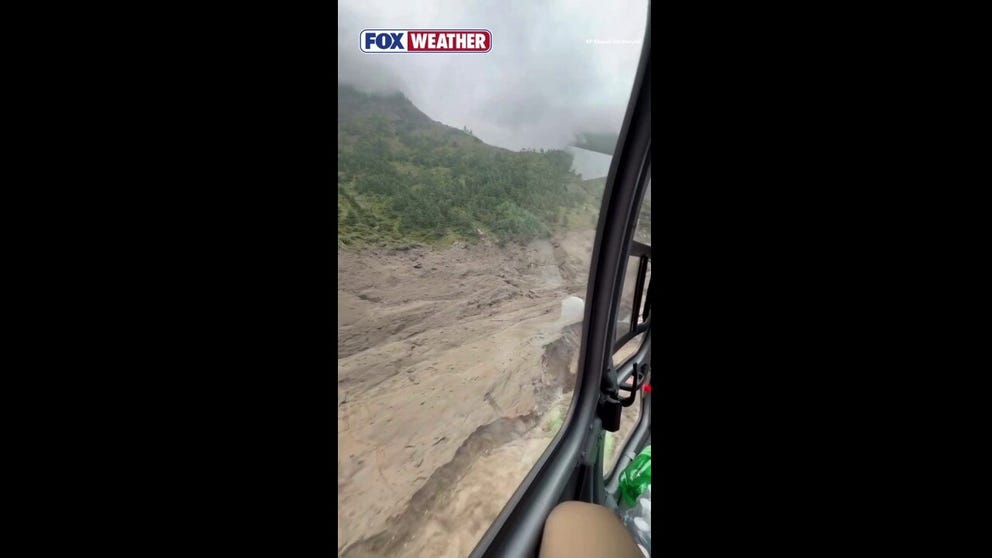
Aerial video shows devastation following destructive flash flood in Nepal
A destructive flash flood swept through the Rasuwa area of Nepal on Wednesday. There are several reported deaths in the area with hundreds missing, including Americans.
"Additional analysis of long period seismic waves indicate that the seismic energy was instead generated by a landslide," the USGS said. "The shaking caused by the landslide was equal to a magnitude 5.2 earthquake."
The U.S. Geological Survey (USGS) determined that the seismic event was a glacial collapse and debris flow that caused subsequent catastrophic impacts downstream.
The U.S. Embassy in Nepal has said that they are working to account for U.S. citizens who may have been affected by the Rasuwa flooding.
Nepali authorities report severe flooding in Rasuwa and have issued warnings for communities along the Bhote Koshi, Trishuli, and Narayani rivers.
— U.S. Embassy Nepal (@USEmbassyNepal) August 26, 2026
U.S. citizens in Rasuwa, Nuwakot, Dhading, Gorkha, Chitwan, and Tanahun should stay away from riverbanks and low-lying areas, seek… pic.twitter.com/u3pAb5T8M0
Stay with FOX Weather as this story continues to develop.