

What was the weather like on America's first national Thanksgiving in 1863?
According to meteorological records, the first Thanksgiving was a sunny day with a high temperature of near 40 degrees and slight winds.
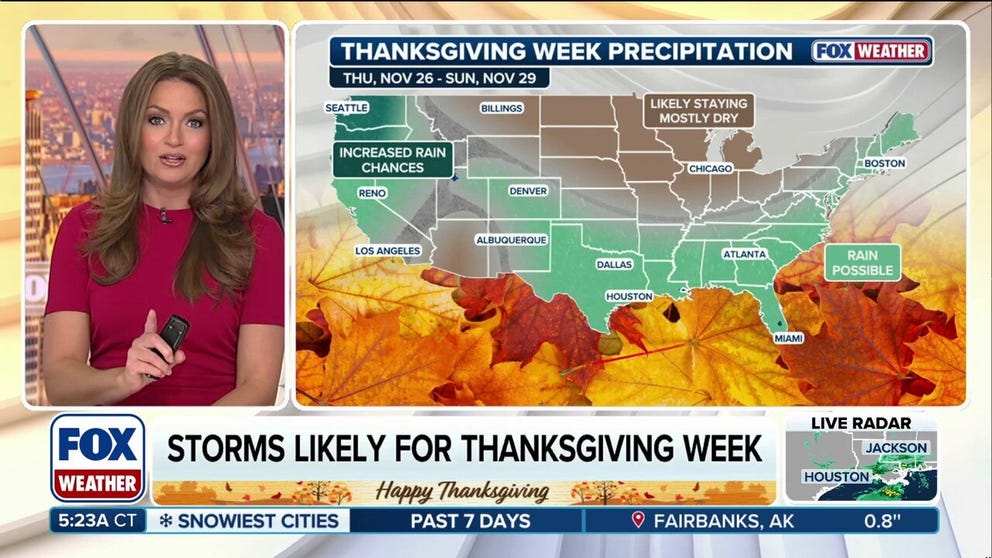
What weather conditions to expect for Thanksgiving week
HOLIDAY WEEK WEATHER OUTLOOK: FOX Weather Meteorologist Britta Merwin breaks down the expected weather conditions for Thanksgiving week, with multiple storms possibly disrupting travelers for the holiday.
THE TAKEAWAY
- The proclamation for the first-ever Thanksgiving was signed in October 1863, for the Battle of Gettysburg.
- The first officially federally celebrated Thanksgiving was in Plymouth, Massachusetts, on Nov. 26, 1863.
- There were sunny skies, with a high of 40 degrees and a low of 32 degrees on the first Thanksgiving.
PLYMOUTH, Mass. – As the holiday season approaches, millions of Americans will flock outdoors and travel to see family to celebrate festivities, but have you ever wondered what the weather was like during the first federally celebrated Thanksgiving?
Some people believe that Thanksgiving began in the early 1600s when English pilgrims landed in Plymouth, Massachusetts, with 102 people aboard the Mayflower.
SUPER EL NIÑO DECLARED AS FORECASTERS WARN OF MAJOR SHIFTS IN WEATHER DURING WINTER SEASON
It wasn’t until after the Battle of Gettysburg in 1863, which resulted in the deaths of over 50,000 Americans, that President Abraham Lincoln created the proclamation to commemorate the victory and losses from the historic conflict that helped sway the Union's victory.
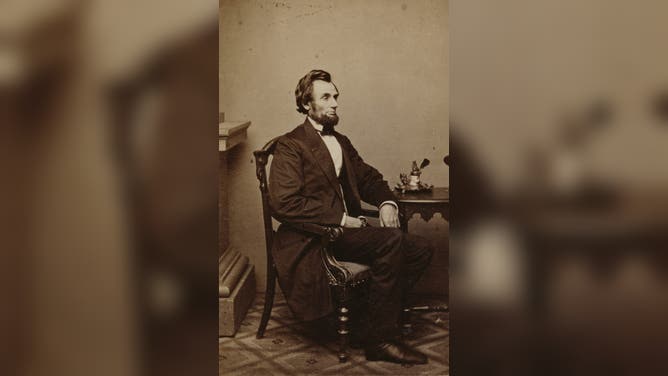
President Abraham Lincoln. Washington D.C.; Mathew B. Brady. American. about 1823 - 1896; United States. North America; 1865; Albumen silver.
(Sepia Times/Universal Images Group / Getty Images)
On Oct. 3, 1863, President Lincoln signed the proclamation to use the last Thursday of every November to be celebrated as Thanksgiving in an effort to give thanks and bring community to all the widows, orphans, mourners or sufferers from the Civil War.
The first ever federally recognized Thanksgiving holiday came on Nov. 26, 1863, which was quite a chilly day.
THANKSGIVING WEATHER NIGHTMARES: A LOOK BACK AT THE MOST POWERFUL HOLIDAY STORMS IN US HISTORY
According to meteorological records from the U.S. Army, it was a sunny day with a high temperature of near 40 degrees and slight winds.
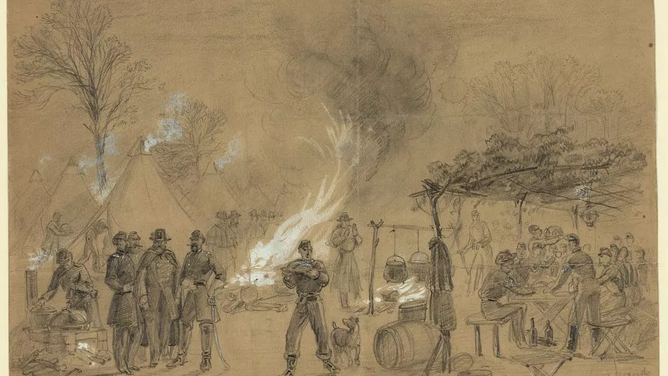
Civil War artist Alfred R. Waud sketched this Thanksgiving scene at a Civil War camp in 1861.
(Library of Congress)
The lowest temperature that day was near freezing at 32 degrees.
The weather station used to make these observations was located in Fort Warren, where troops were protecting the Boston harbor from enemy Confederate forces.
November 1863 was a warm one for most of Eastern Massachusetts, with some light snow earlier in the month and many days with highs in the 50s.
THANKSGIVING OUTLOOK: RAIN, STORMS AND POSSIBLE SNOW COULD DISRUPT HOLIDAY TRAVEL PLANS FOR MILLIONS
Despite the Civil War, communities across the Union observed Thanksgiving, which has since become a longstanding part of American culture.