

The mystery behind the 'sailing stones' of Death Valley National Park
Observations concluded that rock movement occurs with a specific combination of events, involving water, ice and wind.
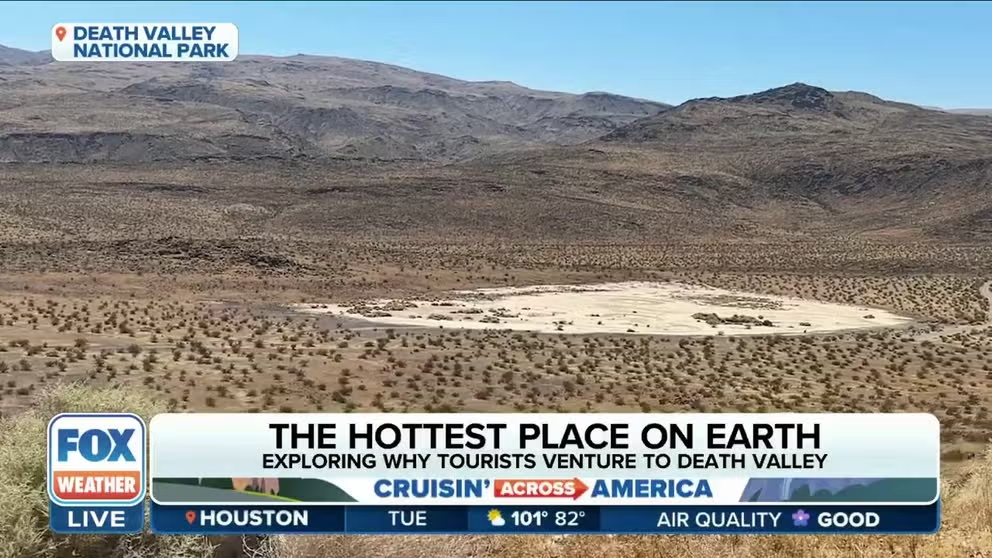
FILE: Hottest Place on Earth: Exploring why tourists venture to Death Valley
What would make someone want to travel to one of the hottest places in the country, for fun? That's what FOX Weather's Robert Ray intends to find out. More than one million people travel to the park every year.
DEATH VALLEY NATIONAL PARK, Calif. - The infamous "sailing stones" of Death Valley’s Racetrack Playa paint a puzzling picture. Weighing up to 700 pounds, these rocks miraculously travel all on their own, leaving winding trails that stretch from a few feet to over a thousand feet long.
But how is it possible that these stones are dragged across the ground, with no physical push? For decades, this mystery perplexed scientists. And no—it’s not a ghost.
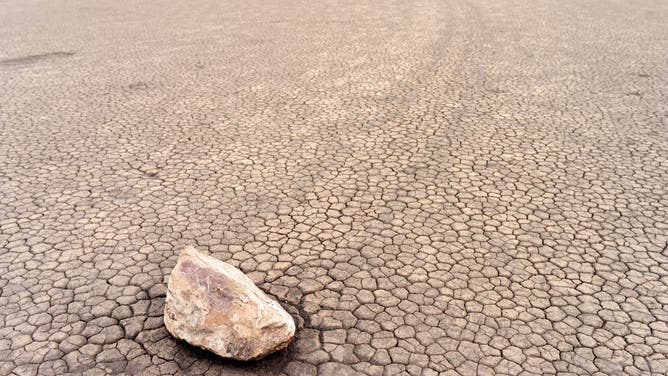
The Racetrack Playa sailing stones are pictured in Death Valley, California, on April 7, 2019. - The Racetrack is a dry lakebed known for its moving rocks that leave trails on the ground. According to the National Park Service webpage the movement of the rocks requires a combination of events: "First, the playa fills with water...As nighttime temperatures plummet, the pond freezes to form sheets of "windowpane" ice...On sunny days, the ice begins to melt and break up into large floating panels, which light winds drive across the playa pool. The ice sheets shove rocks in front of them and the moving stones leave trails in the soft mud bed below the pool surface."
(AGUSTIN PAULLIER/AFP via Getty Images)
The answer is a rare, specific combination of weather events, including ice, water and wind.
HERE ARE THE TOP 10 MOST POPULAR NATIONAL PARKS ACROSS AMERICA
According to the National Park Foundation, the rocks — composed of dolomite and syenite, just like the surrounding mountains — tumble down to the valley floor due to erosion. Once on level ground, they travel horizontally with no apparent force.
"Many of the largest rocks have left behind trails as long as 1,500 feet, suggesting that they've moved a long way indeed from their original location," they said.
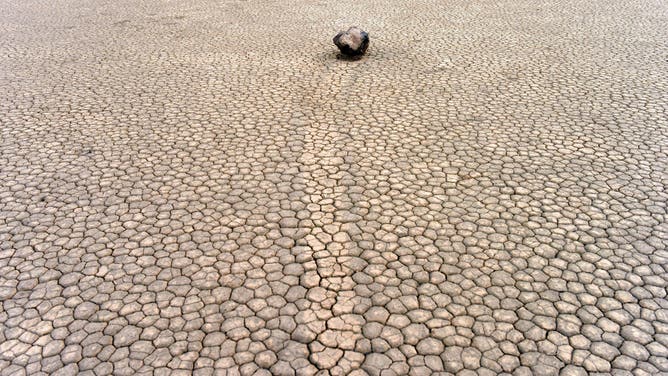
The Racetrack Playa sailing stones are pictured in Death Valley, California, on April 7, 2019. - The Racetrack is a dry lakebed known for its moving rocks that leave trails on the ground. According to the National Park Service webpage the movement of the rocks requires a combination of events: "First, the playa fills with water...As nighttime temperatures plummet, the pond freezes to form sheets of "windowpane" ice...On sunny days, the ice begins to melt and break up into large floating panels, which light winds drive across the playa pool. The ice sheets shove rocks in front of them and the moving stones leave trails in the soft mud bed below the pool surface."
(AGUSTIN PAULLIER/AFP via Getty Images)
Study of their movement dates back to the 1900s, but until December 2013, no one had physically seen them move. And it wasn't until August 2014 that a scientific explanation was formally published.
Because the stones can sit for decades without traveling, researchers initially never expected to see them move in person, explained the Scripps Institution of Oceanography.
THESE POPULAR NATIONAL PARKS ANNOUNCE PLANS FOR 2026 VISITOR RESERVATIONS
A team led by Scripps Institution of Oceanography, UC San Diego, paleobiologist Richard Norris, set up an experiment in winter 2011 with permission of the Park Service.
With the chance of years without movement, the team monitored the rocks by installing a high-resolution weather station capable of measuring gusts to one-second intervals and attaching tracking devices to 15 different stones in the Valley.
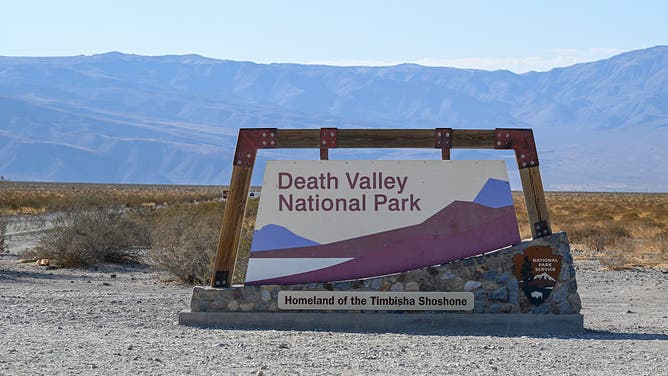
DEATH VALLEY, CALIFORNIA - JULY 17: A view of a welcome sign near California State Route 190 as the temperature shows 115°F (46°C) at Furnace Creek Visitor Center in Death Valley National Park of California, United States on July 17, 2025.
(Tayfun Cokun/Anadolu / Getty Images)
"The National Park Service would not let them use native rocks, so they brought in similar rocks from an outside source," Scripps said.
HERE'S HOW TO STAY SAFE FROM ROCKFALLS AT YOSEMITE NATIONAL PARK
And what Ralph Lorenz of the Applied Physics Laboratory at the Johns Hopkins University thought would be "the most boring experiment ever," all changed with what Norris called a scientific "element of luck."
"We expected to wait five or ten years without anything moving, but only two years into the project, we just happened to be there at the right time to see it happen in person," he said.
Their observations concluded that rock movement occurs with a specific combination of events, involving water, ice and wind.
According to the Scripps Institution of Oceanography, the Racetrack Playa Valley first fills with water, which must be deep enough to create floating ice formations during colder winter temperatures, but shallow enough to still expose the rocks.
When temperatures plunge over the frigid winter nights, the water freezes to form sheets of "windowpane" ice, which can be described as a thin sheet of ice that forms over a body of water, typically showing glass-like clarity.
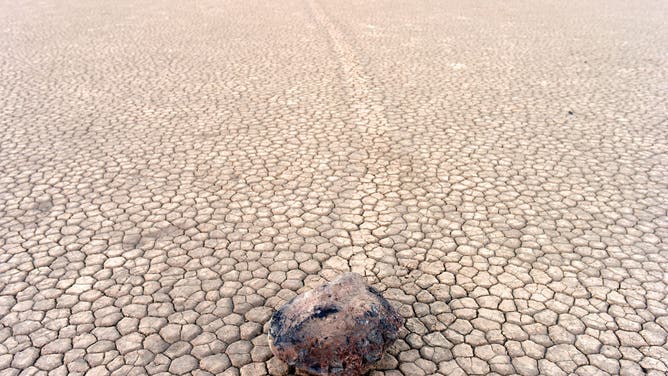
The Racetrack Playa sailing stones are pictured in Death Valley, California, on April 7, 2019. - The Racetrack is a dry lakebed known for its moving rocks that leave trails on the ground. According to the National Park Service webpage the movement of the rocks requires a combination of events: "First, the playa fills with water...As nighttime temperatures plummet, the pond freezes to form sheets of "windowpane" ice...On sunny days, the ice begins to melt and break up into large floating panels, which light winds drive across the playa pool. The ice sheets shove rocks in front of them and the moving stones leave trails in the soft mud bed below the pool surface."
(AGUSTIN PAULLIER/AFP via Getty Images)
That said, the sheet must be thin enough to move freely but thick enough not to break.
Then, on sunny days when the ice begins to melt, they break up into large floating panels, as light winds drive them across the water-covered ground.
THIS ROCK IN ARCHES NATIONAL PARK WILL FALL, IT'S ONLY A MATTER OF TIME
These ice sheets then catch the rocks and drag them along, leaving a visible track in the mud beneath the shallow water.
Ultimately, these stones can stay in motion for anywhere from a few seconds to over ten minutes, moving multiple times before coming to complete rest.