

Do sandbags actually prevent flooding? What to know before a big storm
Let’s break down how to properly prepare sandbags, critical common mistakes to avoid, and alternative flood defenses to consider for the best protection during an impending storm.
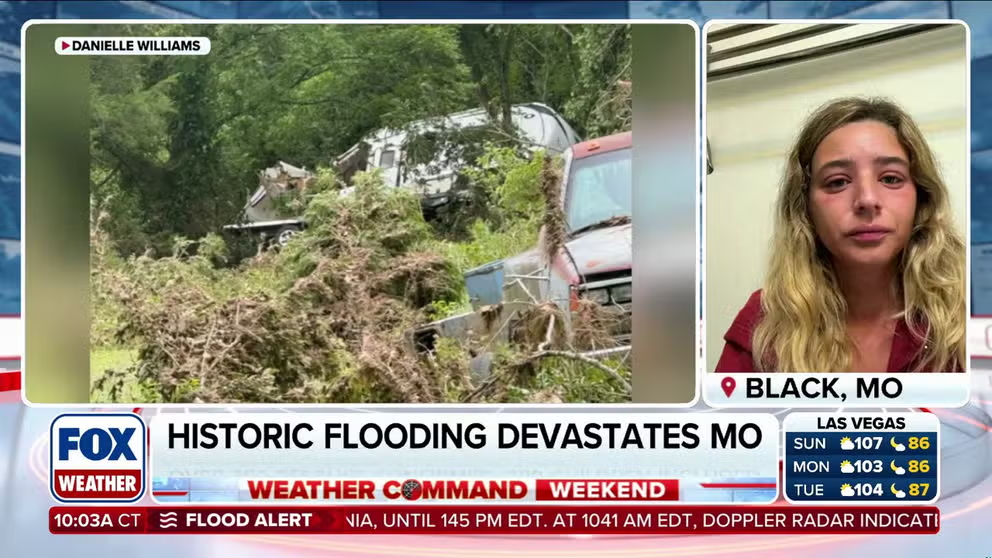
FILE: Missouri resident recounts devastating moment her home was taken by rising floodwaters
Danielle Williams joins FOX Weather following the devastating flash floods that destroyed her home in Black, Missouri. She walks us through the harrowing moment her and her family decided they needed leave as flood waters were up to their knees:
The use of sandbags to stop flooding has been around for centuries, with their formal adoption for flood control following their military use in fortifying trenches.
WHAT FLOOD WATCHES, WARNINGS AND EMERGENCIES MEAN
Every year, thousands of people rely on sandbags to protect homes, businesses, roads and other structures—especially during tropical storms and hurricane season.
But do they actually work at preventing inundation? The short answer is yes. However, they are most effective against shallow flooding, and you must use them properly for them to work.
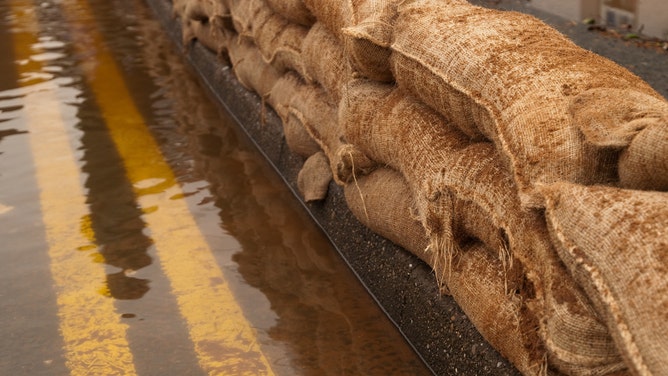
Preparation for an incoming flood. North England / Cumbria, November 18th 2009
(PeteDraper / Getty Images)
According to FEMA, shallow flooding is defined as inundation that is 3 feet deep or less. Sandbags function by forming a physical barrier that absorbs water energy and diverts floodwaters away from vulnerable areas.
HURRICANE SEASON 2026: THESE ARE THE STORM NAMES YOU'LL SEE THIS SEASON
Now let’s break down how to properly prepare sandbags, critical common mistakes to avoid and alternative flood defenses to consider for the best protection during an impending storm.
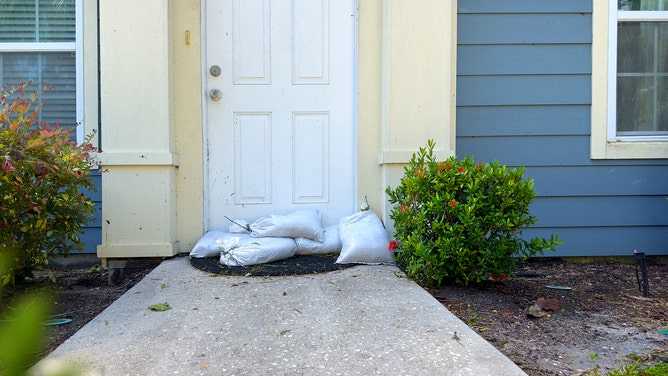
Sandbags piled against the door of residential building
(imagedepotpro / Getty Images)
How to prepare and use a sandbag
According to the U.S. Army Corps of Engineers (USACE), St. Paul District, filling a sandbag typically requires two people.
When filled to capacity—typically about halfway—the bags weigh approximately 35 pounds, and using a funnel during the filling process can speed up the process.
WHAT HURRICANE AND TROPICAL STORM WATCHES AND WARNINGS MEAN
Once your sandbags are ready, it is time to prepare the site by clearing away any debris or obstacles from the layout area.
"Site preparation begins with scraping away ice, snow and topsoil, if possible. A shallow trench sometimes helps hold the levee in place," the USACE notes.
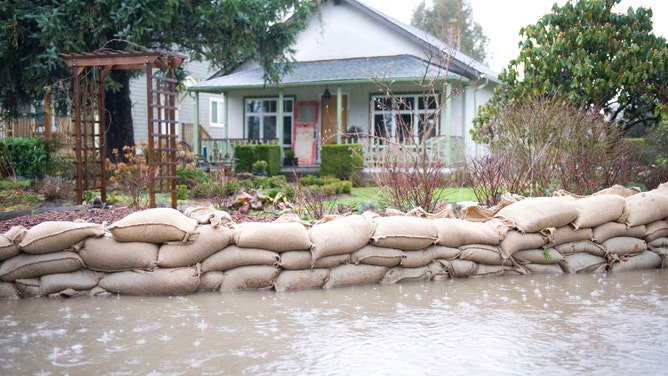
Home in background with sandbags and water surrounding it.
(KarenMassier / Getty Images)
When building sandbag levees, the USACE recommends constructing them at least a foot higher than the water’s expected peak crest. Regarding levee dimensions, the USACE advises:
"...that a levee have a base three times wider than its height. Other sources say a 1:2 ratio is adequate for a solid levee. Bags are staggered, like bricks in a wall. The water’s weight helps hold a levee in place."
Lastly, to prevent water seepage through the structure, plastic poly sheets can be wrapped around the water-facing side of the levees.
TIMELINE: WHEN YOU WILL SEE FIRST IMPACTS OF TROPICAL STORM BERTHA IN THE SOUTHEAST
Proper preparation and placement are everything when it comes to these significant weather events. We see this in real time as New Orleans activates sandbag operations across the city to prepare for the heavy rains and surge expected from Tropical Storm Bertha.
FOX Weather Correspondent Brandy Campbell was live in the city on Tuesday as preparations were already underway.
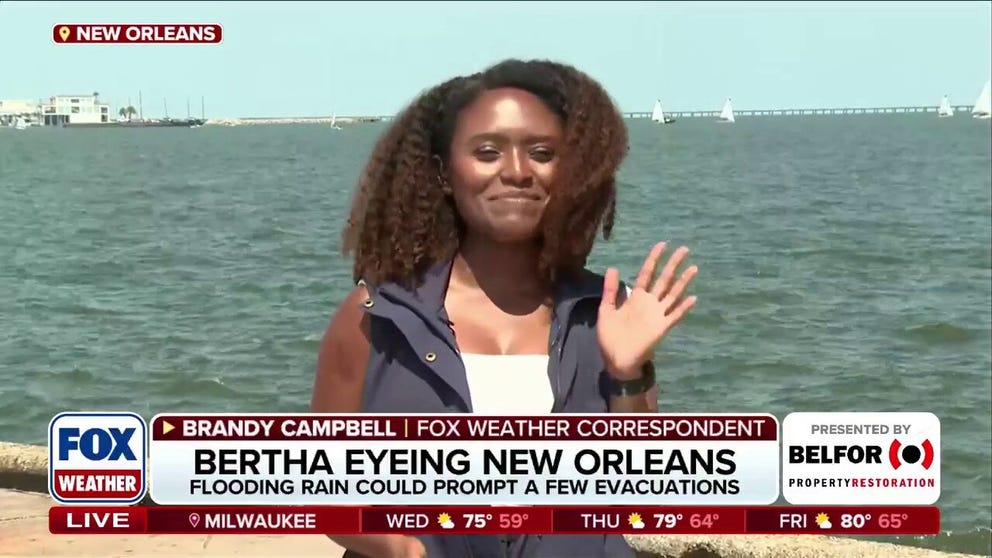
Calm before the storm: New Orleans prepares for Tropical Storm Bertha
FOX Weather Correspondent Brandy Campbell is live in New Orleans, Louisiana, tracking Tropical Storm Bertha as it continues moving west through the Gulf towards the city. While current conditions show few signs of impending hazards, tropical-storm-force conditions are expected by tomorrow morning. The city has already begun its preparations:
Common sandbagging mistakes to avoid
Tying bags too low: Avoid tying the knot tight against the sand inside. Secure the bag near the top to allow the sand to spread out flat. Tight bags create lumps and allow water to seep through.
Filling bags too much: It’s important to only fill bags about halfway. Filling the bag to its maximum capacity will not allow the sand to spread out, as it will, once again, create more of a lump for water to pour through.
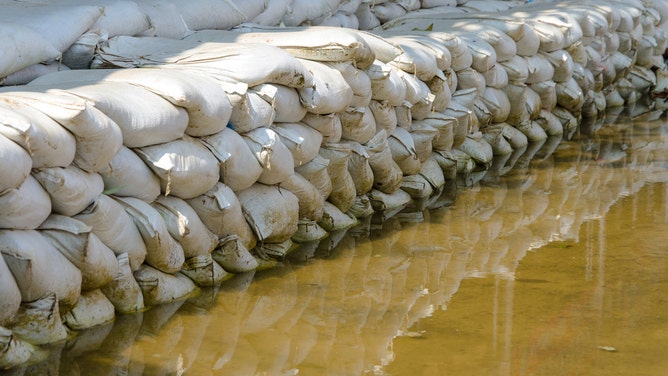
White sandbags for flood defense and it's reflection brown water.
(Casanowe / Getty Images)
Stacking vertically: It’s crucial to use a pyramid shape and staggering build, so the structure does not fall over from the pressure.
Alternatives to using sandbags
When it comes to techniques for preventing flood damage beyond sandbagging, Flood Risk America highlights key engineered options including custom flood panels, passive automatic floodgates, water-filled and fabric barriers and permanent flood doors.
As major storms barrel through the Gulf during hurricane season, taking the time to prepare proper flood defenses before landfall is vital.