
Farmers’ Almanac releases 2026-2027 winter forecast: What they say to expect for blockbuster winter in the US
Since 1818, the Farmers’ Almanac has issued an annual winter forecast, which it says is the longest-running long-range weather forecast in North America.
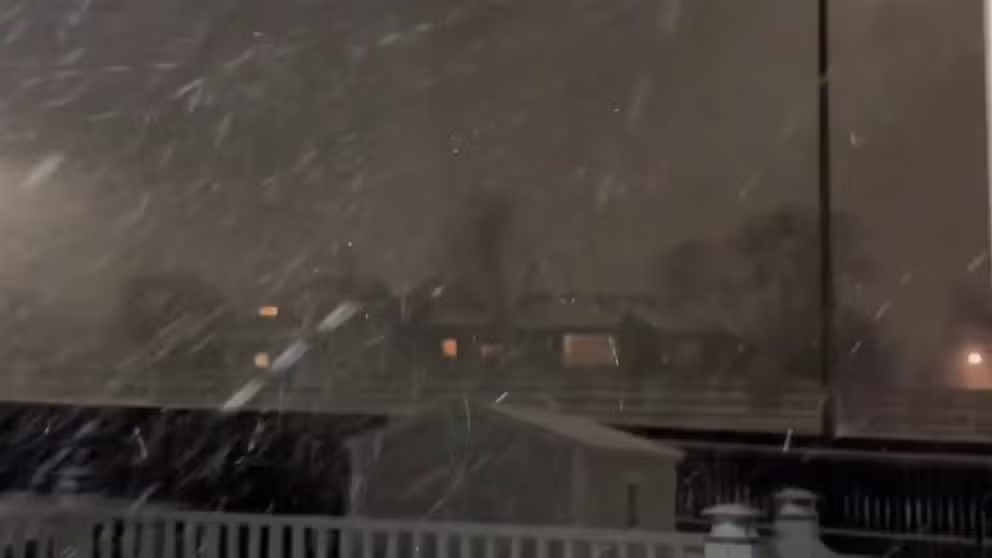
FILE: The winter weather continues in Nebraska, as the area is under a blizzard warning until early Wednesday morning.
Lincoln, Nebraska is under a high wind warning until Wednesday afternoon.
The Farmers' Almanac has released its 2026-2027 winter forecast. Here's what they say to expect in your region.
Since 1818, the Farmers’ Almanac has issued an annual winter forecast, which it says is the longest-running long-range weather forecast in North America.
According to the report, this winter will be one of sharp contrasts and plenty of surprises.
With a potential "super" El Niño brewing, the powerful climate pattern could reshape winter weather across North America, significantly influencing temperature and precipitation patterns across the U.S.
Let's break down what the Farmers’ Almanac prognosticators predict for each region this winter.
HOW DOES THE FARMERS' ALMANAC FORMULATE IT'S WINTER FORECAST
SOUTHERN TIER
This winter, El Niño is expected to favor wetter-than-normal conditions across much of the southern tier of the U.S.
From the Southeast through Texas and the Desert Southwest to Southern California, this pattern could bring more frequent storms, along with periodic surges of cold air.

This image shows a "Welcome to the Free State of Florida" sign as snow falls during a historic winter storm on Monday, Jan. 21, 2025.
(@MyFDOT/X / FOX Weather)
Where that cold air collides with abundant moisture, wintry precipitation — including sleet, freezing rain and snow — could develop, while the southern Rockies may fare well when it comes to mountain snowfall.
THE NORTHERN TIER
Temperatures are expected to average near normal across the West, northern Plains, Upper Midwest and Great Lakes, but that doesn't mean winter will be a walk in the park.
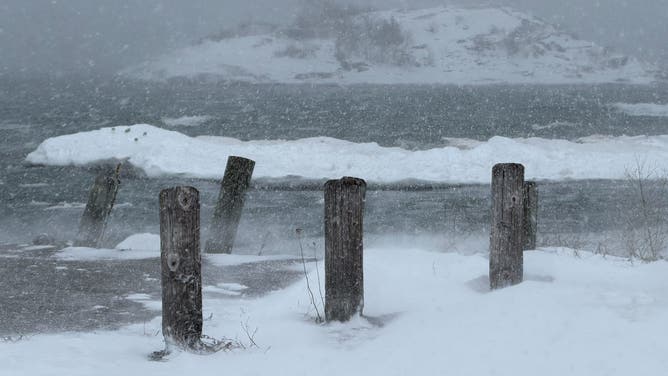
Snow falling in Marquette, Michigan, on Sunday, March 15, 2026.
(Robert Ray / FOX Weather)
Wintry weather will still be in play across the northern tier, with fast-moving clippers, sudden cold snaps and brief bursts of snow all possible.
NORTHEAST
In the Northeast, winter could be a mixed bag.
Coastal communities may see more rain and mixed precipitation, while inland areas could face several rounds of heavy, wet snow — particularly in January and February.
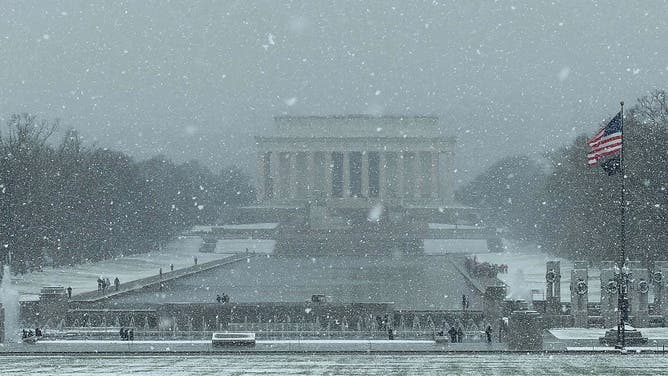
Snow lies in front of the Lincoln Memorial (background) during the first snowfall of the winter season.
(Photo: Thomas Müller/dpa (Photo by Thomas Müller/picture alliance via Getty Images) / Getty Images)
"Small shifts in storm tracks and temperatures could make the difference between rain, sleet, freezing rain, and accumulating snow," the almanac predicts. "Residents should be prepared for forecasts to change quickly as storms approach."
WHEN DOES WINTER REALLY START? IT DEPENDS ON WHO YOU ASK
NORTHWEST
In the midst of a historic wildfire season, many across the Pacific Northwest are already looking ahead to winter. The Farmers’ Almanac predicts a more variable and less reliable snow season for the region.
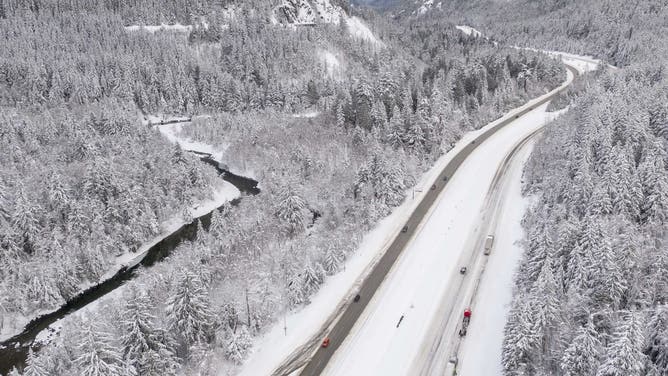
Traffic on Interstate 90 after a snow storm near Snoqualmie Pass, Washington, U.S.
(David Ryder/Bloomberg via Getty Images / Getty Images)
The northern Plains and Upper Midwest could trend drier overall, though bouts of intense cold, strong winds and snow will still be possible.