
From sea to land: NOAA satellites saved 300 people in 2025
Whether it was an injured hiker or a stranded boater, NOAA’s satellite tools assisted law enforcement and rescue teams during these operations.
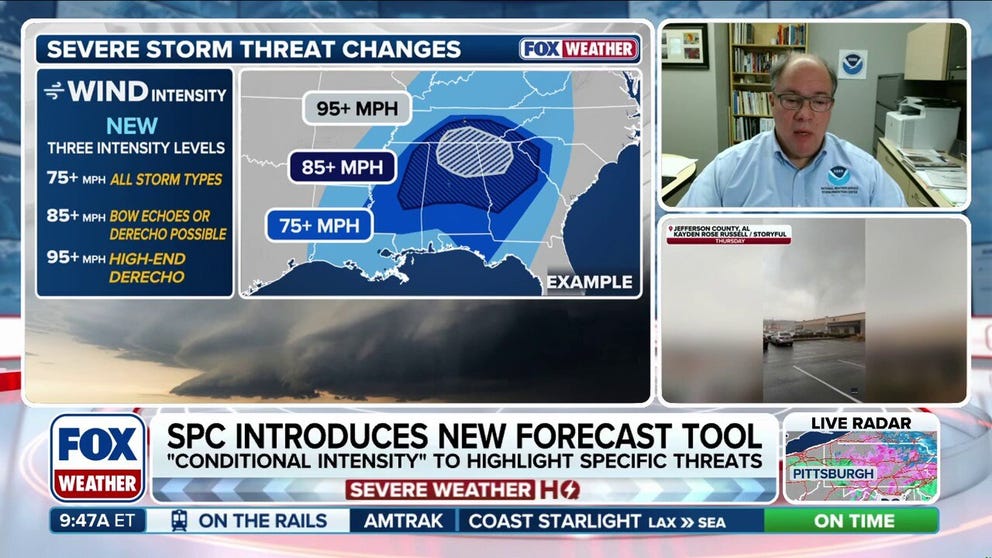
NOAA Storm Prediction Center refines severe weather outlook
The SPC has introduced changes to their severe weather outlook, introducing new intensity levels to highlight specific threats for storms. Bill Bunting, Storm Prediction Center deputy director, joins FOX Weather to talk about how these changes will allow forecasters to convey how strong the impacts of a severe day might be.
The National Oceanic and Atmospheric Administration (NOAA) announced Tuesday that its satellites helped rescue 300 people in 2025 from life-threatening situations across the U.S.
Whether it was an injured hiker or a stranded boater, NOAA’s satellite tools assisted law enforcement and rescue teams during these operations.
VIDEO: TWO RESCUED AFTER HOT AIR BALLOON CRASHES INTO 920-FOOT CELL TOWER IN TEXAS
According to NOAA, 183 people were pulled from the water, 47 were saved from aviation incidents and 70 were rescued on land.
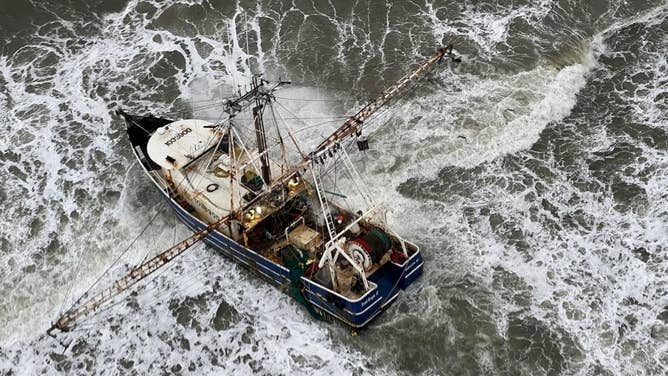
A Coast Guard aircrew aboard an MH-60 Jayhawk helicopter arrives on scene after receiving the report of a disabled fishing vessel drifting towards the coast of Duck, N.C.
(United States Coast Guard)
Florida had the most rescues with 71 people, followed by Alaska with 28 and Wyoming with 21.
One of the most notable rescues occurred in March 2025, when a stranded skier who was immobilized by frostbite issued a distress signal in Ridgway, Colorado.
WATCH: COAST GUARD RESCUES 11-YEAR-OLD GIRL SWEPT OUT FROM CALIFORNIA BEACH
The Air Force Rescue Coordination Center received the alert and contacted the Colorado Search and Rescue Association, which dispatched a rescue team to the skier’s coordinates.
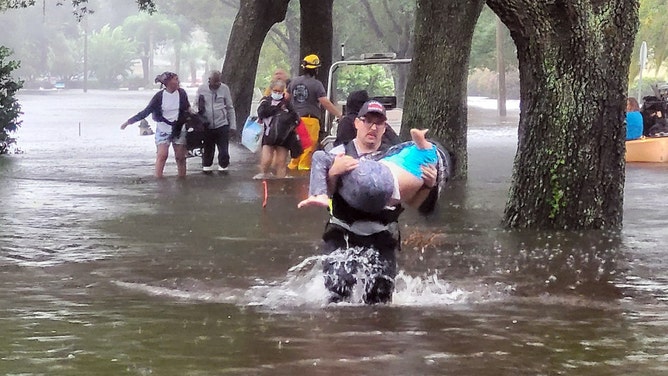
Water rescues continue throughout Orange County. Florida, on Thursday.
(Orange County Fire Rescue / FOX Weather)
NOAA utilizes the same polar-orbiting and geostationary satellites that meteorologists use to issue lifesaving weather forecasts.
These satellites are part of the global Search and Rescue Satellite Aided Tracking system, or COSPAS-SARSAT.

Four boaters remain afloat on their capsized vessel 26 miles off the west coast of Florida, waving to a US Coast Guard HC-144 Ocean Sentry plane that located the capsized boat and directed a rescue team to its location.
(US Coast Guard / FOX Weather)
COSPAS-SARSAT began in 1982 and has helped rescue more than 63,000 people worldwide. This includes more than 11,190 rescues throughout the U.S. and its surrounding waters, which is part of the U.S. Search and Rescue Satellite Aided Tracking system (SARSAT).
SARSAT uses a network of U.S. and international spacecrafts to detect aircrafts, boats and personnel.
Information collected at the NOAA Satellite Operations Facility is immediately sent to rescue coordination centers operated by the United States Air Force and the United States Coast Guard.
The satellite data also supports rescue missions worldwide by relaying distress signals to international partners.