

See It: Snow blankets Hawaii volcanoes as Kona Low triggers Winter Storm Warnings
Most commonly associated with tropical beaches, Hawaii's tall volcano summits saw heavy snow on Monday from a powerful storm known as a Kona Low.
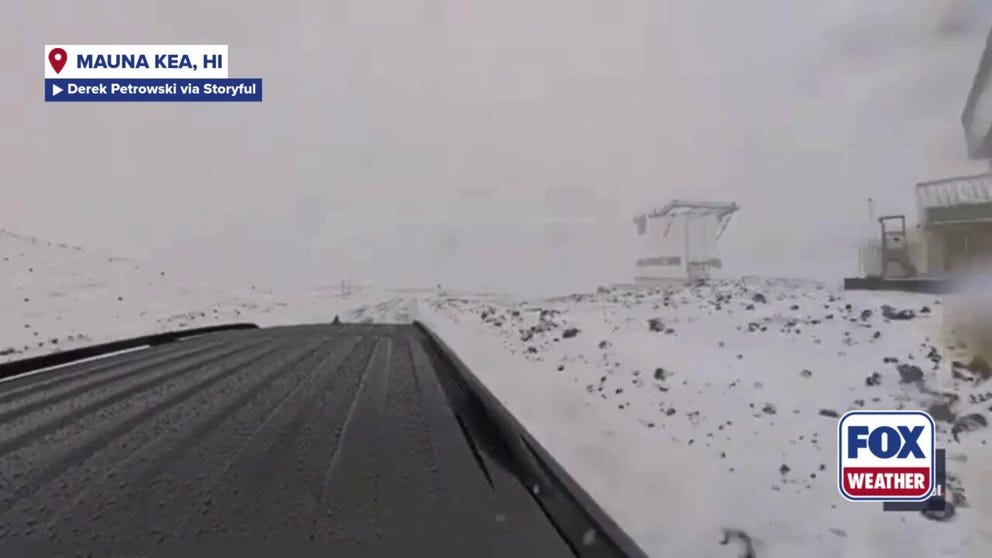
Watch: Kona Low dumps inches of snow on Hawaii's Mauna Kea volcano
Snow coated the roads on Mauna Kea, a dormant volcano on Hawaii's Big Island Monday, as a storm known as a Kona Low dumped inches of snow across higher elevations.
HAWAII VOLCANOES NATIONAL PARK, Hawaii – Snow coated the roads on Mauna Kea, a dormant volcano on Hawaii's Big Island Monday, as a storm known as a Kona Low dumped inches of snow across higher elevations.
The peak of Mauna Kea is the highest point in Hawaii at more than 13,000 feet above sea level.
![Snow coated the roads on Mauna Kea, a dormant volcano on Hawaii's Big Island Monday, as a storm known as a Kona Low dumped inches of snow across higher elevations.]() Image 1 of 2
Image 1 of 2Snow coated the roads on Mauna Kea, a dormant volcano on Hawaii's Big Island Monday, as a storm known as a Kona Low dumped inches of snow across higher elevations. (Derek Petrowski via Storyful)
![Snow coated the roads on Mauna Kea, a dormant volcano on Hawaii's Big Island Monday, as a storm known as a Kona Low dumped inches of snow across higher elevations.]() Image 2 of 2
Image 2 of 2Snow coated the roads on Mauna Kea, a dormant volcano on Hawaii's Big Island Monday, as a storm known as a Kona Low dumped inches of snow across higher elevations. (Derek Petrowski via Storyful)
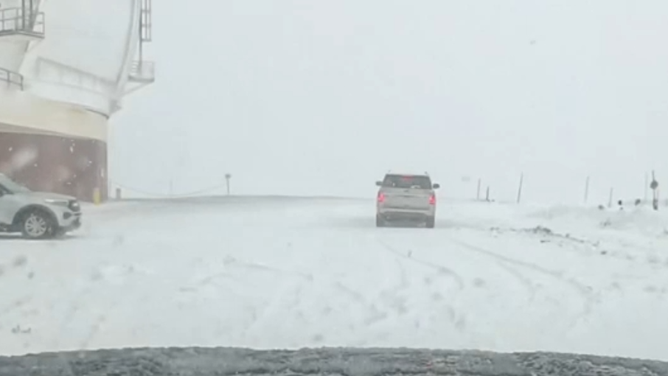
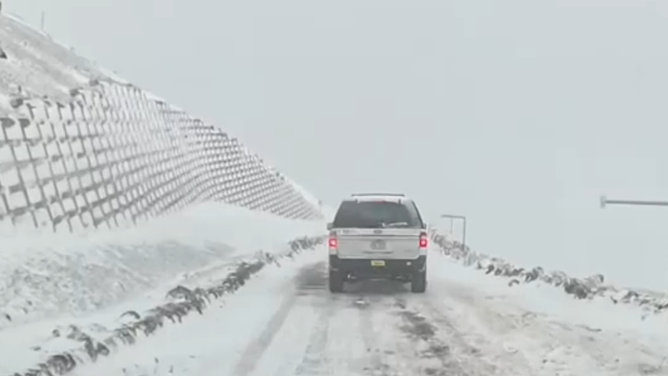
Other video shot from the Mauna Kea Science Reserve showed blinding driving conditions, as crews made their way down the volcano.
The Science Reserve, which is managed by the University of Hawaii, is home to some of the most powerful telescopes in the world.
MUST-SEE: KILAUEA VOLCANO SPEWS 1400 FEET OF LAVA INTO THE AIR
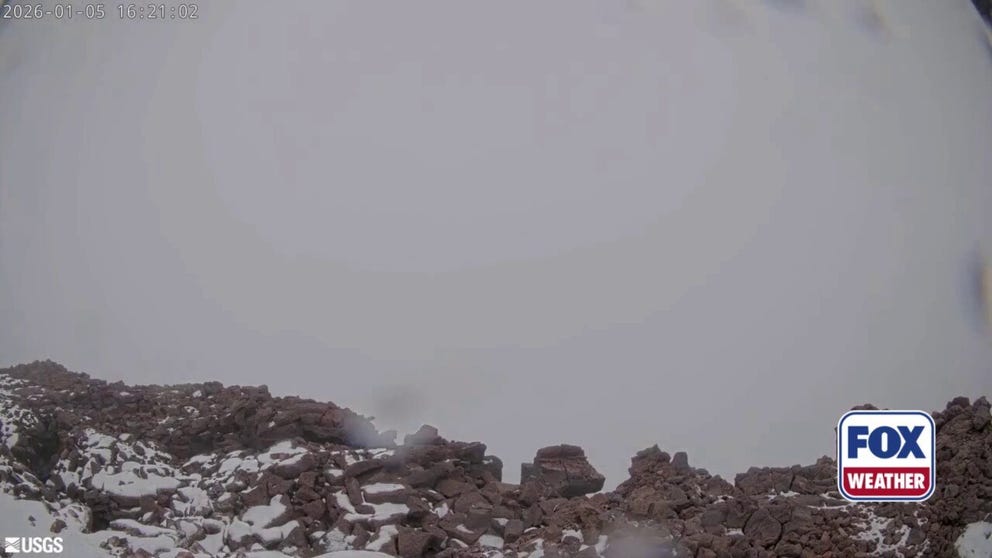
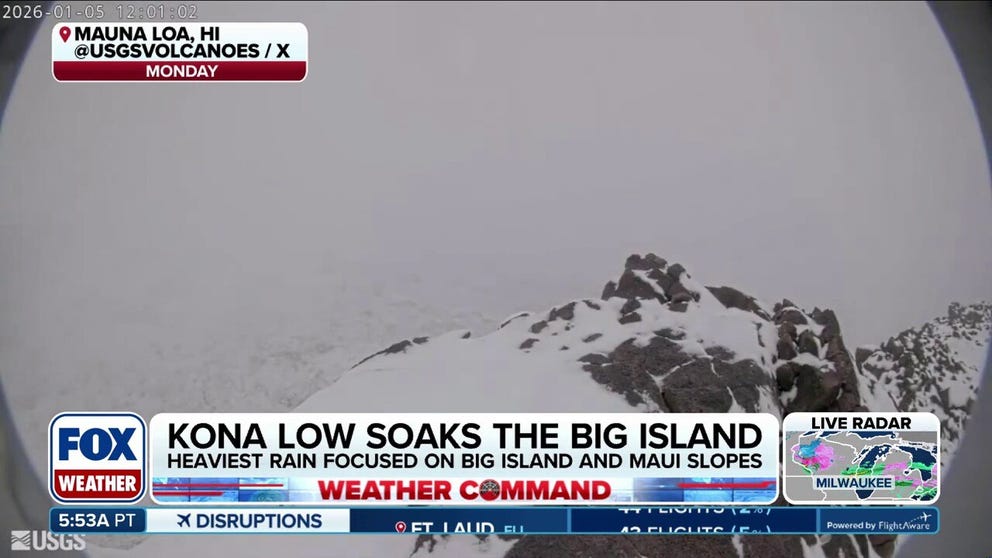
Timelapse shows snow across Hawaii's Mauna Loa volcano
Timelapse video shows snow blanketing Hawaii's Mauna Loa volcano, as a Kona Low brought several days of heavy rain to the state and Winter Storm Warnings for summits on the Big Island.
Timelapse video of Mauna Loa, the world's largest active volcano, also showed snow blanketing that summit.
Winter Storm Warnings remain in effect for the Big Island Summits through midnight Wednesday, downgraded from a Winter Storm Warning Monday, when this footage was taken.
WHAT IS A WINTER STORM WARNING?
The Kona Low is currently positioned northwest of Kauai and is slowly drifting south.
Snow blasts Hawaii volcanoes, as Kona Low brings heavy rain and snow
A Kona Low located just to the northwest of Hawaii is bringing periods of heavy rain across most of the state, as well as significant snow across the summits of the Big Island.
Meanwhile, the rest of the state has experienced days of heavy rain, particularly across the southeast-to-south-facing mountain slopes on the Big Island and Maui, where persistent winds from the southeast caused the heaviest rains on those sides of the islands.
The Kona Low is expected to weaken and move west of Hawaii by midweek.