

Must-see: Kilauea volcano spews 1400 feet of lava into the air
The U.S. Geological Survey’s webcams captured more than 1,400 feet of lava spewed into the air from the north and south vents of the volcano.
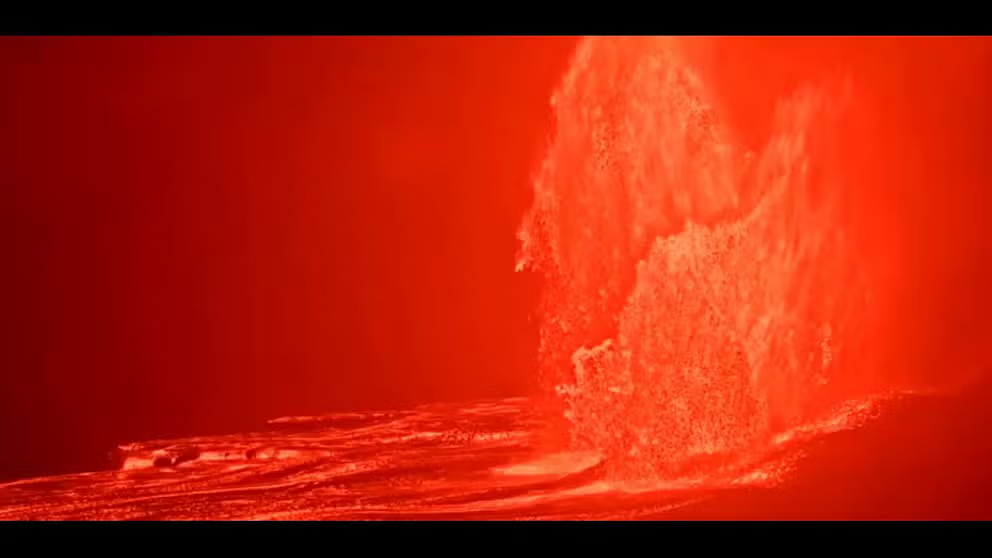
Hawaii’s Kilaueau volcano erupted on Wednesday for the 39th time in a year
Hawaii’s Kilaueau volcano erupted again, marking the one-year anniversary of a continuous on-off volcano eruption. More than 1,400 feet of lava spewed into the air from the north and south vents of the volcano. According to the National Park Service, Kilauea is the youngest and most active volcano on the island of Hawai’i.
KILAUEA, Hawaii – Hawaii’s Kilauea volcano erupted again on Wednesday for the 39th time in a year, continuing to be among one of the world’s most active volcanoes.
The eruption began on the anniversary of Episode 1 at around 8:10 p.m. HST, marking the one-year anniversary of a continuous on-off volcano eruption.
The U.S. Geological Survey’s webcams captured more than 1,400 feet of lava spewing into the air from the north and south vents of the volcano.
The USGS reported that the gas and ash plumes from the episode were so large that they were seen from space.
"You can see, very subtly, the low-level gas plume drifting to the southwest following low-level winds and spreading to the southern part of the island," said the USGS. "Higher-level ash plume is much more obvious and reaches 20,000 feet. High-level winds are carrying that material to the southeast."
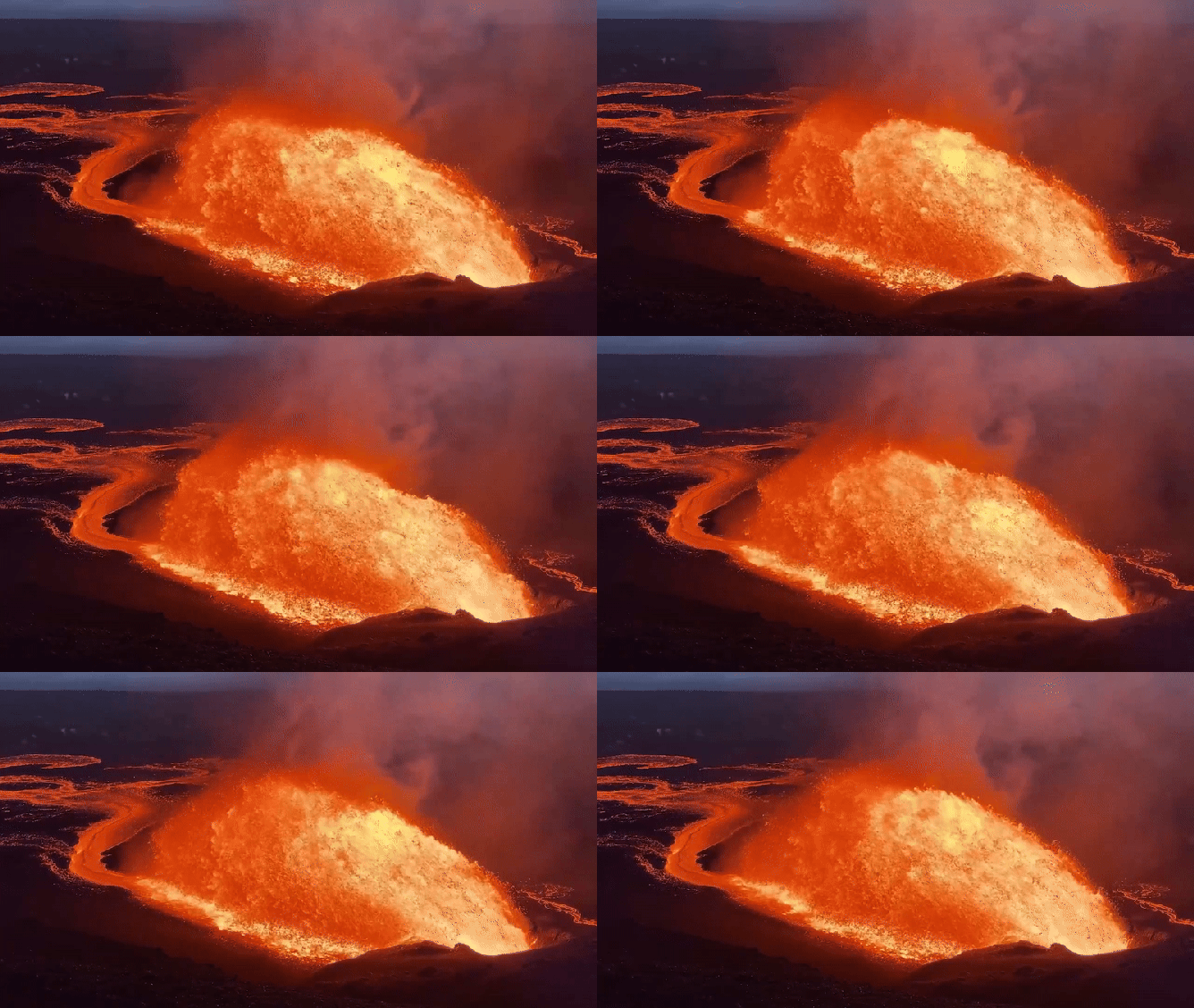
This animated image shows lava shooting from inside Hawaii’s Kilauea volcano during its most recent eruptive episode in August, 2025.
(USGS / FOX Weather)
As of 2:13 a.m. HST, the volcano stopped erupting after a 6-hour episode.
According to the National Park Service, Kilauea is the youngest and most active volcano on the island of Hawai’i.
In the past, the volcano has only had a short period of repose, but it has covered almost 90% of its surface in lava flows within the last 1,000 years.
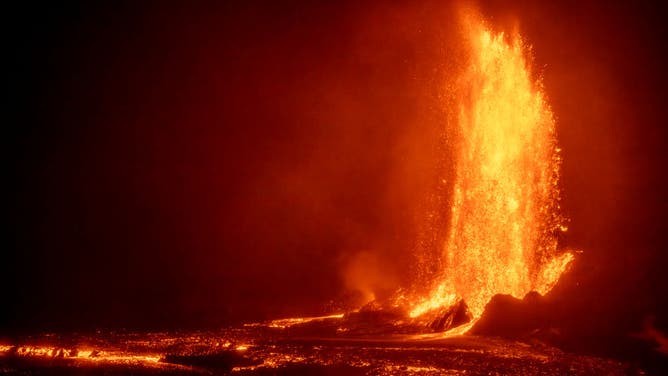
VOLCANO NATIONAL PARK, HI - MARCH 11: The eruption of the Kilauea volcano on March 11, 2025 in Volcano National Park, Hawaii. The eruption was the 13th in a series of eruptions since December 23, 2024. (Photo by William Campbell/Getty Images)
The last significant episode, the 38th eruption, took place earlier this month and lasted close to 12 hours.
Many of these episodes have lasted a day or less and are separated by pauses of several days.