

Watch: Satellite video shows stunning view of the world's largest impact craters
The captured footage from space offers a view of the frozen Manicouagan Reservoir, covered in snow and ice.
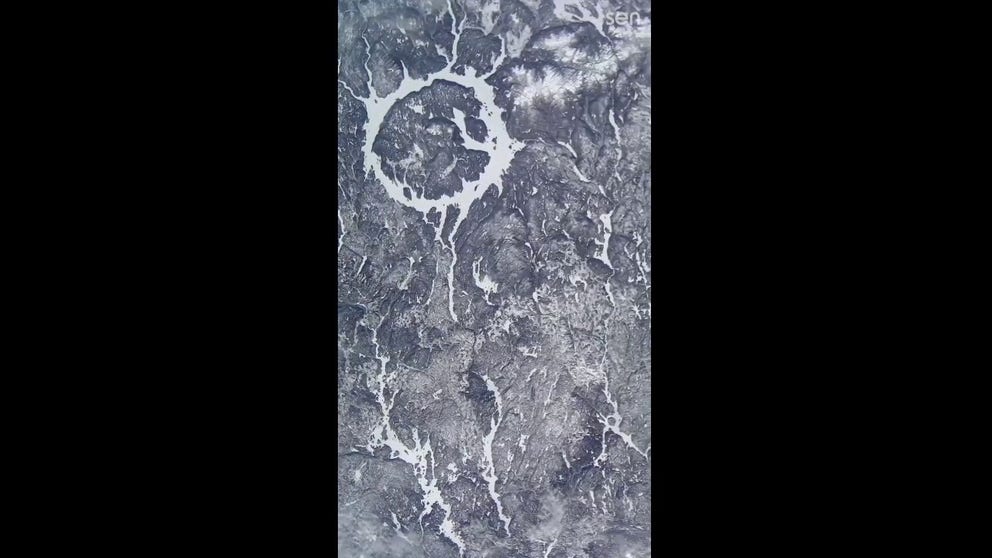
See it: One of the world's largest impact craters seen from space
Sen captured breathtaking footage of the Manicouage Reservoir in Quebec, Canada. The ring-shaped lake is the world's largest impact craters.
Sen captured footage from space on Saturday showing the world’s largest impact craters.
The satellite video offered a breathtaking view of the circular, frozen Manicouagan Reservoir, covered in snow and ice.
NASA ROCKET TO CONDUCT 'CT SCAN' OF NORTHERN LIGHTS TO HELP UNDERSTAND AURORAL ELECTRICITY
The unique shape of the lake makes it popular with satellite imagery and astronaut photography, since it is easily identified from space.
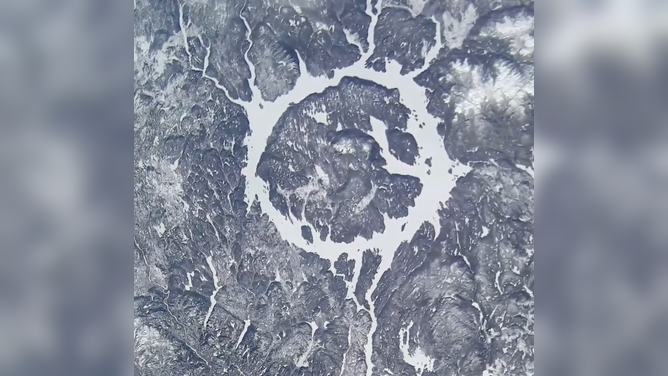
Satellite video offered a stunning view of the frozen Manicouagan Reservoir, covered in snow and ice.
(Sen / FOX Weather)
The Manicouagan Reservoir, also known as the "Eye of Quebec," is a lake located in southeastern Quebec.
According to NASA, the ring-shaped lake was formed 214 million years ago, near the end of the Triassic Period, when an asteroid that was three miles wide struck Canada.
NASA ROCKET TO CONDUCT 'CT SCAN' OF NORTHERN LIGHTS TO HELP UNDERSTAND AURORAL ELECTRICITY
The Manicouagan is 750 square miles and reaches a depth of roughly 1,150 feet.
The "Eye of Quebec" holds about 34 cubic miles of water, making it one of the largest freshwater reservoirs in the world.
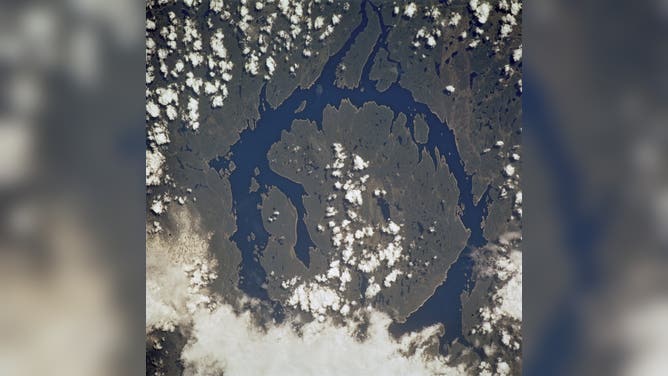
The Manicouagan Reservoir Crater in Quebec, Canada, is the largest meteorite craters in the world.
(Getty / Getty Images)
The impact not only created the annular lake, but an island in its center called Rene-Levasseur Island, which holds the crater's central peak, Mount Babel.
Mount Babel formed in the aftermath of the impact when shattered rock and debris were uplifted.
Geologists estimate that the crater was about 60 miles wide, but has since been heavily eroded by ice sheets.
Stay with FOX Weather to see more satellite videos of the world's wonders.