

NASA rocket to conduct 'CT scan' of Northern Lights to help understand auroral electricity
The GNEISS mission could deploy as early as Saturday, Feb. 7, from the Poker Flat Research Range near Fairbanks, Alaska.
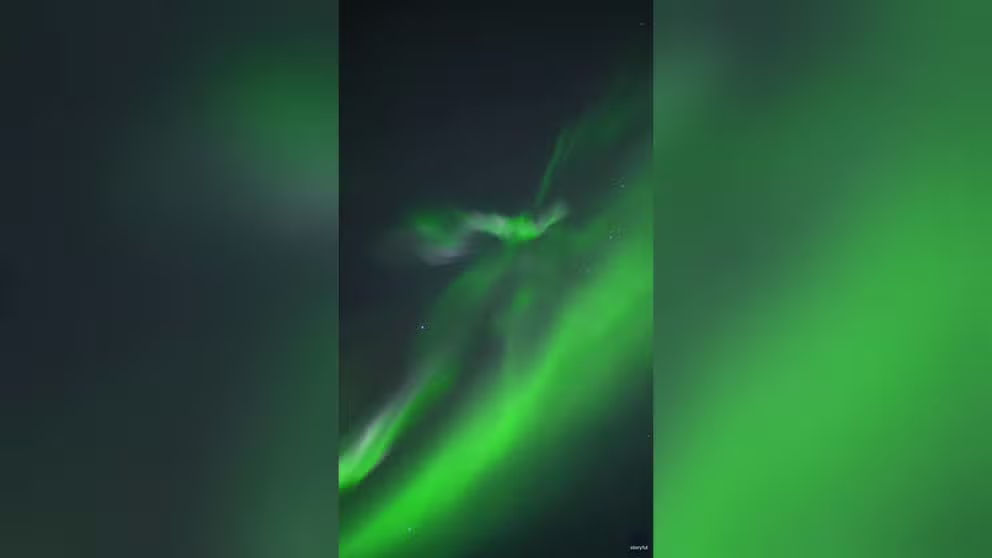
FILE: Vivid aurora dances in sky above Alaska home
A video recorded in North Pole, Alaska, shows a vivid display of the northern lights as it dances above a home on Nov. 23, 2024.
FAIRBANKS, Alaska– NASA is launching a rocket mission from Alaska as early as Saturday to study and help understand electrical circuitry underlying the aurora.
The rocket mission will use a technique similar to how a CT scan works on humans, to reconstruct the electrical currents flowing from the northern lights, NASA said.
NASA compared the electrical flow of auroras to that of a light bulb with a power cord.
"The electricity doesn’t stop where the light appears. Electricity travels in loops; the lightbulb is just a pit stop on a roundtrip journey known as a circuit," NASA said. "If the light is on, electrons aren’t just flowing in — they’re also flowing back out through the power cord from whence they came."
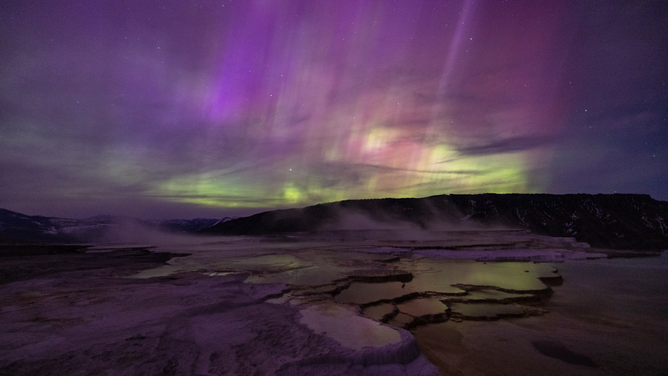
The Northern Lights are seen in Yellowstone National Park.
(@YellowstoneNPS/Twitter)
NASA said the incoming electrons in auroras flow along beams that resemble a power cord, but the current flowing back is chaotic.
After the aurora is alit, electrons scatter in unpredictable directions.
Eventually, the currents find their way back into the auroral circuit after making it through the chaos of the atmosphere.
7 THINGS TO KNOW ABOUT THE NORTHERN LIGHTS
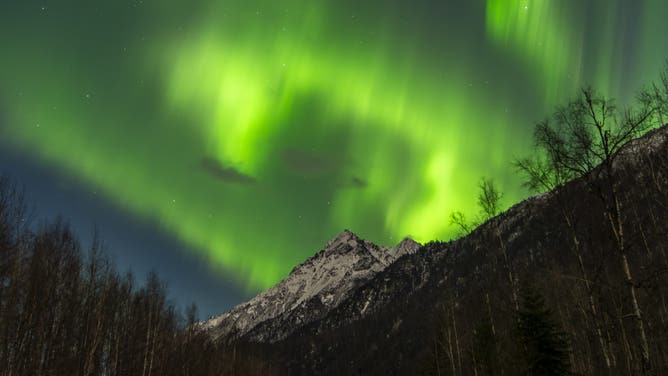
FILE: Northern lights (Aurora Borealis) illuminate the sky in Alaska's Eklutna Tailrace, United States on March 09, 2025.
(Hasan Akbas / Anadolu / Getty Images)
The Geophysical Non-Equilibrium Ionospheric System Science (GNEISS) mission will help understand how that current closes, with two rockets flying side-by-side through different parts of the same aurora, NASA said.
Once inside, each rocket will eject four subpayloads that measure distinct locations inside the aurora.
"As the rockets fly overhead, they send radio signals through the surrounding plasma to receivers on the ground. The plasma alters those radio waves en route, in the same way different body tissues alter the beams from a CT scan," NASA said.
NASA said the GNEISS team will use the radio signals to infer plasma density, which reveal where electricity can flow.
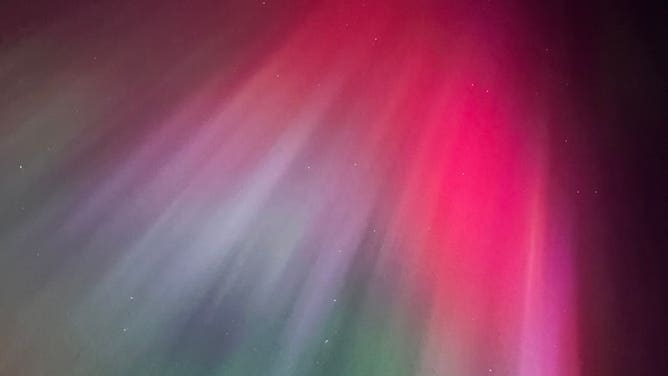
Northern Lights over Ashland, WI
(@clkoval/X / FOX Weather)
"We’re not just interested in where the rocket flies," said Kristina Lynch, principal investigator for GNEISS and a professor at Dartmouth College in New Hampshire. "We want to know how the current spreads downward through the atmosphere."
During the same launch window as the GNEISS mission, NASA also plans to launch the Black and Diffuse Aurora Science Surveyor.
THE BEST CELESTIAL EVENTS YOU WON'T WANT TO MISS IN 2026
This sounding rocket mission focuses on unusual blank spots inside auroras known as "black auroras."
NASA said scientists suspect they are where auroral currents suddenly reverse direction.
The GNEISS mission could deploy as early as Saturday, Feb. 7, from the Poker Flat Research Range near Fairbanks, Alaska.