

Spring equinox is almost here, meaning the 'Chicagohenge' is just around the corner
This event occurs twice a year, when the center of the sun crosses the plane of our planet’s equator.
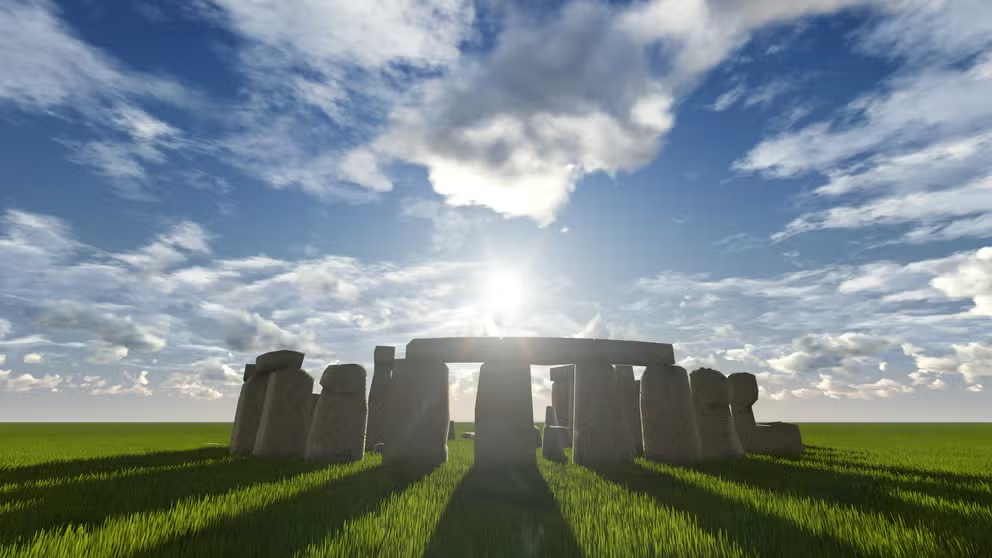
What is an equinox? The science behind the astronomical seasons explained
The vernal equinox marks the beginning of astronomical spring and occurs in the Northern Hemisphere around March 20th, whereas the autumnal equinox falls around September 22nd.
As seasons change, and we inch closer to spring, it’s almost that time of year when the sun directly lines up with Chicago’s east-west-facing streets known as the "Chicagohenge."
This event occurs twice a year during the spring and fall equinoxes, when the center of the sun crosses the plane of our planet’s equator.
WHY SPRING EQUINOX AURORAS SHINE BRIGHTEST IN MARCH AND WHERE TO CATCH THEM
During the equinoxes, the sun will rise and set in between the city’s skyscrapers, creating a picture-perfect view for residents.
The first "Chicagohenge" is set to occur between March 20 and 23, while the second one will happen between Sept. 19 and 22.
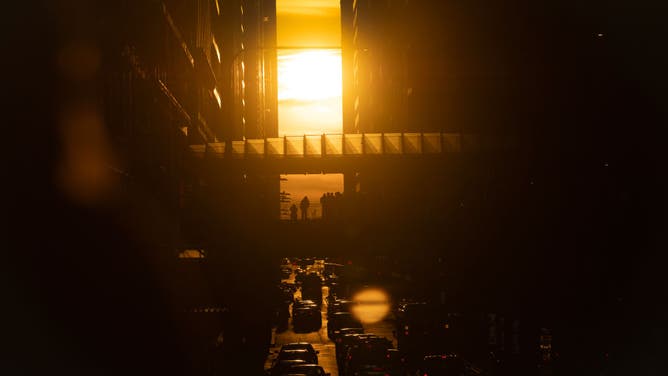
Photographers, tourists and residents gather downtown to view Chicagohenge on March 22, 2025 in Chicago, Illinois.
(Scott Olson/Getty Images / Getty Images)
What is an equinox?
Equinoxes are associated with the changing seasons, occurring twice a year, in March and September. Depending on where you are located, it can either mean nights and gloomy weather or nicer temperatures and more sunlight.
The day an equinox occurs, observers close to the equator will see the sun directly overhead at noon.
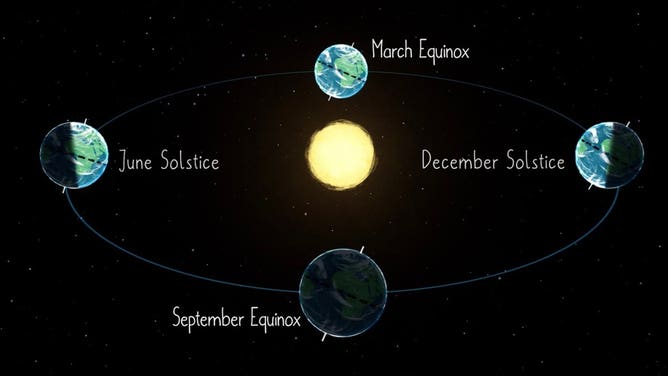
Diagram demonstrating how the tilt of Earth's axis causes variations in sunlight between the Northern and Southern Hemispheres throughout the year. During the equinoxes, the axis is not tilted toward or away from the Sun, resulting in roughly equal sunlight for both hemispheres.
(NASA/JPL-Caltech / NASA)
Once the equinox passes, viewers will see the sun’s path in the sky continue its movement further north every day until the June solstice, after which it begins traveling south.
The sun will cross the equator plane again in September, and will travel south until the December solstice.
FIRST DAY OF SPRING IS MARCH 20: HERE'S THE SCIENCE BEHIND THE VERNAL EQUINOX
It will then head back north and begin the cycle again.
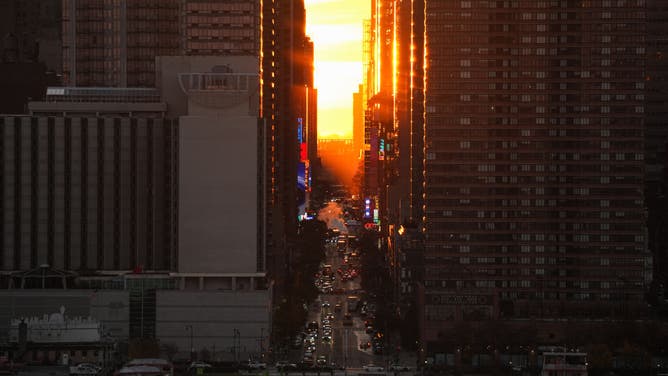
Sun rises between the buildings on 42nd Street, the so-called ' 'Manhattanhenge' in New York, United States on November 25, 2024.
(Lokman Vural Elibol/Anadolu via Getty Images / Getty Images)
The movement of the sun is why the March equinox is referred to the northward equinox, and the September equinox is known as the southward equinox.
Are there other "Henges"?
A "Chicagohenge" is not the only phenomenon that occurs during an equinox.
A "Manhattanhenge," similar to the "Chicagohenge," occurs twice a year when the sun aligns with the Manhattan streets.
WHAT'S MANHATTANHENGE? WHY THOUSANDS GATHER FOR TWICE-ANNUAL CELESTIAL SHOW
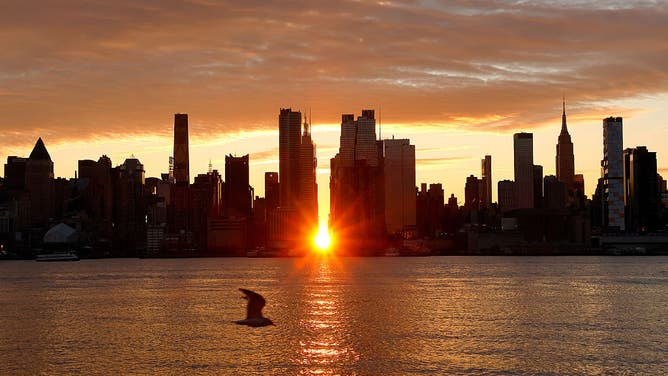
The sun rises behind the skyline of midtown Manhattan over 42nd Street during a Manhattanhenge sunrise in New York City on January 12, 2026, as seen from Weehawken, New Jersey.
(Gary Hershorn/Getty Images / Getty Images)
This event typically takes place in May and July.
There is also the "Baltimorehenge" that happens in March and September around the same time as the "Chicagohenge."
Then there is the "Torontohenge" that occurs in February and October.