

Powerful solar flare erupts from the sun, raising chances for dazzling Northern Lights display by Friday
Scientists are now waiting to see how the CME will impact Earth, potentially triggering a geomagnetic storm and producing dazzling auroras for thousands of skywatchers.
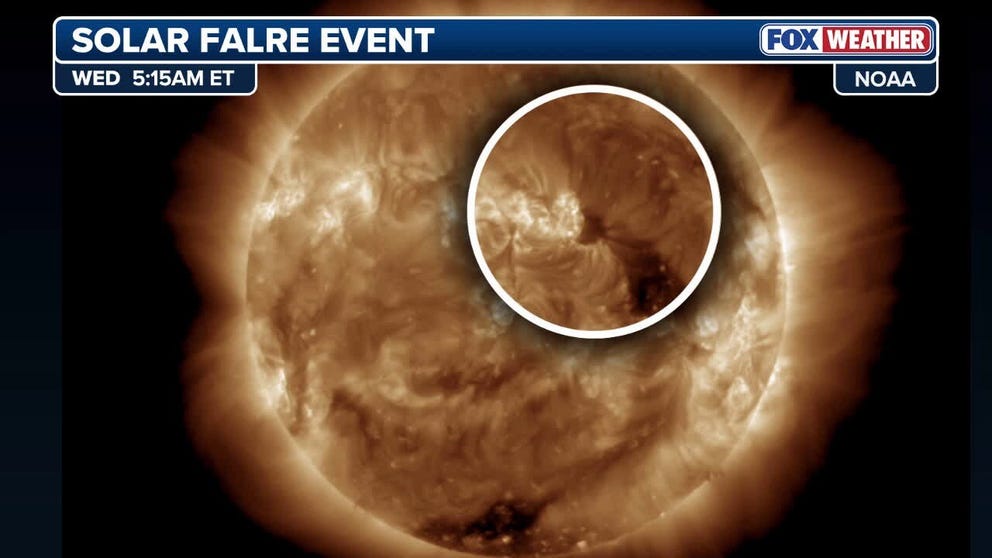
FILE: Three powerful solar flares emanate from the sun
Three strong solar flares erupted from the sun in less than 24 hours. During this series of eruptions, there were reports of multiple radio blackouts that occurred across Earth.
THE TAKEAWAY
- An M6.9 solar flare occurred on Tuesday morning.
- The event could result in a dazzling Northern Lights show by Friday.
- The CME's impact will determine the exact arrival time when its magnetic field hits Earth.
The sun unleashed a powerful M6.9 solar flare, triggering a coronal mass ejection (CME) now forecast to reach Earth later this week and potentially spark a minor geomagnetic storm.
The solar flare eruption peaked at 6 a.m. EDT, firing off a barrage of intense flares, including powerful M-class eruptions.
WATCH THE MASSIVE SOLAR FLARE THAT EXPLODED ON THE SUN LEADING TO ‘STRONG RADIO BLACKOUT’ ON EARTH
Solar flares are ranked by strength in five classes starting from A, B, C, M and X, with each class more powerful than the one preceding it. This eruption was in the second-strongest category.
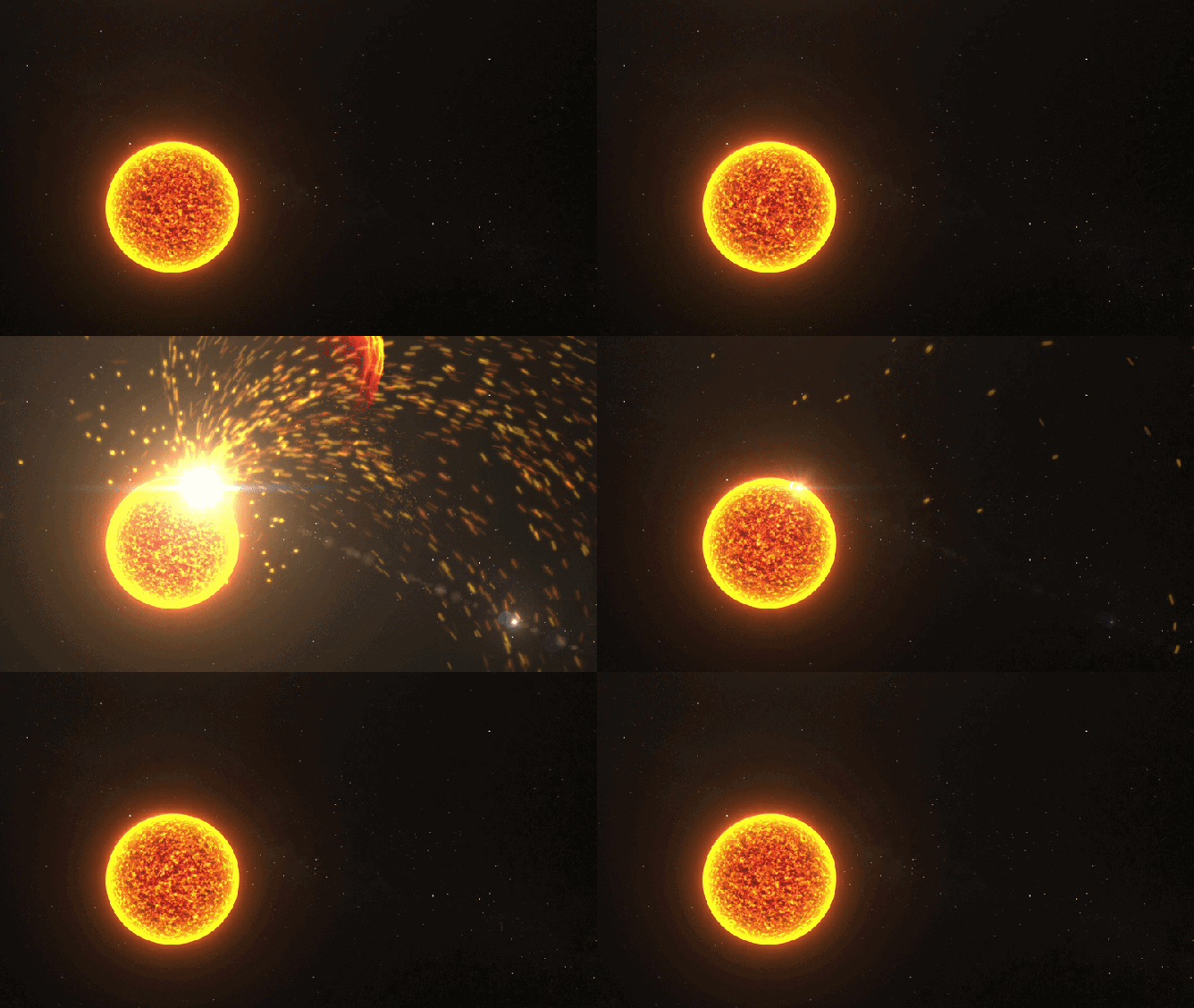
This animation shows a solar eruption that produces a solar flare, a coronal mass ejection, and a flurry of energetic particles. The particles follow the spiral shape of the solar wind's magnetic fields into interplanetary space.
(NASA's Goddard Space Flight Center Conceptual Image Lab / NASA)
Solar flares are powerful bursts of energy that can impact radio communications, electric power grids and navigation signals, and they pose a risk to spacecraft and astronauts, according to NASA.
THE BEST CELESTIAL EVENTS IN 2026 YOU WON'T WANT TO MISS
These powerful eruptions can cause various effects
- A bright flash of light called a solar flare.
- A radiation storm, or flurry of solar particles propelled into space at high speeds.
- An enormous cloud of solar material, called a coronal mass ejection, that billows away from the sun.
Scientists are now waiting to see how the CME will impact Earth, potentially triggering a geomagnetic storm and producing dazzling auroras for thousands of skywatchers.
Despite this, only a limited number of locations in North America will be able to view the celestial event.
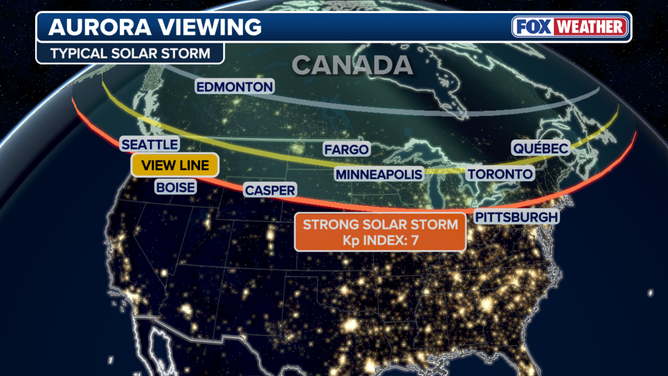
Aurora viewing map.
(FOX Weather)
If the CME occurs at the same time as a high-speed solar wind stream, the two could combine to enhance geomagnetic activity and increase the odds for aurora activity, according to Space.com.
Early models show that Earth could receive a glancing blow from the CME by Friday at around 6 to 7 a.m. EDT.
AUGUST SKYWATCHING GUIDE: FROM A PLANETARY PARADE AND ECLIPSES TO A METEOR SHOWER
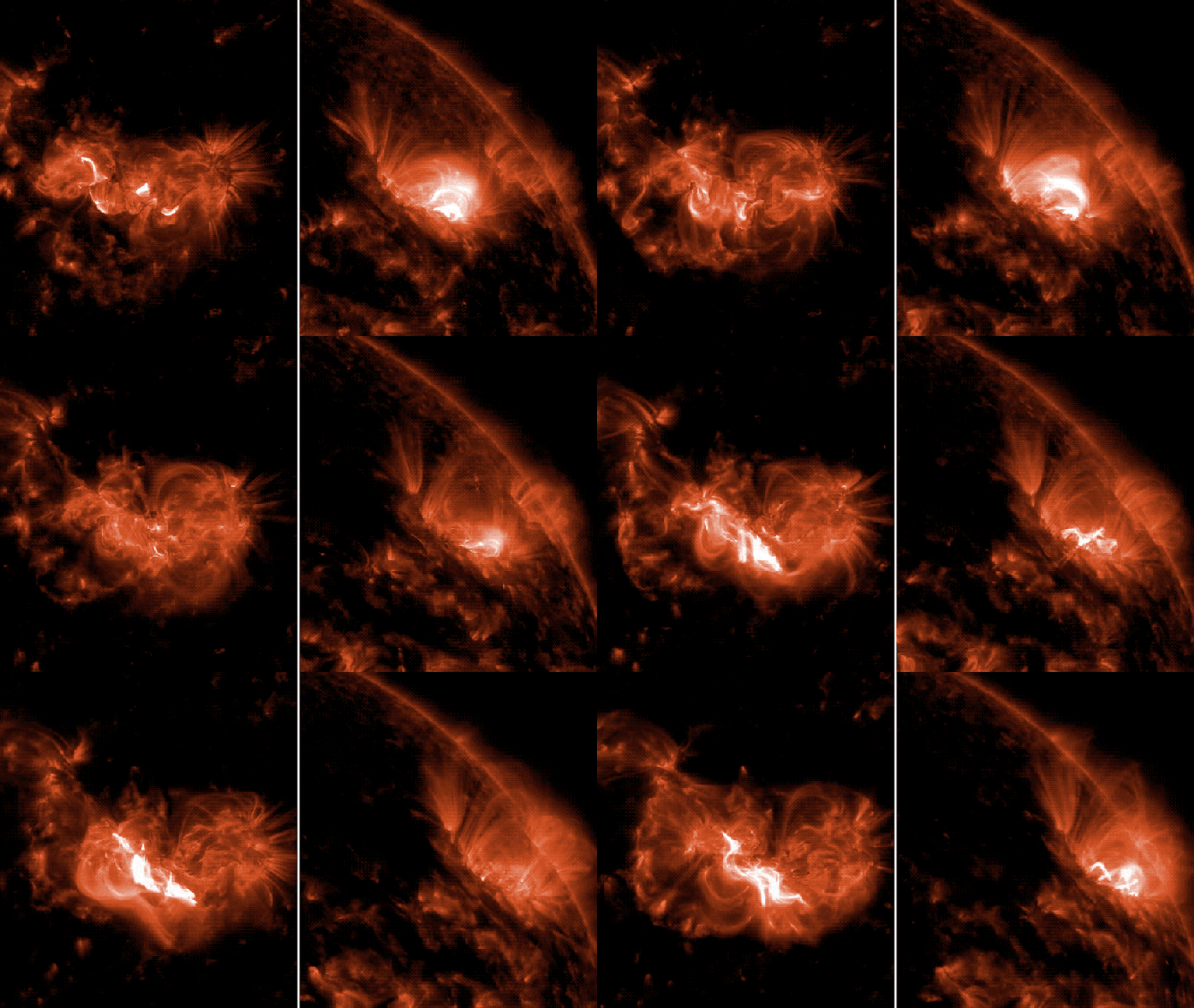
NASA’s Solar Dynamics Observatory captured these images of the solar flares — as seen in the bright flashes in the left image (May 8 flare) and the right image (May 7 flare). The image shows a subset of extreme ultraviolet light that highlights the extremely hot material in flares and which is colorized in orange.
(NASA/SDO / NOAA)
The CME's impact will determine the exact arrival time when its magnetic field hits Earth and interacts with it, increasing the chances of geomagnetic activity.
SOLAR VS. LUNAR: WHICH ECLIPSE GIVES YOU THE BEST CHANCE OF SEEING IT?
Hopefully, the event will produce a colorful aurora for astronomers and skywatchers to enjoy on Friday.