

See it: Snapping turtles hibernate in frozen water as they endure 'brumation'
These snapping turtles are willingly frozen and are undergoing a process called brumation. Here's what that means.
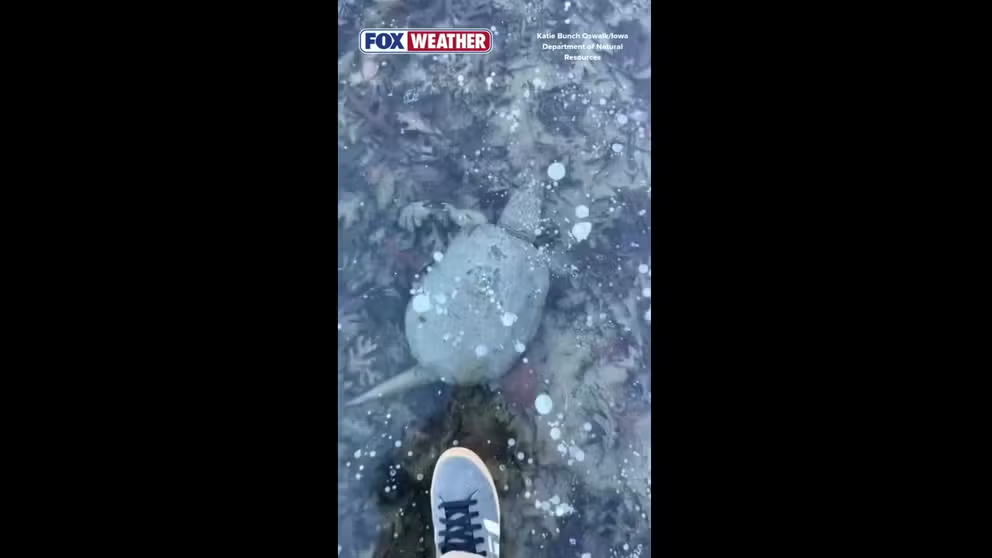
Snapping turtles lie dormant under frozen water
Snapping turtles in Iowa lie in a state of brumation under the frozen waters. This is a natural process that reptiles experience during the winter.
IOWA – Hikers saw a unique sight while exploring the frozen outdoors of Iowa.
A video shared by the Iowa Department of Natural Resources showed snapping turtles lying frozen in time under icy waters.
YOUNG MANATEE TRAPPED IN STORM DRAIN AFTER SEEKING WARMTH FROM THE COLD
Luckily, these snappers are willingly frozen and are just undergoing a process called brumation. This is a form of dormancy for reptiles.
"During brumation, their heart rate, body temperature and metabolism decrease," a statement from the National Park Service reads.
A cold temperature change also means that reptiles can’t digest food for the whole winter.
It is worth noting that if temperatures rise for a day or two, reptiles may halt brumation and emerge to forage.
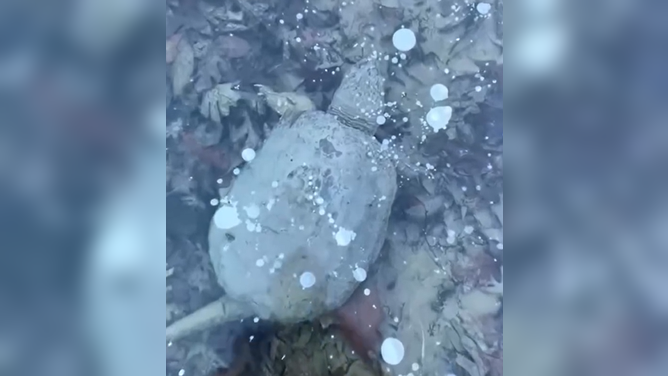
A snapping turtle lays in brumation under frozen waters.
(Katie Bunch Oswalk/Iowa Department of Natural Resources)
According to the U.S. Fish and Wildlife Service, these critters can stay underwater for so long through a process called cloacal respiration, which draws oxygen from water as it passes over blood vessels in their hind end, which is full of them.
VIDEO: FLORIDA POLICE RESCUE INJURED BALD EAGLE ON PRESIDENTS' DAY
Simply put, this process is like reptilian hibernation, but much more extreme.
This process allows these kinds of creatures to thrive, surviving in the freezing winter conditions, on top of the fact that reptiles can't produce their own body heat.
Editor's Note: This article was updated to provide clarification that the video recently shared by the Iowa Department of Natural Resources of snapping turtles brumation is from December 2024.