

See it: Over 30 new species discovered during expedition to the ocean's 'largest frontier'
The mission explored "the last and largest frontier" — the midwater between the surface and ocean floor.
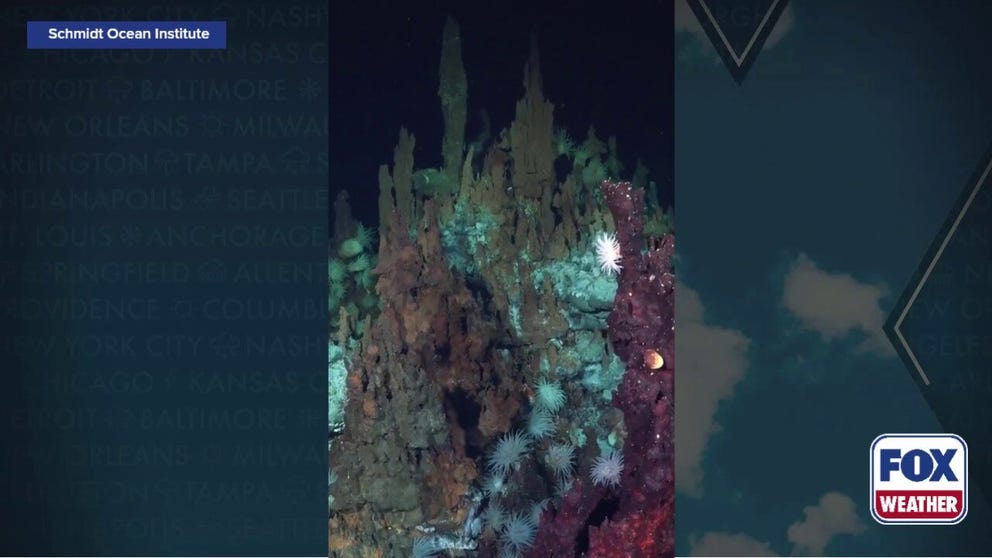
See it: Scientists discover 31 unknown species off the coast of Brazil
Researchers discovered over 30 new species off the coast of Brazil during a two-week expedition in the South Atlantic Ocean’s midwater, a region known as the "largest frontier." These remarkable findings provide vital insights into deep-sea marine life and how to improve overall ocean health.
An international team of researchers has discovered 31 new species off the coast of Brazil in the South Atlantic Ocean using advanced AI tools during a two-week expedition led by the Schmidt Ocean Institute and Monterey Bay Aquarium Research Institute (MBARI) Adjunct Karen Osborn.
GLOWING BLUE SPIDER AMONG DOZENS OF UNKNOWN SPECIES DISCOVERED IN UNCHARTED ANGOLA HIGHLANDS
The mission was set to explore what Osborn calls "the last and largest frontier" — the midwater between the surface and ocean floor.
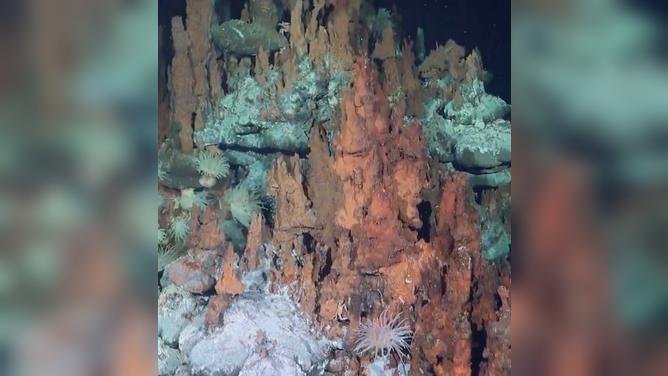
Researchers discover 31 new species in the South Atlantic Ocean during an expedition to the midwater off Brazil's coast.
(Schmidt Ocean Institute)
"Every dive into this environment reveals exciting new discoveries that help us understand the fascinating organisms that play a critical, but poorly understood, role in ocean function," she said.
During the expedition, AI tools developed by MBARI’s Bioinspiration Lab played a vital role in helping scientists discover and sample delicate gelatinous creatures living in the midwater.
RARE SPECIES OF MOON JELLYFISH DISCOVERED IN GULF OF AMERICA OFF LOUISIANA COAST
These tools protect the animals from the damage typically caused by traditional sampling methods, according to MBARI.
Specifically, researchers used DeepPIV (particle image velocimetry), a technology that projects a sheet of laser light to illuminate the water and generate 3D in situ visualizations, allowing scientists to analyze and interpret organism data right where it is generated.
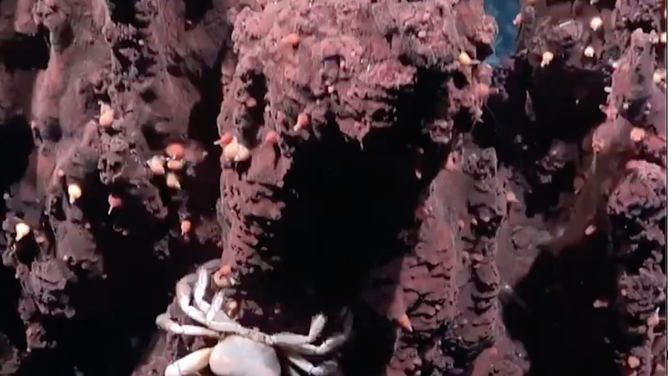
Researchers discover 31 new species in the South Atlantic Ocean during an expedition to the midwater off Brazil's coast.
(Schmidt Ocean Institute)
In addition to laser imaging, the team deployed EyeRIS (remote imaging system). This technology utilizes a lightfield camera to generate 3D images, revealing critical data about the structure and movements of marine life in their natural habitat.
SLITHERING TOWARD EXTINCTION: DEADLY DISEASES COULD WIPE OUT RATTLESNAKE POPULATION
"This instrument allows researchers to quantitatively study the form and function of organisms, recently revealing new insights about the locomotion of deep-sea octopus," according to MBARI.
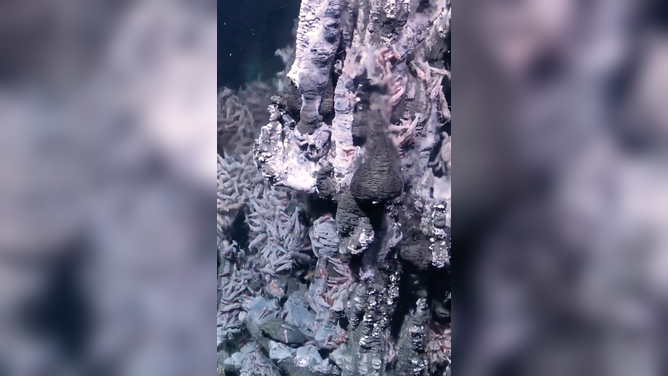
Researchers discover 31 new species in the South Atlantic Ocean during an expedition to the midwater off Brazil's coast.
By combining rapid genome sequencing with high-resolution imagery, researchers successfully identified a wide array of previously unknown marine life, including:
- One new species of amphipod
- One new species of gossamer worm
- Nine new species of jellies
- Seven new species of siphonophores
- Seven new species of ctenophores
- Four new species of larvaceans
- Two new species of large, single-celled rhizarians
The remarkable images and videos the team was able to capture provide vital insights into the marine life within the midwater, how to protect them and improve ocean health.