

NASA's mission to save the Swift telescope experiences a major setback
The robotic spacecraft from Katalyst's LINK servicing mission encountered attitude control issues that caused the spacecraft to spin and resulted in sporadic communication.
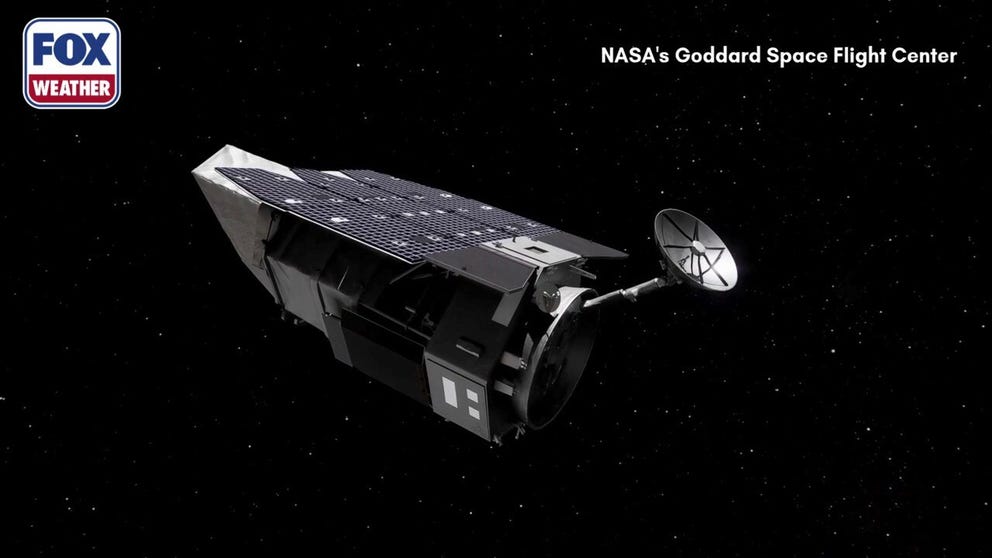
NASA introduces the Nancy Grace Roman Space Telescope
The Nancy Grace Roman Space Telescope is a NASA observatory designed to settle essential questions in the areas of dark energy, exoplanets, and infrared astrophysics.
The mission to rescue the Neil Gehrels Swift Observatory from sinking into Earth's atmosphere experienced a big setback over the weekend.
NASA PREPARES FOR CRITICAL SPACEWALK TO MAKE REPAIRS AND UPGRADE INTERNATIONAL SPACE STATION
According to NASA, the robotic spacecraft from Katalyst's LINK servicing mission, which is designed to boost Swift's orbit, encountered attitude control issues that caused the spacecraft to spin and resulted in sporadic communication.
"Preliminary investigation shows that two of LINK's three reaction wheels currently are not operable, and there is some loss of functionality in its cold gas thruster system," NASA said in a press release.
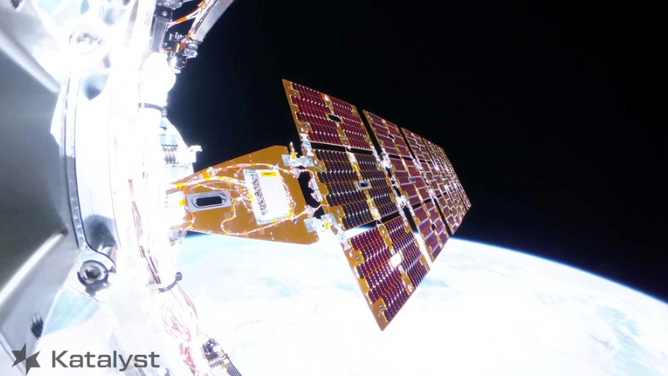
A solar panel extends from the side of Katalyst Space’s LINK robotic servicing spacecraft.
(Katalyst Space / NASA / NASA)
Fortunately, LINK's other major subsystems are still functioning, and the spacecraft continues to have power and communication with the Katalyst team.
The agency said it plans to stop LINK's spin over the next few days using the spacecraft's electric propulsion thrusters.
NASA WILL CONDUCT DARING RESCUE MISSION TO REPOSITION TELESCOPE SINKING INTO EARTH'S ATMOSPHERE
At the same time, Katalyst is working closely with NASA to develop a new attitude controller for LINK's current configuration.
Katalyst mentioned that the work includes "remapping the available actuators, retuning the control algorithms and validating the updated controller in simulations before it is activated in orbit."
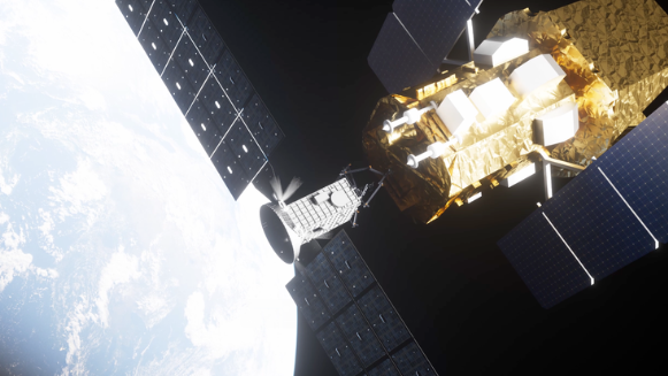
Photo of NASA's Swift satellite.
(NASA)
The issue has delayed the mission, and LINK is now expected to approach Swift by the end of August.
"We're focused on stabilizing the spacecraft and restoring core system functionality while planning rendezvous with Swift, which we will begin executing once recovery is complete," Katalyst said.
LINK was launched on July 3 to reposition the Neil Gehrels Swift Observatory into a higher orbit.
The robotic servicing spacecraft launched aboard a Northrop Grumman Pegasus XL rocket from Kwajalein Atoll, Marshall Islands, marking the first time NASA has performed this type of mission.
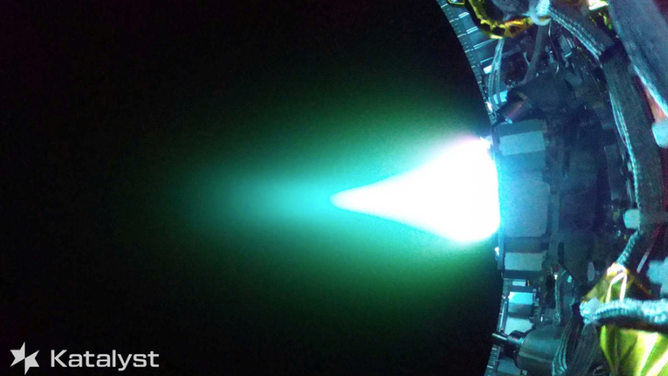
LINK fires one of its xenon-fueled thrusters.
(Katalyst Space / NASA)
The $30 million mission must be completed by the end of the year. If Swift drops too low in orbit, NASA will no longer be able to raise it, and the telescope will eventually reenter Earth's atmosphere.
AUGUST SKYWATCHING GUIDE: FROM A PLANETARY PARADE AND ECLIPSES TO A METEOR SHOWER
The Neil Gehrels Swift Observatory was built as an astrophysics multi-tool capable of rapidly observing a wide range of cosmic objects in visible, ultraviolet, X-ray and gamma-ray light.
The observatory has been used to study black holes, gamma-ray bursts and other cosmic events.
By saving Swift, NASA hopes to extend the telescope's operational life, allowing scientists to continue studying some of the universe's biggest mysteries.