

Look up: The moon and Venus to put on a dazzling show as they appear side by side in the sky
It will be the easiest to see just after twilight, when Venus is at its brightest.
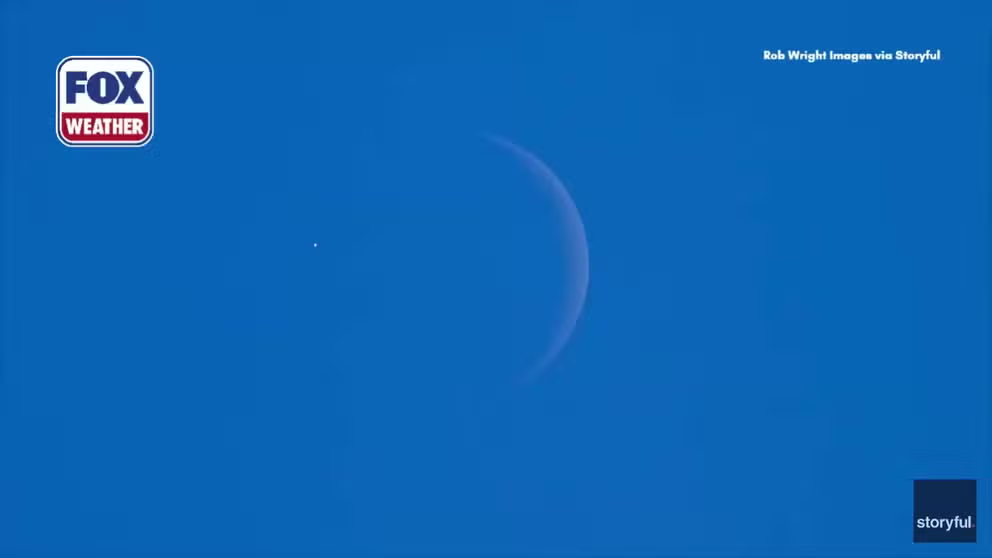
FILE: Stunning Timelapse Video Shows Lunar Occultation of Venus
A lunar occultation of Venus took place on the afternoon of Wednesday, June 17. Stunning timelapse footage by Rob Wright shows the moon disappearing behind the dark side of the crescent moon before reappearing a few instances later.
THE TAKEAWAY
- The moon and Venus will appear very close to each other in the night sky on Sept. 14 in a conjunction.
- A planetary conjunction is when two or more planets appear close together from our perspective on Earth.
- It will be the easiest to see just after twilight, when Venus is at its brightest.
On Monday, Venus and the moon will appear next to each other in the night sky, in a lovely spectacle as Venus is about to reach peak brightness.
While a moon/Venus conjunction is a common occurrence, catching it when Venus is at peak brightness makes it all the more exciting.
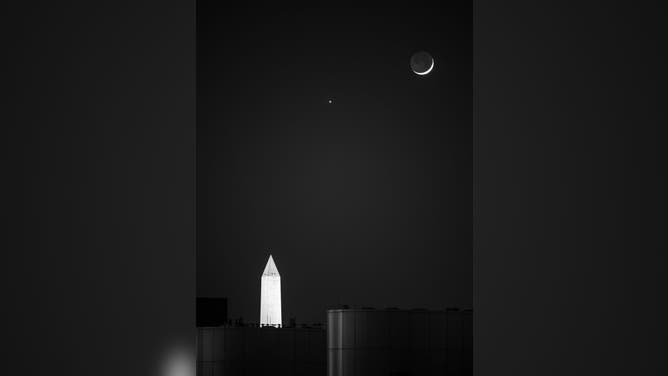
The Moon and Venus, center, are seen in conjunction above the Washington Monument, Monday, May 18, 2026, as viewed from the Mary W. Jackson NASA Headquarters Building in Washington.
(NASA/Bill Ingalls / NASA)
Plus, it's a wonderful photo opportunity for stargazers everywhere.
A planetary conjunction is when two or more planets appear close together from our perspective on Earth, even though they're millions of miles apart, according to The Planetary Society.
SEPTEMBER SKYWATCHING GUIDE: HARVEST MOON, BRIGHT VENUS, FALL EQUINOX AND MORE AHEAD
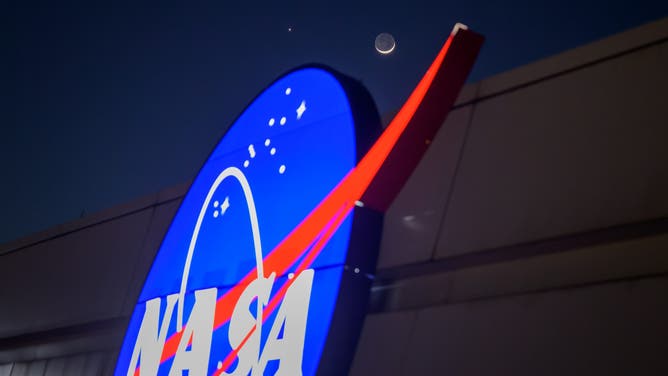
The Moon and Venus, left, are seen in conjunction, Monday, May 18, 2026, from the Mary W. Jackson NASA Headquarters Building in Washington.
(NASA/Bill Ingalls / NASA)
It will be the easiest to see just after twilight, when Venus is at its brightest.
Look as far to the South as you can to see the conjunction, which shouldn't need any help to see the bright planet.
NASA’S PANDORA MISSION AIMS TO UNCOVER ATMOSPHERIC SECRETS OF MORE THAN 20 ALIEN WORLDS
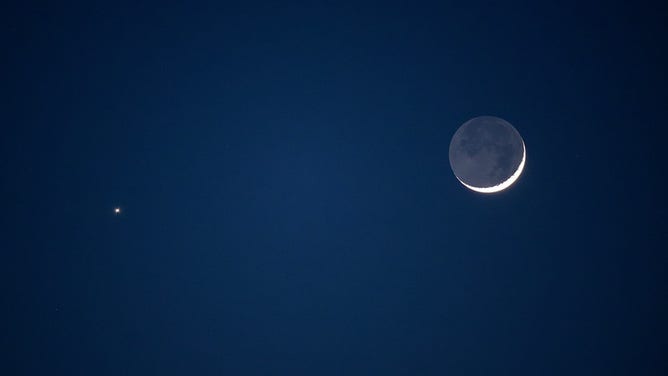
The Moon and Venus, left, are seen in conjunction, Monday, May 18, 2026, from the Mary W. Jackson NASA Headquarters Building in Washington.
(NASA/Bill Ingalls / NASA)
The moon will be a thin waxing crescent, making Venus the star of the show.
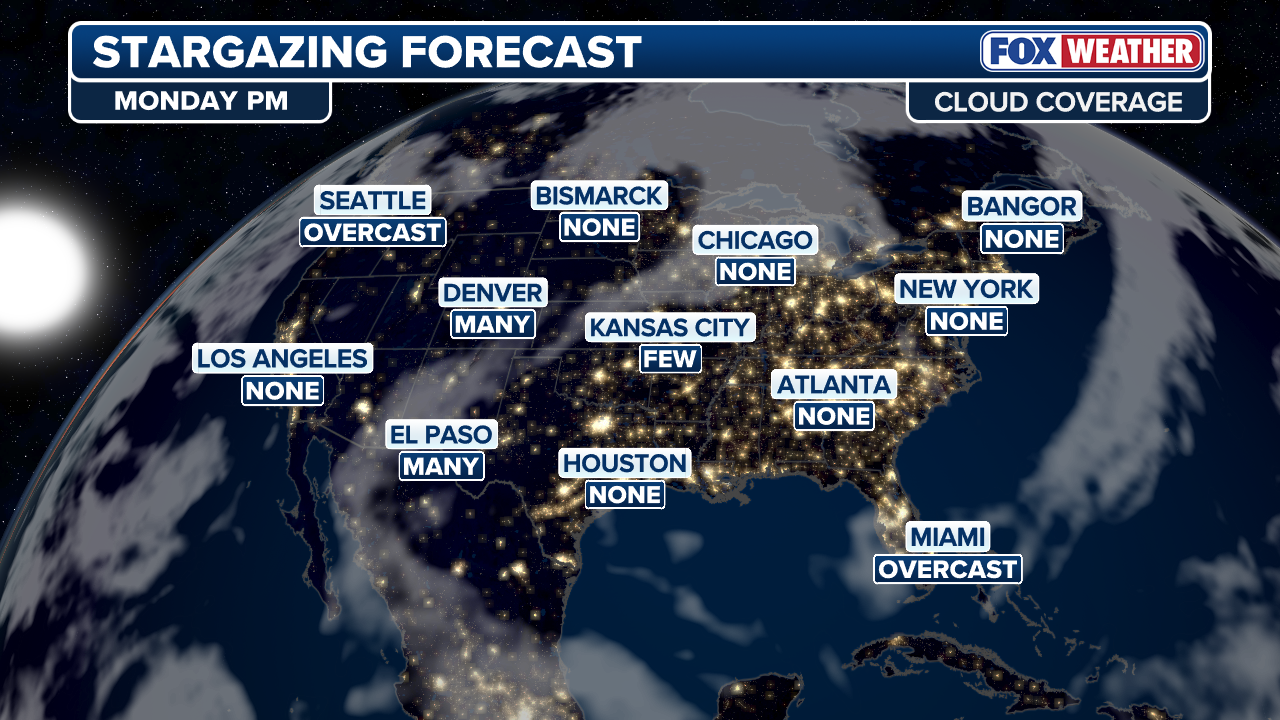
For those in the eastern U.S., it'll be a great night for skywatching, as cloud coverage is almost nonexistent.
NASA'S HUBBLE SPACE TELESCOPE REVEALS GIANT ATMOSPHERIC WAVE AROUND SATURN'S SOUTH POLE
According to the FOX Forecast Center, those in the western half of the country will have a harder time, with lots of clouds blocking their views.
(FOX Weather)
For those wanting to see Venus after the conjunction on Monday night, the planet will still be shining the brightest of the whole year for this week, according to EarthSky.org.
Additionally, the moon will pass in front of Venus on Monday, in an occurrence called an occult.
Very few, if any, people will be able to see the occult happening over Europe, Asia and Africa because it will be daylight hours.
Earthsky.org said Venus could be mistaken for a plane in the night sky because of how bright it will be all week.