

Hidden in plain sight: Scientists discover 'demon' cavefish tucked away in Alabama cave
Researchers said the Demon cavefish escaped detection because it closely resembled another blind species already known to be from the cave.
FILE: Catfish swim in Florida driveway as Hurricane Debby causes flash flooding
Catfish were spotted swimming along a residential driveway and yard in Florida as rain from Hurricane Debby brought flash flooding to the area on Sunday. Dan Ciarletta posted this footage of the fish swimming outside his home in St. Petersburg.
ALABAMA - Researchers have uncovered a new species of blind cavefish hiding in one of the most studied cave systems in Alabama, leading scientists to reshape their understanding of evolution, biodiversity and conservation.
RARE, ELUSIVE PANCAKE-LIKE OCTOPUS SPOTTED IN UNCHARTERED DEEP WATERS OFF CARIBBEAN ISLAND
"Finding an entirely unknown, new genus of freshwater fish in eastern North America today is a little like finding a new kind of big cat," said the study’s lead author, Dr. Matthew L. Niemiller, an associate professor of biological sciences and director of the Cave Bio Lab at The University of Alabama in Huntsville. "The group is so well-known, we thought the big surprises were behind us."
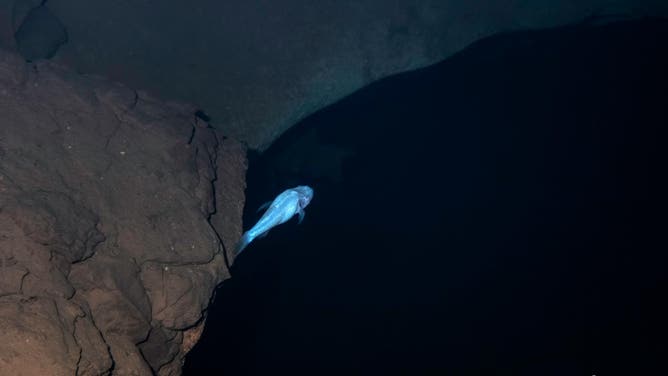
Researchers have uncovered a new genus of blind cavefish in one of the most studied cave systems.
(Matthew L. Niemiller / UAH / FOX Weather)
The newly discovered Demon cavefish (Demogorgonichthys arcanus) is completely eyeless, colorless and is electric blue. The fish was discovered in Bobcat Cave near Huntsville, Alabama.
"This is a site that has been monitored at least quarterly for more than 30 years. Cavefishes in this family have been a model system for cave biology since the 1800s," Niemiller said.
FIRST-KNOWN FRESHWATER CONTAGIOUS CANCER SPREADING AMONG CATFISH IN VERMONT LAKE
Researchers said the Demon cavefish escaped detection because it closely resembled another blind species already known to be from the cave, the Southern cavefish. But detailed anatomical studies, CT imaging and genetic analyses revealed the new fish.
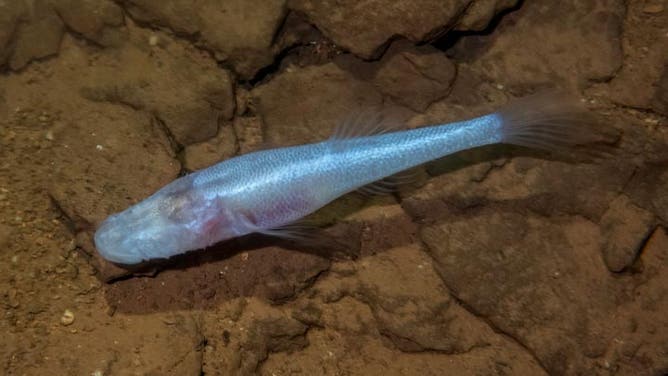
Researchers say that the Demon Cavefish escaped detection because it closely resembles another blind species already known from the cave.
(Matthew L. Niemiller / UAH / FOX Weather)
"A new genus is warranted when an animal simply doesn't fit within any existing one, and this fish met that bar in its anatomy, its CT imaging and its DNA all at once," Niemiller said.
Researchers found that the Demon cavefish and the Southern cavefish occupy the same pools inside Bobcat Cave, yet they are not closely related.
CORAL ECOSYSTEM REEMERGES AFTER 60 YEARS WITHIN THE OCEAN'S 'TWILIGHT ZONE'
Instead, the two species evolved the classic characteristics of cave life, including the loss of eyes and pigmentation.
"Each found its own separate way into the underground world and lost its eyes and pigment independently, millions of years apart. It's a vivid case of convergent evolution," Niemiller said.
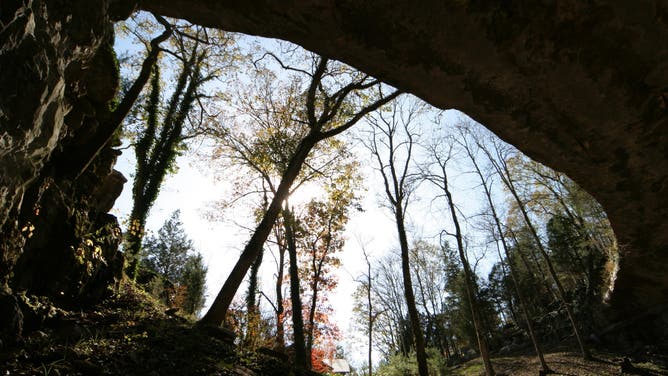
This fish was discovered in Bobcat Cave.
(Jeffrey Greenberg/Universal Images Group via Getty Images / Getty Images)
Since the Demon cavefish is currently known from only a single cave, researchers believe it is highly vulnerable to changes in groundwater quality and hydrology.
"Being known from a single cave and its aquifer makes it inherently vulnerable," Niemiller said. "The central challenge is that the threats come from outside the cave. Groundwater quickly links the surface to the cave, so contaminants, sediment and fluctuations in water level from the surrounding recharge area can all reach the fish."
SCIENTISTS MAKE RARE DISCOVERY IN ONE OF EARTH'S MOST EXTREME OCEANS
For the research team, the study highlights the extraordinary biodiversity hidden beneath North Alabama and suggests there may be many more undiscovered species waiting to be found.
"The Demon cavefish is a reminder that our inventories are far from finished, even in well-explored places," Niemiller said.