

Lunar eclipse 2026 guide: Everything to know about this week’s near-total celestial spectacle
During the peak of the eclipse at 4:13 a.m. HST, 96.3% of the moon's disc will be within Earth’s umbra, creating almost complete darkness for some portions of North America, South America, Europe and Western Africa.
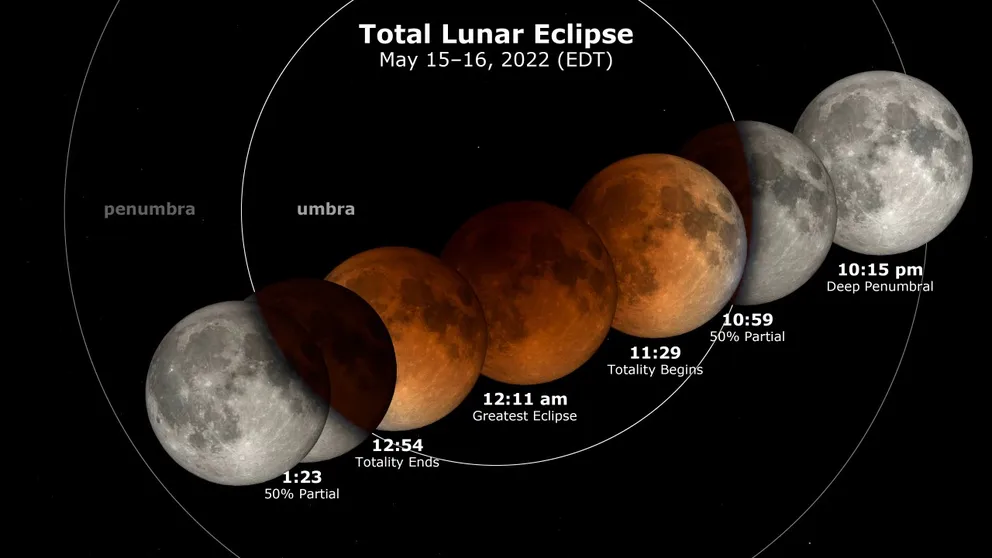
Lunar eclipse
Stargazers in North America will be treated to a total lunar eclipse, when Earth’s shadow will temporarily cover the moon in May
THE TAKEAWAY
- Partial lunar eclipse to occur on Aug. 27 to 28.
- The partial lunar eclipse will be visible across the entire U.S.
- This is the best lunar eclipse viewing until June 2029.
Astronomers and skywatchers are bracing for another celestial event to dazzle the sky this week as a partial lunar eclipse takes place from Aug. 27 to 28.
On Aug. 28 and starting the evening of the 27th in some time zones, the moon will pass into the shadow of Earth, creating a deep particle eclipse.
The partial phase of the eclipse will occur at 2:34 p.m. HST, where the umbra’s effect will take a large bite out of the full moon, also turning it into a picturesque copper color.
"Because the moon will track so deeply into the shadow, viewers can expect the obscured portion of the moon to take on a dramatic rusty, coppery, or reddish tint — similar to a traditional Blood Moon," the FOX Forecast Center said.
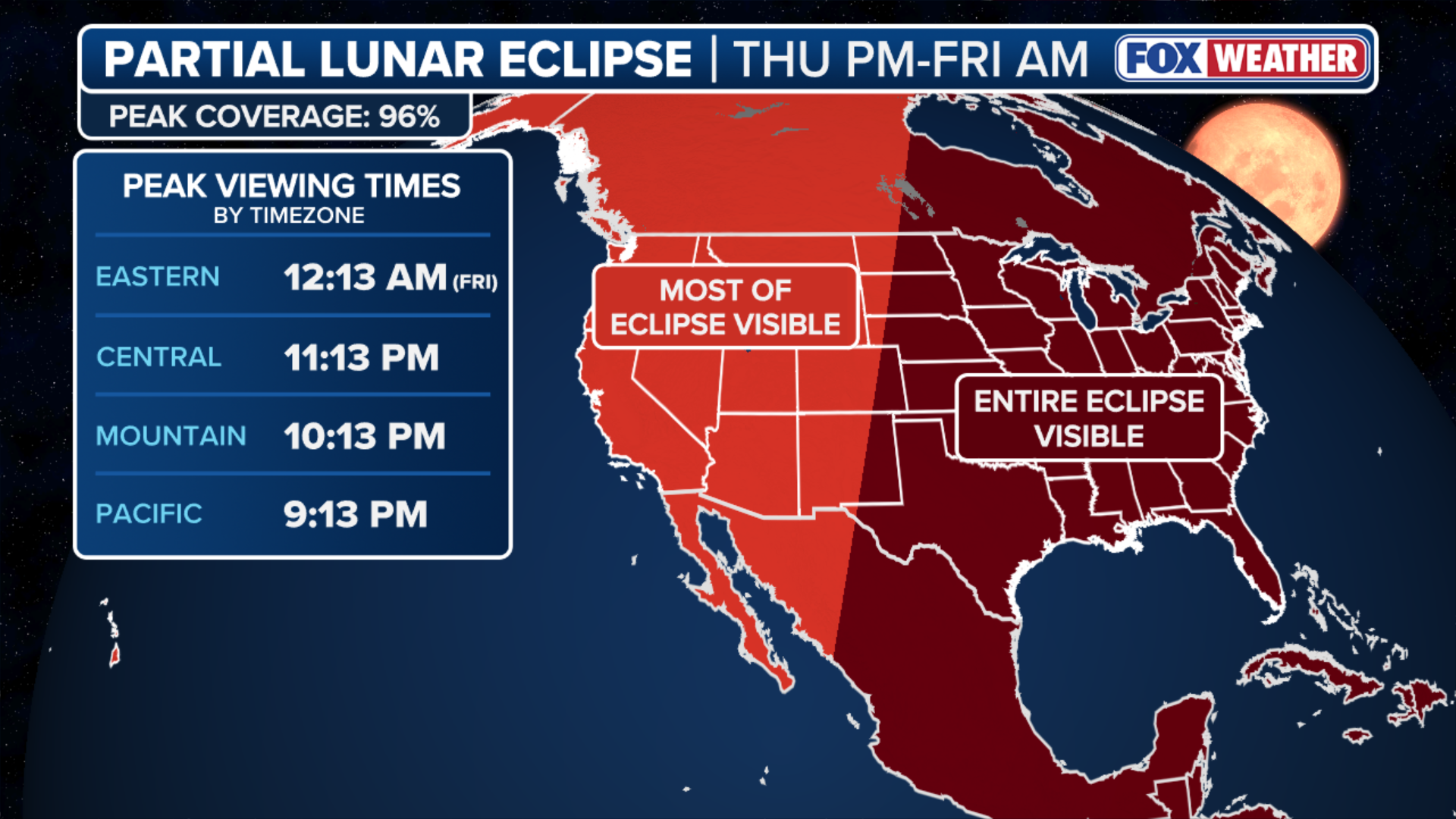
(FOX Weather)
During the peak of the eclipse at 4:13 a.m. HST, 96.3% of the moon's disc will be within Earth’s umbra, creating almost complete darkness for some portions of North America, South America, Europe and Western Africa.
Some areas in the U.S. will have a better viewing experience than others, but the eclipse will be visible to the entire country.
NASA AIMS TO PUT ASTRONAUTS BACK ON THE MOON BY 2028
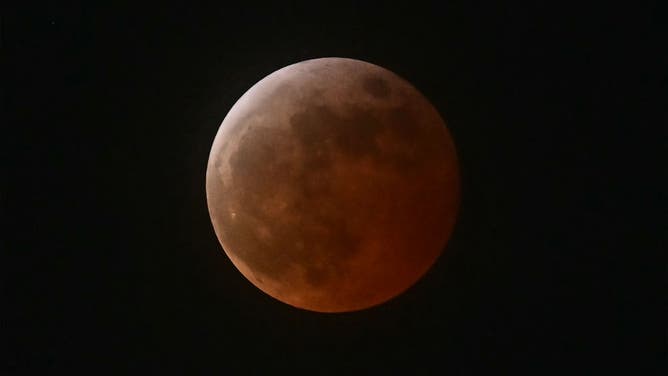
A lunar eclipse is seen during the Blood Moon Lunar Eclipse above Los Angeles, California, on March 13, 2025. (Photo by Frederic J. Brown / AFP) (Photo by FREDERIC J. BROWN/AFP via Getty Images)
When and where to watch
- Penumbral eclipse begins: 9:23 p.m. ET
- Partial eclipse begins: 10:33 p.m. ET
- Maximum eclipse: 12:12 a.m. ET
- Partial eclipse ends: 1:51 a.m.
- Penumbral eclipse ends: 3:01 a.m. ET
The peak of the eclipse will occur around midnight for most locations, with the East Coast kicking things off a bit earlier in the evening and others in the West seeing the peak closer to 9 p.m.
If you want to observe the celestial event, it would be wise to set up early in the evening, by 7 p.m. to catch the eclipse from start to finish.
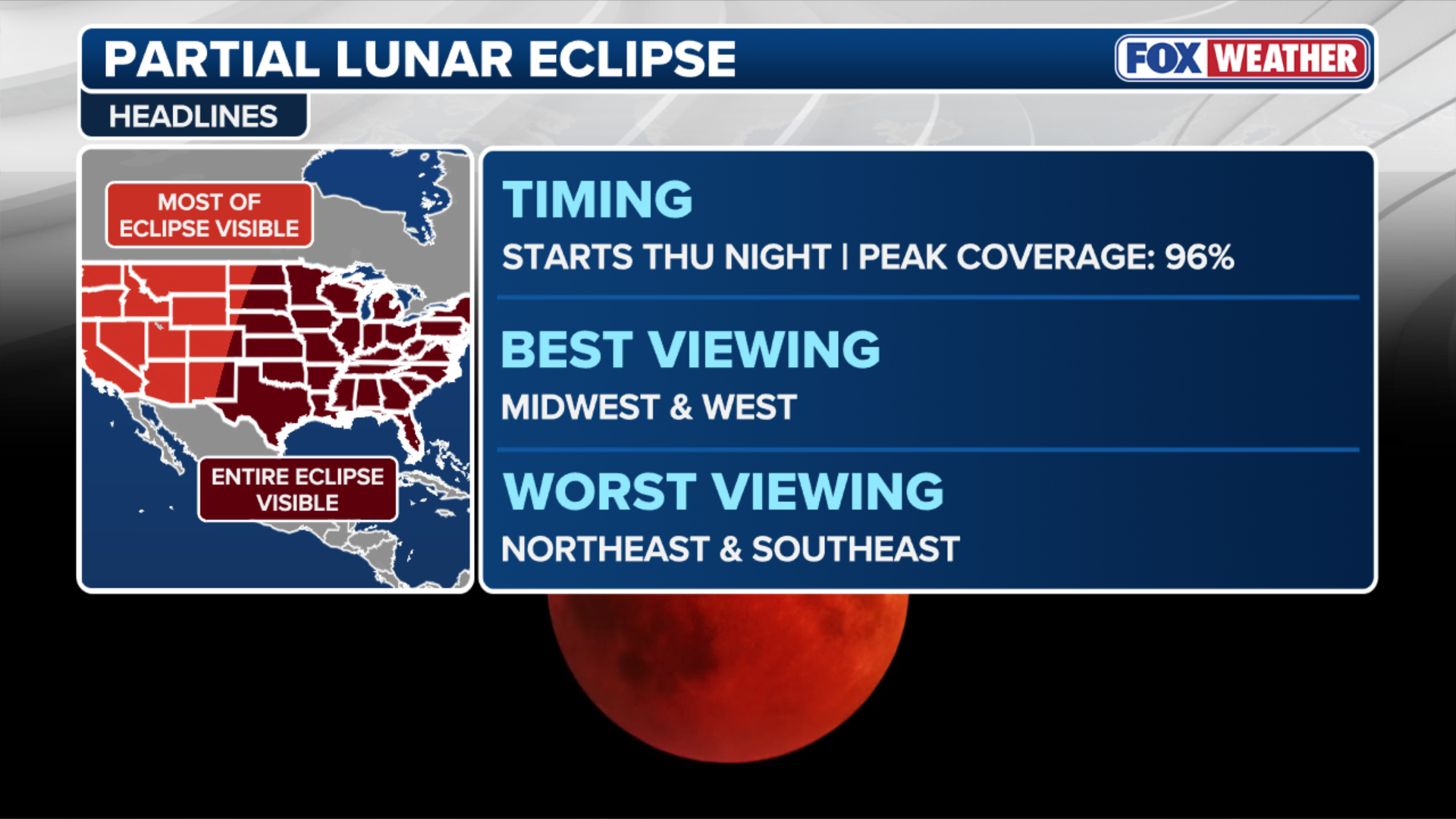
(FOX Weather)
The best regions for viewing the partial lunar eclipse will be the Midwest and West Coast, while the worst places to watch are the Northeast and Southeast.
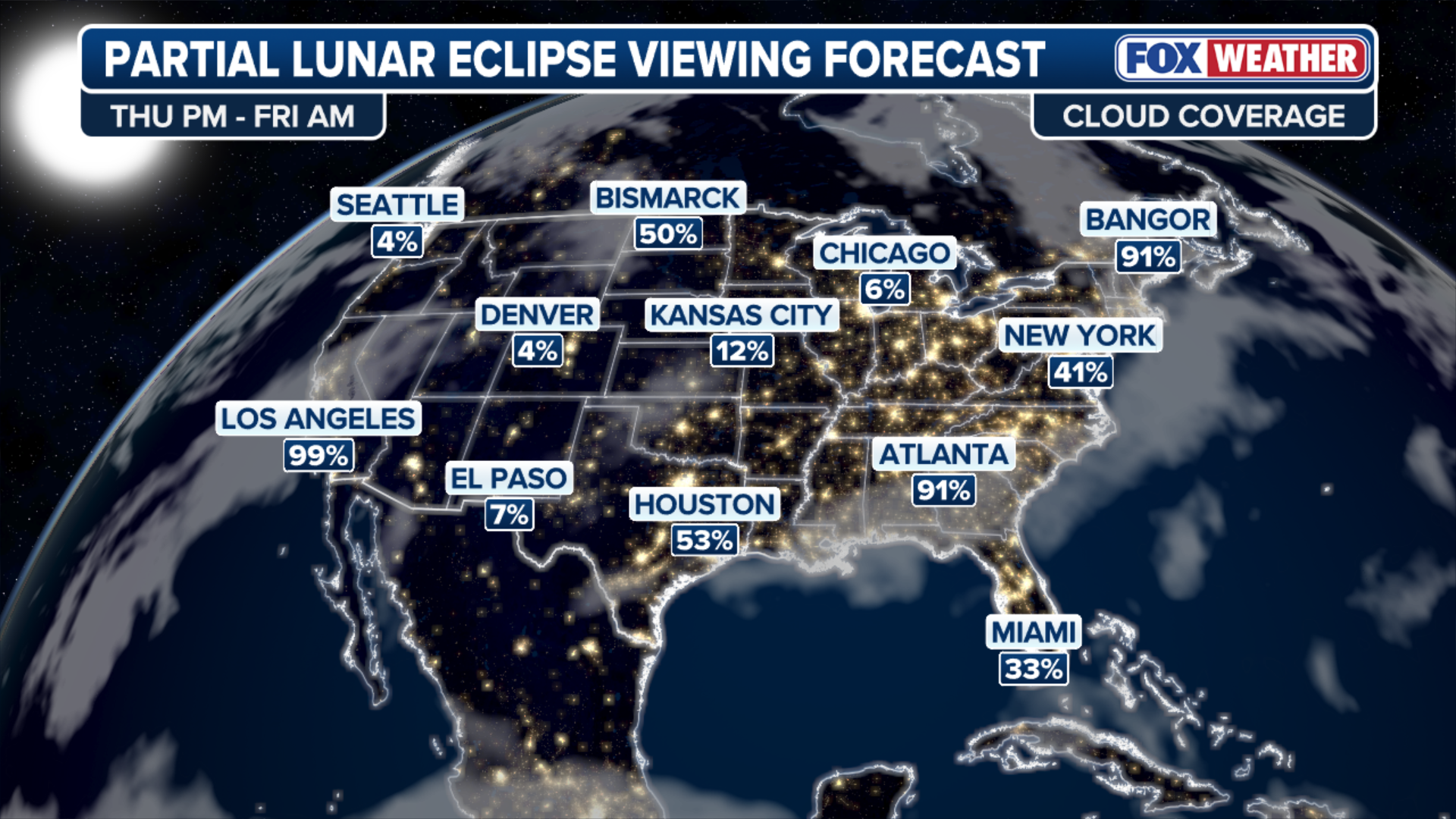
(FOX Weather)
How to watch a lunar eclipse
- Thankfully, a lunar eclipse is much easier to view than a solar eclipse because we are viewing reflected sunlight bouncing off the moon, so you don't need safety glasses or viewing tools.
- Use a telescope or binoculars for the best possible view of this stunning celestial event as summer comes to a close.
- Try to minimize light near your viewing area.
SUNLIGHT FOR SALE: GIANT SPACE MIRROR COULD ONE DAY BRING DAYLIGHT TO EARTH AT NIGHT
Setting up early with ideal lighting in your viewing area, along with minimal cloud cover, will be the best recipe for viewing the partial lunar eclipse and its rare, picturesque qualities.
This will be the best lunar eclipse visible for most of the U.S. until June 2029.