

Artemis II begins first full day in space, performing critical system checks, maneuvers on historic mission
After a 4-hour rest period, the Artemis II crew will awake at 7am EDT on Thursday, April 2, to prepare for what's called the perigee raise burn, NASA said.
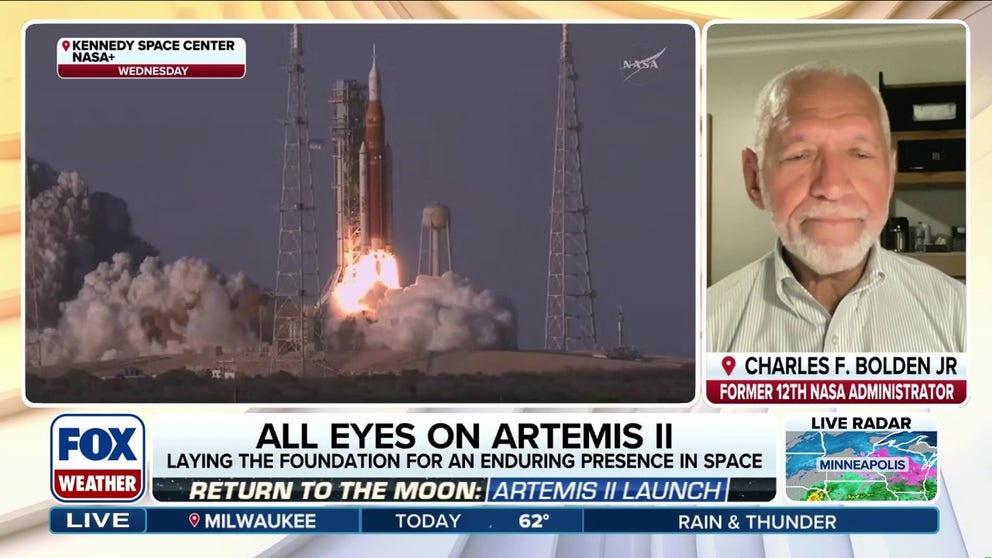
Former NASA administrator calls Artemis II mission a ‘baby step’ to Mars
Former 12th NASA Administrator Charles F. Bolden Jr. joins FOX Weather following the successful and historic launch of Artemis II. And the mission is much more than a trip to the Moon, as Bolden describes it as a vital "baby step
Artemis II, the historic test flight taking four astronauts on a flyby around the moon, had liftoff after months of preparation.
The Orion spacecraft and SLS rocket took off from Kennedy Space Center's Launchpad 39B at 6:35 p.m. on Wednesday, April 1.
It's the first time in 52 years that humans have been on a lunar mission.
LIVE UPDATES: ARTEMIS II LAUNCH FINAL COUNTDOWN UNDERWAY TO SEND ASTRONAUTS AROUND THE MOON
Nearly 12 hours into the mission, the crew has now officially started its first full day in space. These initial 24 hours are critical as the astronauts focus on essential system checks and orbital maneuvers to ensure the spacecraft is healthy before heading to the Moon.
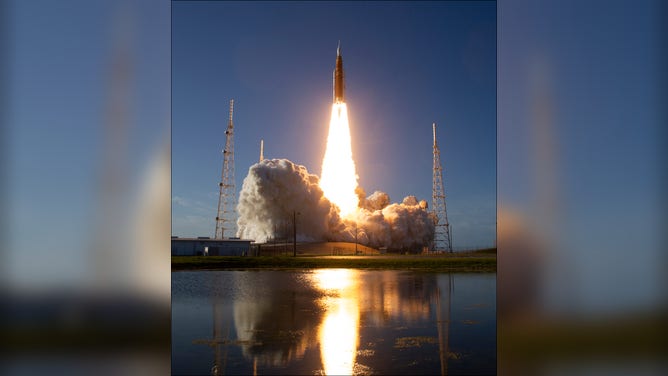
NASA's Artemis II Space Launch System rocket carrying the Orion spacecraft lifts off from Launch Complex 39B at Kennedy Space Center on April 1, 2026 in Cape Canaveral, Florida.
(@nasahqphoto / X)
Following its successful launch and an apogee raise burn—the engine firing that pushed the spacecraft into a high orbit 43,000 miles above Earth—the Artemis II crew released from the rocket's upper stage to conclude a 70-minute 'proximity operations' demonstration.
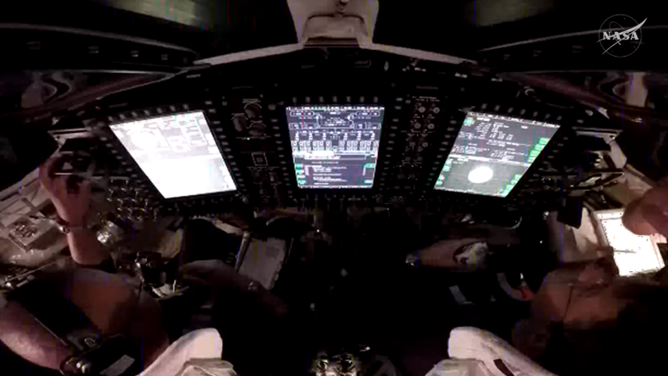
A view over the shoulders of NASA astronauts Victor Glover (left) and Reid Wiseman (right), pilot and commander, respectively, inside the Orion spacecraft as they participate in a proximity operations demonstration.
(NASA / NASA)
During the exercise, the astronauts manually steered the Orion capsule to practice the precise maneuvers required for future docking missions.
It was then during the test operation that the crew encountered an issue with the spacecraft's toilet.
They reported a blinking fault light and worked closely with the mission control in Houston to restore the toilet to normal after the operation.
After a 4-hour rest period, the four-astronaut crew will awake at 7am EDT on Thursday, April 2, to prepare for what's called the perigee raise burn, NASA said.
Compared to the apogee raise burn, the perigee raise burn pushes the lowest point of the spacecraft's orbit further away from Earth.
According to NASA, "Together with the apogee raise burn completed earlier, these burns shape the spacecraft’s initial orbit and prepare it for later translunar operations. "
The crew will then enter another sleeping period around 9:40am.
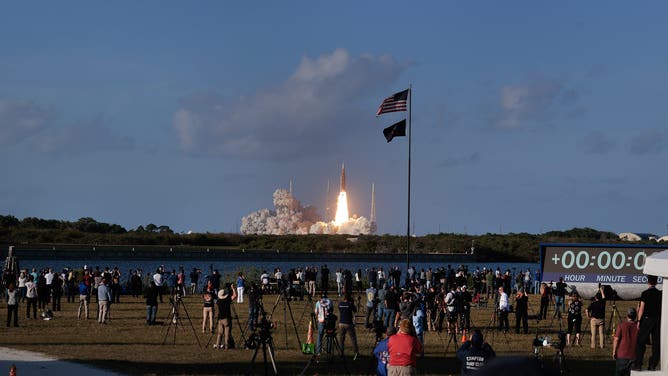
People watch as NASA's Artemis II Space Launch System rocket carrying the Orion spacecraft lifts off from Launch Complex 39B at Kennedy Space Center on April 1, 2026 in Cape Canaveral, Florida.
(Chip Somodevilla/Getty Images / Getty Images)
On Wednesday, a few hours before the mission's launch window opened, the mission very briefly entered a "No-Go" range, while they addressed a glitch with the Flight Termination System.
After roughly 45 minutes, the mission returned to "Go" and things continued as planned.
The launch window for the mission opened at 6:24 p.m.
Artemis II is the first crewed mission in NASA's Artemis program. The space agency has plans for at least three more Artemis missions, with the ultimate goal of building a permanent base on the moon and helping bring humans closer to Mars exploration.
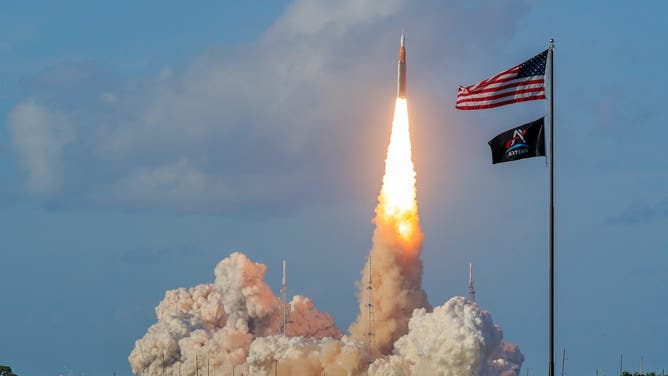
NASA's Artemis II Space Launch System rocket carrying the Orion spacecraft lifts off from Launch Complex 39B at Kennedy Space Center on April 1, 2026 in Cape Canaveral, Florida.
(Chip Somodevilla/Getty Images / Getty Images)
MEET THE ASTRONAUTS PREPARING FOR HUMANITY’S RETURN TO THE MOON ON THE ARTEMIS II MISSION
NASA astronauts Reid Wiseman, Victor Glover, Christina Koch and CSA astronaut Jeremy Hensen are aboard the Orion spacecraft, which will carry them around the moon and back to Earth over 10 days.
"Artemis II is the opening act," NASA Administrator Jared Isaacman said. "It's going to set up for the subsequent missions. That's why we're going to the Golden Age of science and discovery right now."
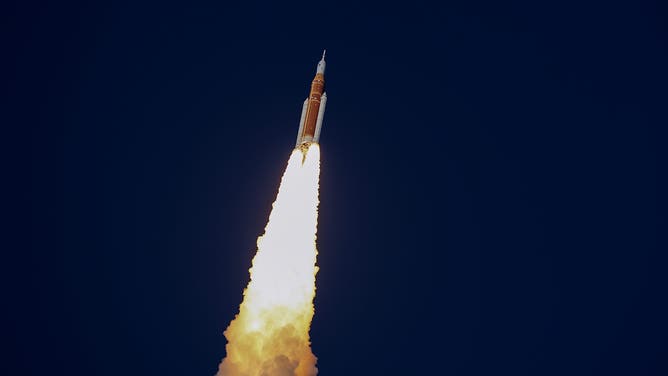
CAPE CANAVERAL, FLORIDA - APRIL 01: NASA's Artemis II Space Launch System rocket carrying the Orion spacecraft lifts off from Launch Complex 39B at Kennedy Space Center on April 1, 2026 in Cape Canaveral, Florida. The 10-day mission will take NASA astronauts Commander Reid Wiseman, Pilot Victor Glover and Mission Specialist Christina Koch and CSA (Canadian Space Agency) Mission Specialist Jeremy Hansen around the moon and back. The astronauts are supposed to fly 230,000 miles out into space, the farthest any human has ever traveled from Earth. (Photo by Joe Raedle/Getty Images)
HOW LIGHTNING STRIKING APOLLO 12 FOREVER CHANGED NASA'S LAUNCH WEATHER POLICIES
Weather is a critical factor in launching a rocket. Temperatures and conditions have to be perfect to meet launch criteria.
While rain showers could've potentially been an issue, everything worked out perfectly on Wednesday, and the weather held off.
The mission was delayed a few times, first in January after arctic air settled over Florida, making it too cold for the wet dress rehearsal of the rocket.
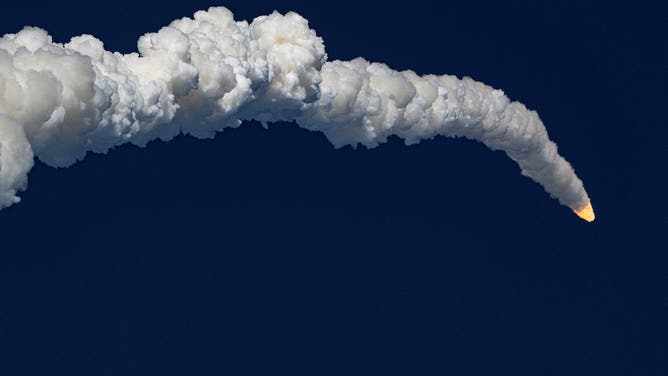
The Artemis II crewed lunar mission launches at Kennedy Space Center in Cape Canaveral, Florida, on April 1, 2026. Four astronauts blasted off aboard a massive NASA rocket April 1 on a long-anticipated journey around the Moon, the first crewed lunar flyby in more than 50 years. With an intense roar that reverberated far beyond the launchpad, the enormous orange-and-white rocket carried three Americans and one Canadian away from Florida's Kennedy Space Center at approximately 6:35 pm local time, according to an AFP journalist onsite. "We're going to the Moon!" yelled a spectator. (Photo by Jim WATSON / AFP via Getty Images)
NASA'S ARTEMIS MISSIONS: EVERYTHING YOU NEED TO KNOW AHEAD OF THE HISTORIC MOON LAUNCH
In February, the mission was delayed two more times, the first during a wet dress rehearsal when a hydrogen leak occurred.
After repairing the link, a second wet dress rehearsal kicked off successfully, but a few hours later, a leak in the flow of helium happened, causing the rocket and spacecraft to be rolled back to the Vehicle Assembly Building for repairs.
Finally, Orion and the SLS rocket were rolled back out to the launchpad in mid-March.
NASA didn't conduct a third wet dress rehearsal, but announced its anticipated launch date of April 1.

Anticipation builds for historic Artemis II launch and humankind's return to the moon
Millions around the globe are eagerly awaiting the launch of Artemis II and humanity's return to the Moon. FOX Weather Correspondent Katie Byrne has details on some of the people cheering on the extremely talented crew.
10 IMPORTANT ROCKET LAUNCHES IN THE HISTORY OF THE US SPACEFLIGHT
Anticipation for the rocket launch kept growing as we inched closer and closer to liftoff.
People from all over the world came to Florida to watch the launch.
NASA employees and members of the media gathered to witness the history-making event.
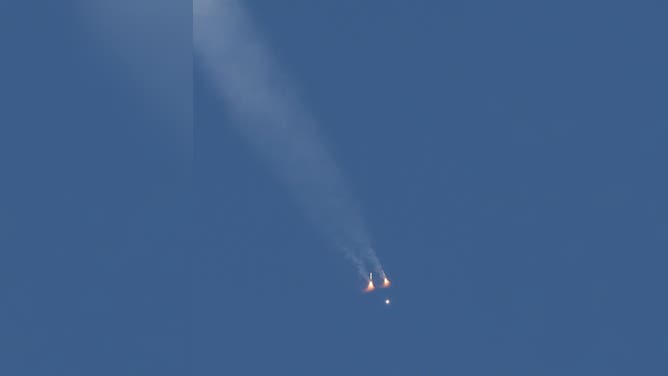
The two solid rocket boosters separate from NASA's Artemis II Space Launch System (SLS) rocket and Orion spacecraft are seen as it soars into orbit after lifting off from Launch Pad 39B at the Kennedy Space Center in Cape Canaveral, Florida on April 1, 2026.
(Gregg Newton / AFP via Getty Images / Getty Images)
The Artemis II astronauts will now spend four days making the journey to the moon, two days orbiting the moon and another four days returning to Earth.
They are set to splash down in the Pacific Ocean in roughly 10 days.