

From blue whales to prehistoric giants, these are 10 of the largest marine animals to ever exist
From the extinct to the legendary, find out which animals top the charts.
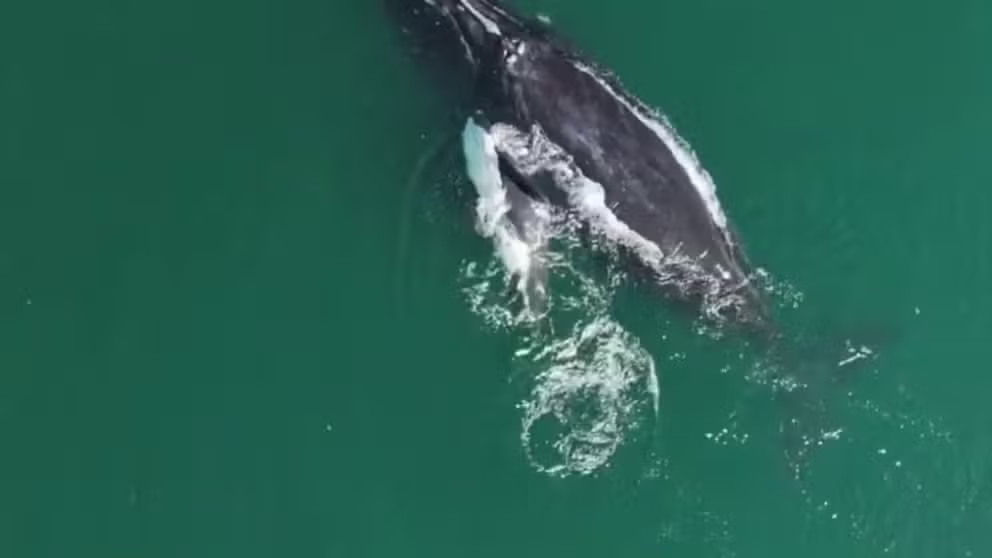
FILE: North America right whale calf spotting first of season
Researchers from the Clearwater Marine Aquarium Research Institute spotted the whale and her calf off the coast of Georgia.
The ocean covers about 70% of Earth, and beneath the surface have lived some of the largest and most mysterious creatures to ever exist.
While it's hard to accurately label the 10 biggest marine animals ever, we've compiled a list of some of the most massive creatures to call the deep blue their home.
SEE IT: STINGRAYS MAKE SURPRISE APPEARANCE IN POLLUTED NEW YORK CITY WATERWAY
From the extinct to the legendary, find out which animals top the charts:
Blue whale
The undisputed reigning champ of the seas is the blue whale. To this day, the blue whale is the largest animal to ever grace the oceans.
Blue whales can be found in all the world's oceans except the Arctic Ocean, and are endangered. The whales can grow to be 110 feet long and 330,000 pounds, according to NOAA Fisheries.
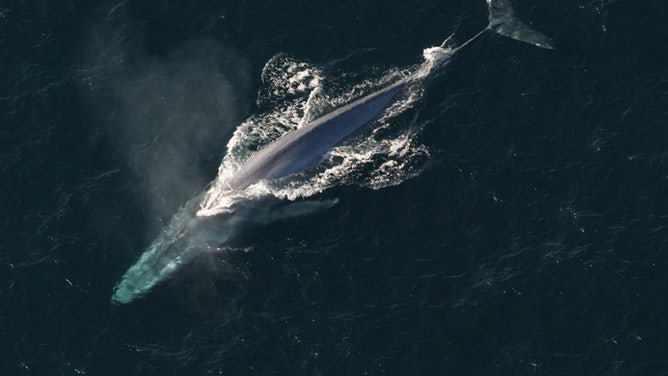
Blue whale swimming in the ocean.
(NOAA)
Perucetus colossus
This now-extinct prehistoric creature is thought to be one of the earliest species of whale that lived some 40 million years ago.
Early estimations of this whale's size thought it could be even bigger than the blue whale, but studies have since estimated it's not quite as large. Though that's not to discount this whale's massive size, estimated to be somewhere between 132,000 and 154,000 pounds, according to a paper published in a paleontology journal in 2024.
HOW DO HURRICANES AND TROPICAL STORMS INFLUENCE SHARKS?
Fin whale
The fin whale is the second-largest whale species still living today. This colossal whale is found all over the world and can live between 80 and 90 years, according to NOAA Fisheries.
They are up to 85 feet long and 176,000 pounds. Fin whales are also endangered, and are detectable by the distinct fin on their backs near the tail.
RARE, ELUSIVE PANCAKE-LIKE OCTOPUS SPOTTED IN UNCHARTERED DEEP WATERS OFF CARIBBEAN ISLAND
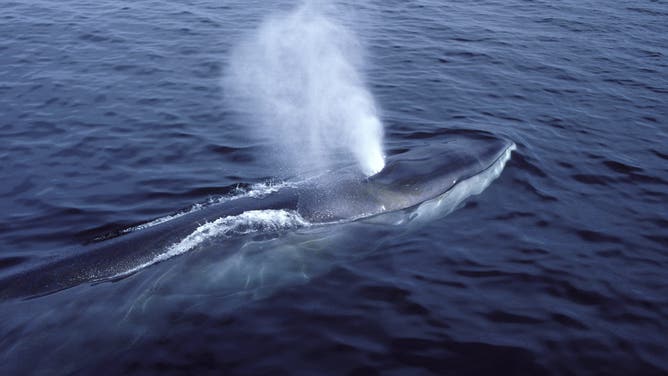
Fin whale. Balaenoptera physalus. Photographed in the Gulf of Maine, North Atlantic Ocean.
(Francois Gohier/VW Pics/Universal Images Group / Getty Images)
Ichthyotitan severnensis
This giant prehistoric species of marine reptile is the largest-known type of ichthyosaur.
According to the Natural History Museum in England, this species was estimated to be roughly 82 feet long. Fossils found in southwestern England in 2020 helped to learn more about this ancient reptile, which roamed the Earth about 250 million years ago, according to the museum.
PHOTOS: BOY DISCOVERS RARE, PREHISTORIC FOSSIL DURING FIELD TRIP IN KANSAS
Sperm whale
Sperm whales are the biggest of the toothed whales and have one of the widest global distributions of any marine mammal species, according to NOAA Fisheries.
These gigantic creatures are named for the waxy substance found in their heads, called spermaceti, and their populations were severely impacted due to commercial whaling for this substance.
CORAL ECOSYSTEM REEMERGES AFTER 60 YEARS WITHIN THE OCEAN'S 'TWILIGHT ZONE'
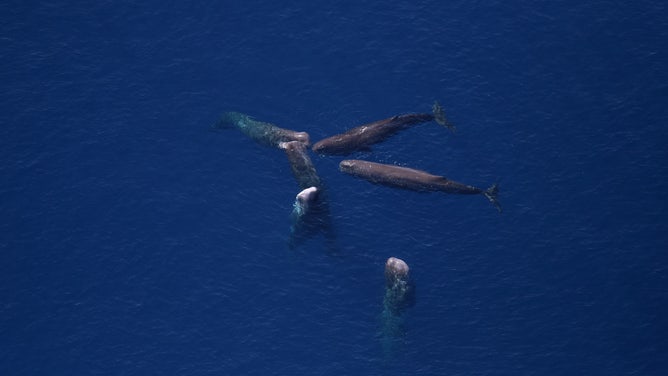
A group of sperm whales.
(NOAA)
Male sperm whales can grow to be 40,000 pounds and be 52 feet long, while female sperm whales can be 30,000 pounds and 40 feet long.
Megalodon
This iconic historic shark species is long extinct, but still inspires movies and entertainment today due to its legendary reputation.
Otodus megalodon lived during the Neogene period, more than 20 million years ago. The megalodon was massive, the largest known shark species to ever live. They were estimated to be about 79 feet long and weigh more than 207,000 pounds, according to a paper published in a paleontology journal.
SEVERAL MEGALODON TEETH FOUND ON THE OCEAN FLOOR OFFER NEW CLUES ABOUT THE ANCIENT GIANT
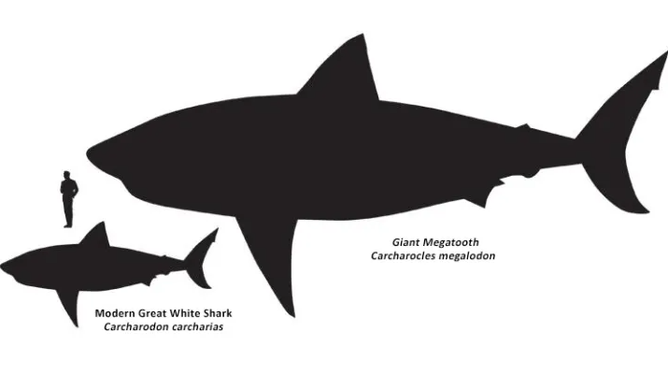
Size comparison between humans, modern Great White Sharks and the ancient Giant Megatooth.
(© Mary Parrish/Smithsonian Institution / FOX Weather)
North Pacific right whale
The North Pacific right whale is the largest of three species of right whales that exist around the world.
As its name states, this endangered whale species is found in the North Pacific, along the West Coast of the U.S. and Alaska, according to NOAA Fisheries. They are known to weigh up to 100 tons and get up to 64 feet long. Right whales as a whole are highly limited in population after commercial whaling in the 1800s through the 1960s.
ENDANGERED RIGHT WHALES SPOTTED IN ONE OF THE EAST COAST’S BUSIEST SHIPPING CORRIDORS
NOAA Fisheries estimates there are fewer than 500 North Pacific right whales remaining.
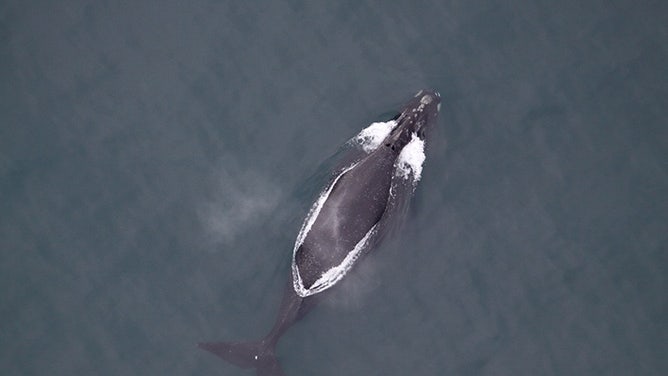
North Pacific right whale named Spot.
(NOAA FIsheries / NOAA)
Bowhead whale
This whale species is one of the few whales to exist almost exclusively in Arctic and subarctic waters, according to NOAA Fisheries.
Bowhead whales have a thick layer of blubber to keep them warm in these icy waters. They can grow to up to 200,000 pounds and 62 feet long. According to NOAA Fisheries, the Bowhead whale could potentially live for more than 200 years.
MEET THE RARE TWO-HEADED GECKO THAT IS GOING VIRAL FOR DEFYING THE ODDS
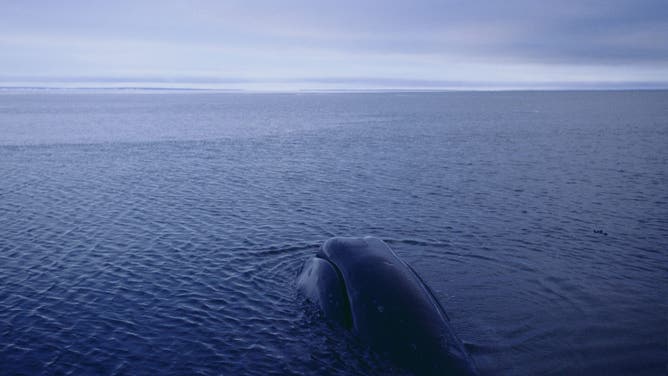
A bowhead Whale (balaena mysticetus) during its migration to the North in July.
(Xavier DESMIER /Gamma-Rapho / Getty Images)
Sei whale
Sei whales live in subtropical, temperate and subpolar waters around the world, and can live between 50 and 70 years.
These whales are endangered, and can grow to be 100,000 pounds, according to NOAA Fisheries. Sei whales are members of the baleen whale family.
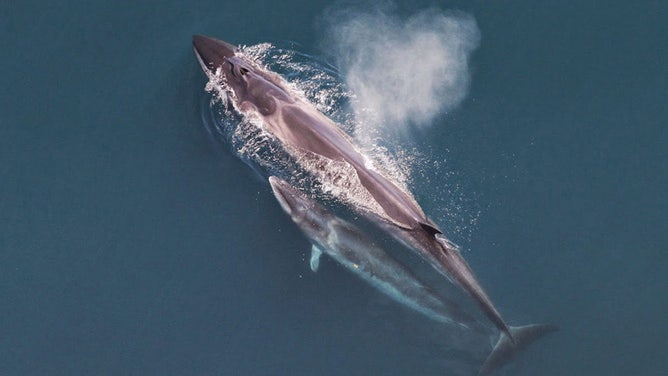
Sei whale mother and calf
(NOAA FIsheries)
Whale shark
Whale sharks are the largest of any shark species living today.
They can be found in the tropical oceans of the world, and their largest possible size is unknown. They have more than 300 rows of tiny teeth on each jaw and are known for their distinct head shape and spotted pattern.
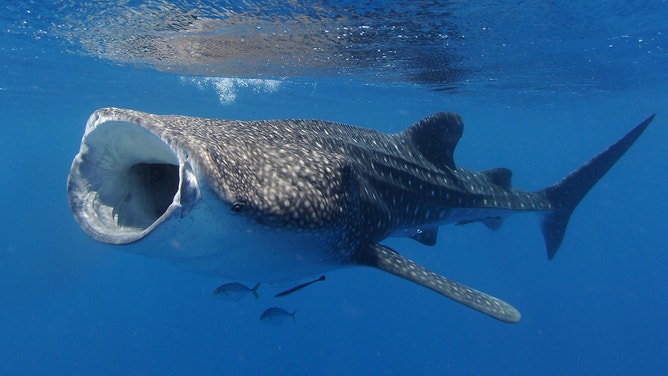
Whale Sharks watched by tourists off the coast on April 22, 2012 in Ningaloo Reef, Western Australia.
(Getty Images)
Whale sharks might be the largest fish and shark species swimming in our world's oceans, but it still doesn't come close to the size of the blue whale.