

The highest-elevation tornadoes in U.S. history prove twisters can strike almost anywhere
If you thought the recent Utah tornado formed high above the ground, wait until you see the elevation reached by these rare mountain twisters.
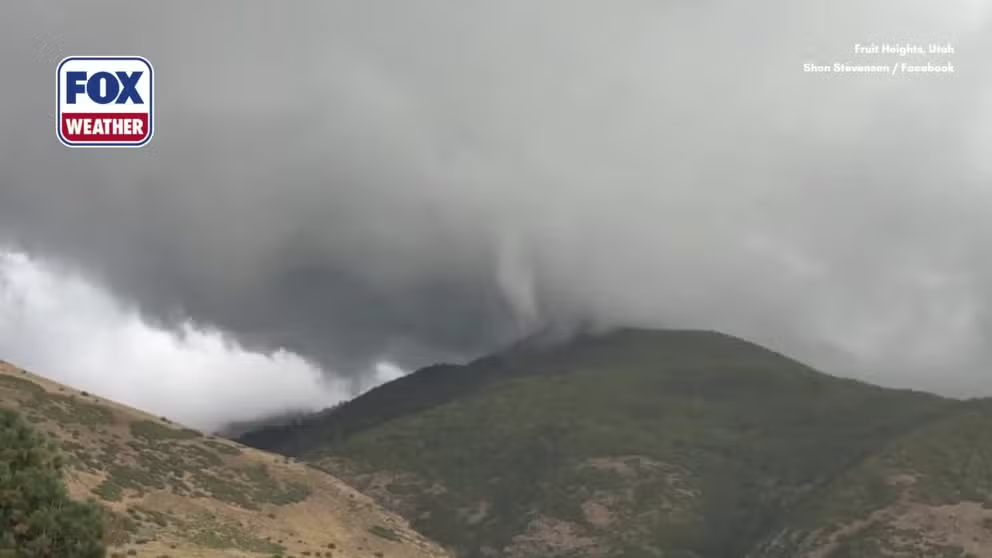
MUST WATCH: High elevation Utah tornado caught on camera spinning at 7,500 feet
A confirmed tornado touched down Friday in the mountains east of Fruit Heights, Utah, with astonishing video capturing the twister on the ground. The National Weather Service said the tornado touched down shortly after 1:50 p.m. MDT along a ridge line near Francis Peak in Davis County at an elevation of about 7,500 feet, as severe thunderstorms moved through northern Utah.
THE TAKEAWAY
- High-elevation tornadoes are rare but can develop in mountainous terrain.
- Several U.S. tornadoes have been documented above 11,000 feet.
- Remote locations make these tornadoes difficult to observe, survey and officially rate.
Viral video of a tornado spinning along a ridge near Fruit Heights, Utah, at an estimated elevation of 7,500 feet captivated the internet, but the impressive twister falls well short of the highest-elevation tornado documented in the United States.
While high-elevation tornadoes are rare, capturing and documenting them well enough for National Weather Service confirmation is even more difficult.
The impressive Utah twister spun at a high elevation, but it was still thousands of feet below the record for the highest-elevation confirmed tornado.
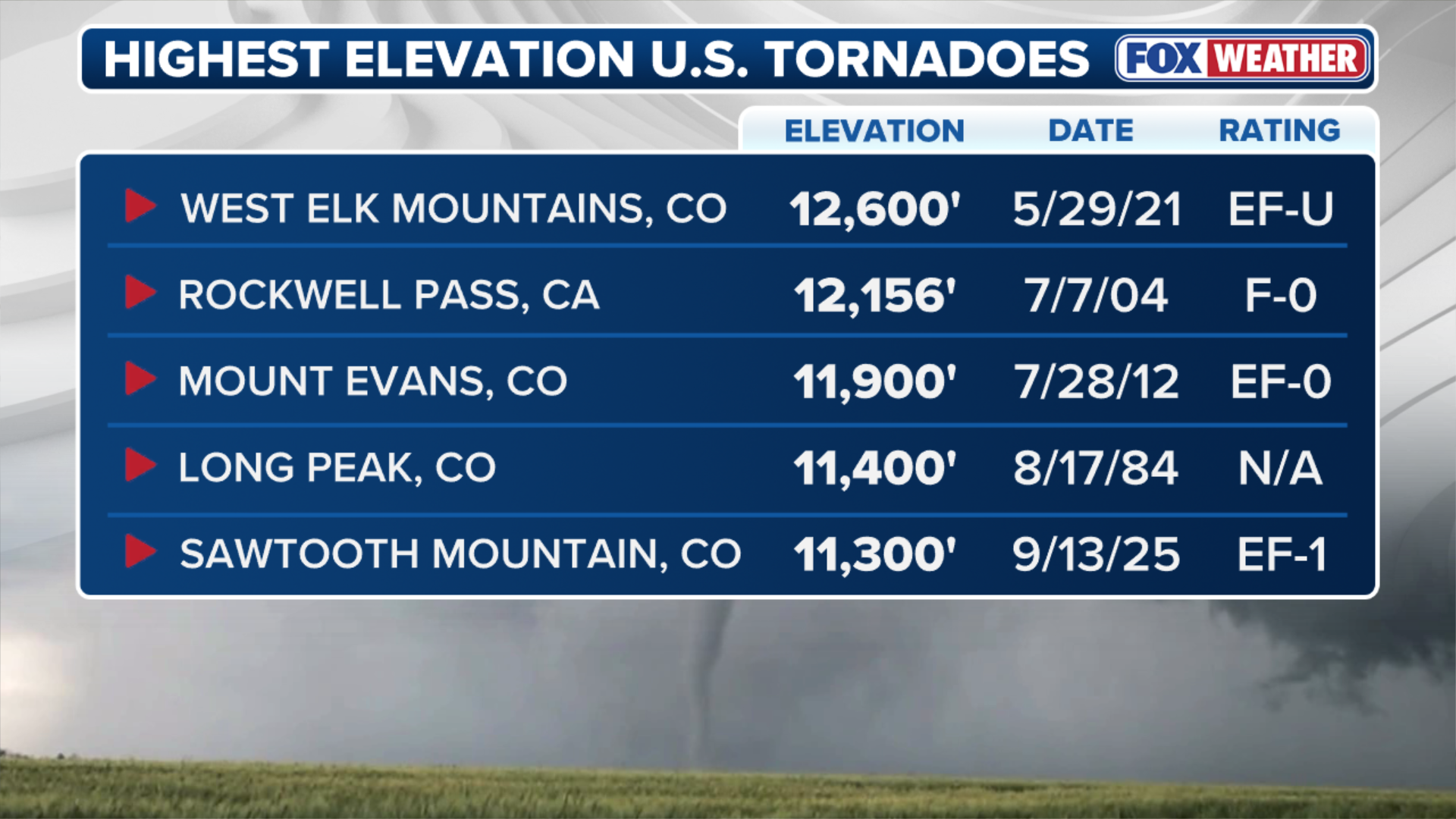 Highest Elevation U.S. Tornadoes.
(FOX Weather)
Mountainous terrain and high elevations typically create unfavorable conditions for tornadoes, making these events rare—but not impossible. Documenting them is the hard part.
Here’s a look at the highest-elevation tornadoes documented in U.S. history.
May 29, 2021: West Elk Mountains, Colorado
The highest-elevation tornado documented in U.S. history occurred on May 29, 2021, in Colorado’s West Elk Mountains at an estimated elevation of 12,600 feet.
According to the National Weather Service, the short-lived landspout touched down near the summit of Purple Mountain and traveled approximately 0.65 miles along the ridge, reaching a maximum width of 20 yards.
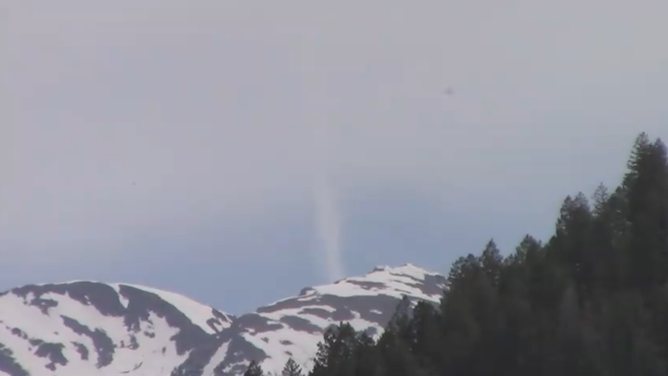
Landspout Tornado near Purple Mountain summit on Saturday, May 29, 2021. Strong surface winds in the vicinity of the West Elk Mountains near Crested Butte, Colorado, combined with local terrain features, aided in the spin-up of a short-lived landspout tornado.
(CO Storm Chasers / National Weather Service)
Due to the tornado’s remote location, National Weather Service meteorologists were unable to conduct an onsite survey, leaving its EF rating and peak wind speed undetermined.
COLORADO BIOLOGISTS RACE TO SAVE RARE TROUT WHEN WILDFIRES THREATEN THEIR MOUNTAIN HOME
July 7, 2004: Rockwell Pass Tornado
The second-highest-elevation tornado documented in U.S. history occurred on July 7, 2004, near Rockwell Pass in Sequoia National Park, California, at an estimated elevation of 12,156 feet.
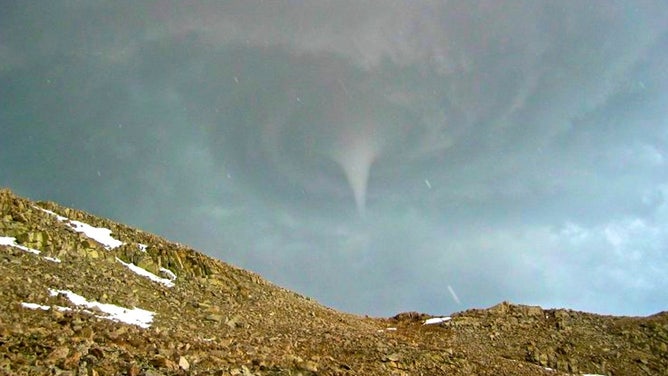
Funnel cloud and cloud-base swirl associated with developing tornado above Rockwell Pass in Sequoia National Park at July 7, 2004.
(Scott Newton / American Meteorological Society)
Backpacker Scott Newton was hiking west of Mount Williamson in California’s southern Sierra Nevada when he found himself with a front-row view of the rare high-elevation tornado.
According to the American Meteorological Society, Newton photographed the tornado from approximately 1 kilometer away as severe-sized hail fell around him.
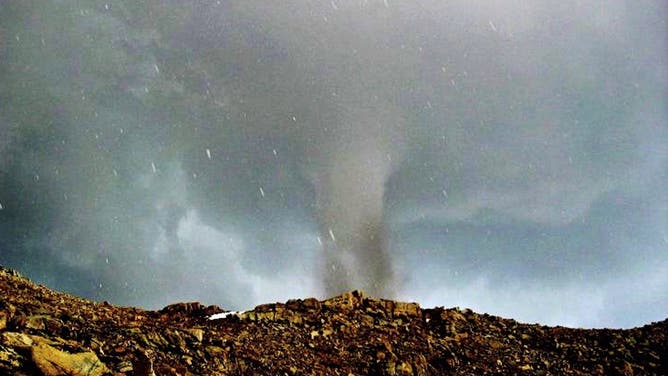
The National Weather Service classified the tornado as an F0 on the original Fujita scale and estimated its path width at 40 yards.
(Scott Newton / American Meteorological Society)
Tornadoes are not uncommon in California, but documented tornadoes at such elevations are exceedingly rare. Newton’s photographs captured what researchers described at the time as the highest-elevation tornado documented in the United States.
The tornado was classified as an F0 on the original Fujita scale, with an estimated path width of 40 yards.
CAN CONCERTS AND SPORTING EVENTS CAUSE EARTHQUAKES?
July 28, 2012: Mount Evans, Colorado
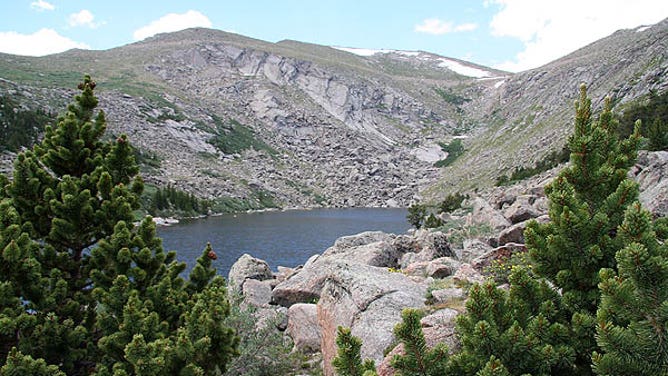
On July 28, 2012, a tornado touched down on the eastern side of Mount Evans—now known as Mount Blue Sky—in Colorado’s Front Range.
The brief tornado occurred at an estimated elevation of 11,900 feet in remote, mountainous terrain. Because it caused no reported damage, the tornado was not assigned an official rating.
August 17, 1984: Long Peak, Colorado
(FOX Weather)
According to the NWS, a trained weather spotter witnessed the brief tornado touch down near Lincoln Lake before it weakened into a funnel cloud and dissipated.
August 17, 1984: Long Peak, Colorado
On Aug. 17, 1984, a tornado was documented near Longs Peak in Rocky Mountain National Park in northern Colorado at an elevation of 11,400 feet.
According to the FOX Forecast Center, limited information is available about the tornado.
THE RACE TO SAVE THE WORLD'S MOST ENDANGERED MARINE MAMMAL ISN'T OVER YET
September 13, 2025: Sawtooth Mountain, Colorado
The most recent high-elevation tornado occurred on Sept. 13, 2025, after National Weather Service meteorologists identified a swath of tree damage across Colorado’s mountainous terrain.
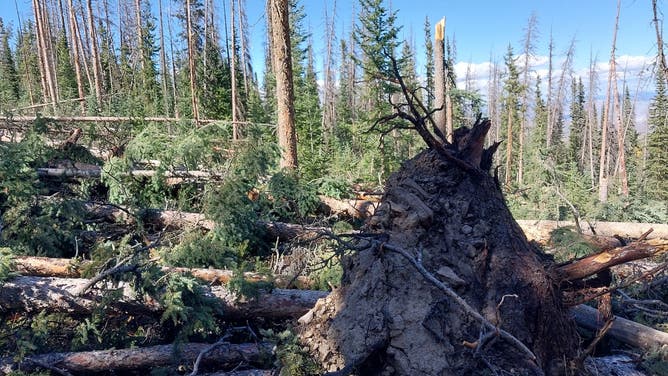
Tree damage along the tornado’s track and within its damage scar after a brief tornado developed along the northern slopes of Sawtooth Mountain on Sept. 13, 2025.
(Saguache County Emergency Management / NWS)
The Sawtooth Mountain tornado was later rated EF1, with estimated peak winds of 88 mph, a 0.85-mile path and a maximum width of 95 yards. It formed at approximately 11,300 feet, lasted about five minutes and caused no injuries or deaths.