

Colorado biologists race to save rare trout as wildfires threaten their mountain home
As wildfires tore through Colorado, biologists launched extraordinary rescue missions to save rare native trout with nowhere else to go.
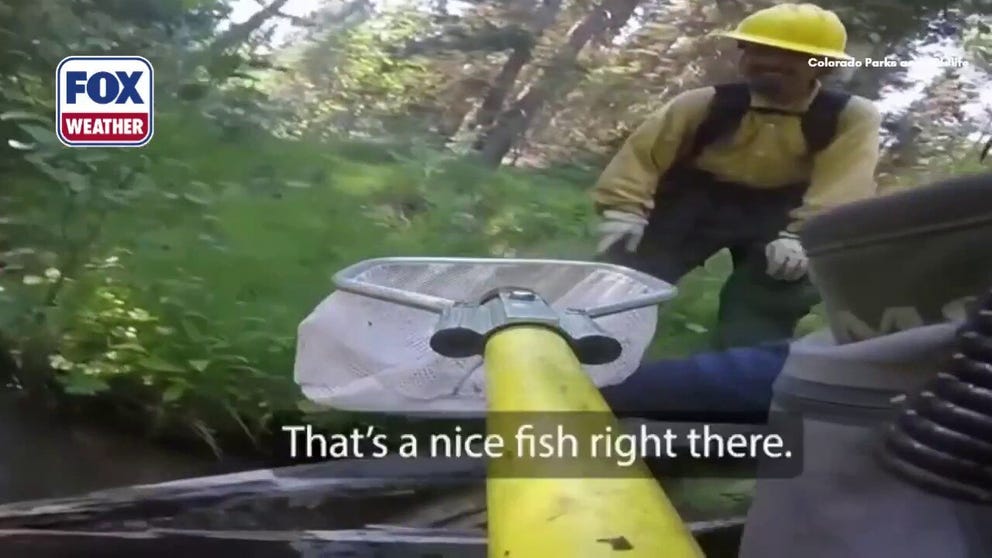
Rare trout rescued from Colorado creek as wildfire burns nearby
A point-of-view camera attached to a net captures a Colorado Parks and Wildlife aquatic biologist scooping a trout from a small mountain creek shortly after the Gold Mountain Fire before placing the threatened fish in a nearby bucket.
THE TAKEAWAY
- Thousands of rare trout were moved out of harm's way during an impending wildfire.
- Multiple wildfires impacted Colorado, putting wildlife at risk in July.
- Emergency rescues like this are not uncommon in the state.
During wildfire season, firefighters are on the front lines battling blazes and protecting lives and property, while behind the scenes, biologists are racing to save thousands of rare fish.
When flames grow out of control and conditions become unpredictable, people in harm’s way can be ordered to evacuate, but what happens to the wildlife that can’t escape its habitat?
TIKTOK VIDEO LEADS SCIENTISTS TO DISCOVER A STRANGE NEW SPECIES OF EARTHWORM EEL HIDING IN INDIA
In July, when the Willow Fire threatened thousands of rare native trout at a Colorado hatchery, an extraordinary rescue effort moved the fish out of the path of the advancing wildfire.
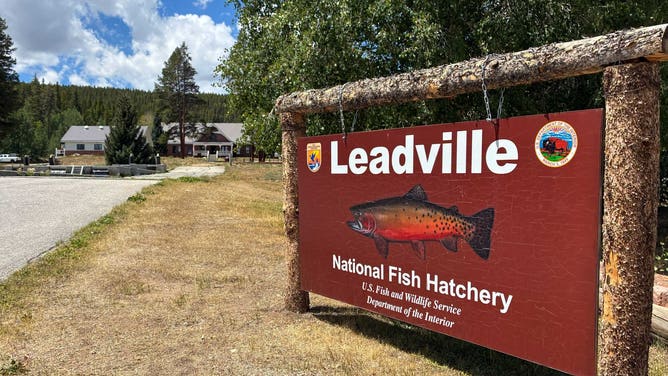
Rare native trout were rescued from the Leadville National Fish Hatchery during the Willow Fire and later returned after the threat passed.
(Colorado Fish and Wildlife)
Colorado Parks and Wildlife teamed up with the U.S. Fish and Wildlife Service to evacuate thousands of exceptionally rare native trout from the Leadville National Fish Hatchery as the fire closed in, moving the vulnerable fish to safety before the flames could threaten their survival.
The Willow Fire evacuation ultimately moved approximately 148,000 fish from the Leadville hatchery, sending them to other hatcheries and waters across the state beyond the wildfire’s reach.
BIZARRE STRING OF BEAVER ATTACKS FORCE MULTIPLE MARYLAND STATE PARKS TO CLOSE
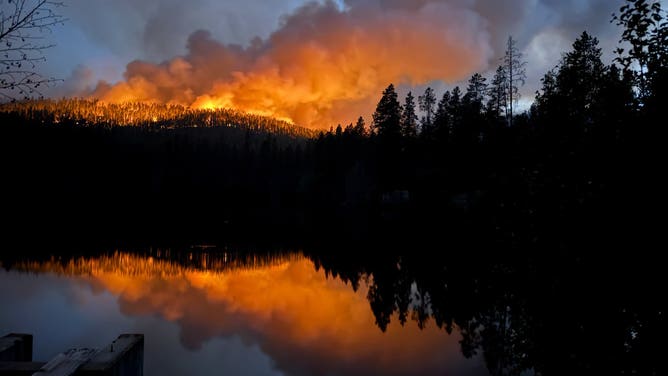
The Willow Fire burns near the Leadville National Fish Hatchery, where flames reached the ridge above the facility.
(Colorado Parks and Wildlife)
Of the nearly 150,000 fish, roughly 142,000 rainbow trout and some cutthroat trout already scheduled for release were stocked in Colorado waters, while the remaining genetically important breeding fish were relocated to four hatcheries across the state.
WATCH: HUNDREDS OF SHARKS AND A LONE STINGRAY CAUGHT ON VIDEO NEAR BEACH IN NORTH CAROLINA
Among the fish moved were 5,000 greenback cutthroat trout and approximately 1,500 Hayden Creek cutthroat trout — two genetically important populations that represent years of work to restore Colorado’s native cutthroat trout.
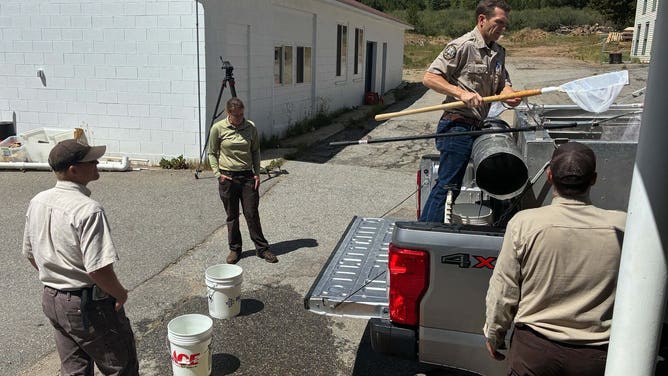
Rare native trout are rescued from the Leadville National Fish Hatchery during the Willow Fire and later returned after the threat passed.
(Colorado Fish and Wildlife)
While wildfire mitigation work continues at the Leadville hatchery, the remaining fish have since been safely returned to the facility.
NORTH AMERICAN RIVER OTTER RETURNS TO THE BRONX RIVER AFTER 100 YEARS
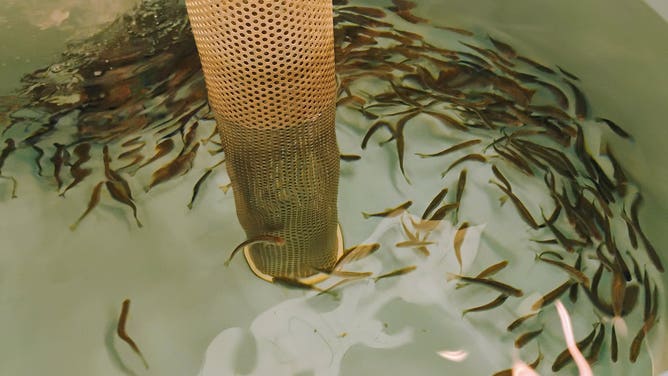
Rare native trout were rescued from the Leadville National Fish Hatchery during the Willow Fire and later returned after the threat passed.
(Colorado Fish and Wildlife)
The extraordinary effort to protect those vulnerable fish underscores just how far biologists will go to preserve Colorado’s native trout. Sometimes, that means doing more than evacuating fish from a threatened hatchery, and other times it means heading directly into harm’s way to rescue them from the wild.
MEET THREEHALVES: THE HAUNTING VIRAL ROBOT DESIGNED FOR EARTH'S MOST DANGEROUS ENVIRONMENTS
Rare trout backcountry rescue
When the Gold Mountain Fire threatened a rare population of Uncompahgre cutthroat trout near Ouray, Colorado Parks and Wildlife biologists launched a remarkable rescue operation deep in the mountains.
For trout living in mountain streams, the danger doesn’t end when the flames die down. A severe wildfire can leave a watershed vulnerable to floods of ash, sediment and debris that can devastate an isolated fish population like the rare trout living in the Colorado backcountry.
FIRST-KNOWN FRESHWATER CONTAGIOUS CANCER SPREADING AMONG CATFISH IN VERMONT LAKE
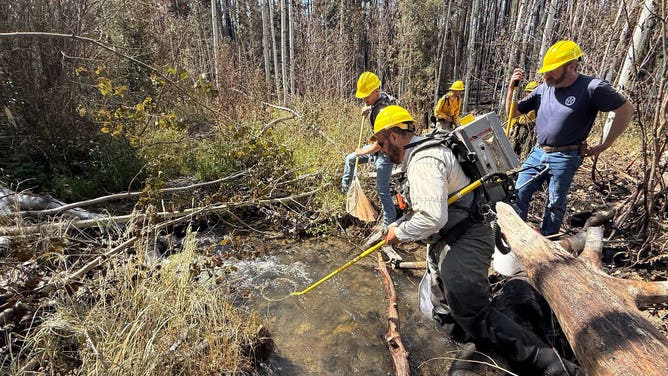
Colorado Parks and Wildlife biologists rescue rare cutthroat trout from Nate Creek following the Gold Mountain Fire.
(Colorado Fish and Wildlife)
After the wildfire swept through Nate Creek in the remote backcountry of Colorado’s Uncompahgre National Forest, the team of biologists hiked through a charred landscape, past smoldering roots and ash-covered ground, to rescue an exceptionally rare strain of Colorado River cutthroat trout found nowhere else.
ONLY SCIENTISTS AND SOLDIERS CAN VISIT THIS FORBIDDEN PARADISE CRAWLING WITH VENOMOUS SNAKES
"The fish are an irreplaceable remnant of the native cutthroat trout that historically occupied many creeks in the Uncompahgre River system around Ouray and Ridgway," Colorado Parks and Wildlife wrote on Facebook.
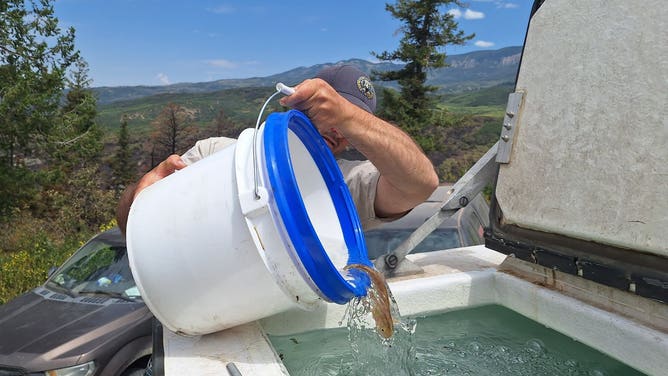
Colorado Parks and Wildlife biologists rescue rare cutthroat trout from Nate Creek following the Gold Mountain Fire.
(Colorado Fish and Wildlife)
The raging Gold Mountain Fire, which scorched more than 100,000 acres across southwestern Colorado, made the already challenging rescue even more difficult.
Working alongside firefighting crews and U.S. Forest Service staff, the team had only a brief window to enter the fire zone and reach the threatened trout — an operation Colorado Parks and Wildlife called "a priority."
INVASIVE CRAYFISH CLAW THEIR WAY ACROSS AMERICA AND TAKE OVER US LAKES
Once at the creek, biologists used electrofishing equipment to temporarily stun and capture the trout before carrying them out of the backcountry in five gallon buckets to a waiting hatchery truck.
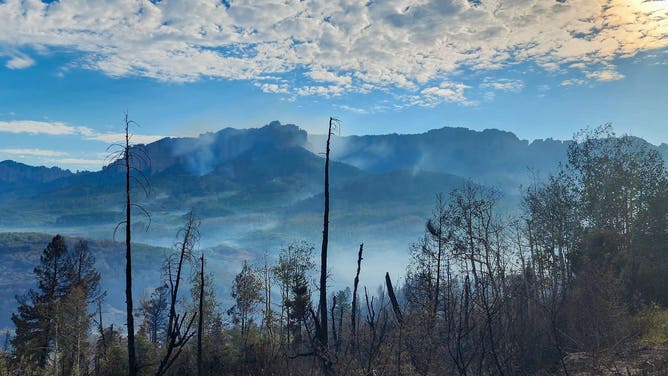
Colorado Parks and Wildlife biologists rescue rare cutthroat trout from Nate Creek following the Gold Mountain Fire.
(Colorado Fish and Wildlife)
From there, the fish were transported to the Rifle Falls Fish Hatchery, where they were held in isolation until conditions in Nate Creek were safe enough for their return.
THE MOST PATRIOTIC FRONT LAWN IN AMERICA CELEBRATES THE NATION'S 250TH WITH A BALD EAGLE MURAL
The rescue was precautionary, but potentially critical. Flash flooding across a wildfire burn scar can send ash, debris and sediment surging into streams, devastating aquatic habitat.
By moving the trout to safety, biologists ensured that even if Nate Creek suffered a catastrophic post-fire event, this rare population would survive, and could one day be used to rebuild what was lost.
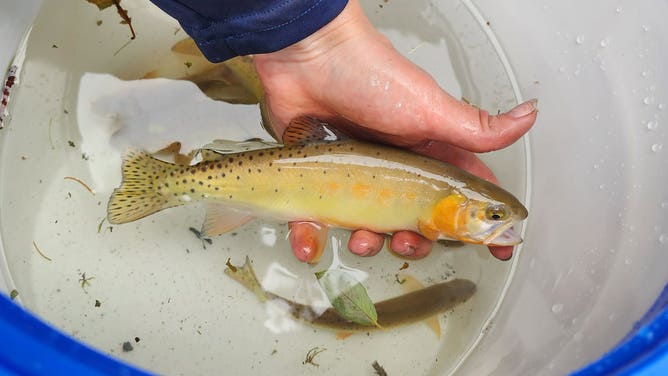
Colorado Parks and Wildlife biologists rescue rare cutthroat trout from Nate Creek following the Gold Mountain Fire.
(Colorado Fish and Wildlife)
These emergency rescues aren’t unprecedented in Colorado.
When wildfires threaten vulnerable native fish populations, biologists have repeatedly stepped in to move trout out of harm’s way, preserving rare genetic lineages and giving those populations a chance to survive long after the fire is out.