

Summer on hold: Rare June storm brings snow to the Rockies, with a foot possible at the highest peaks
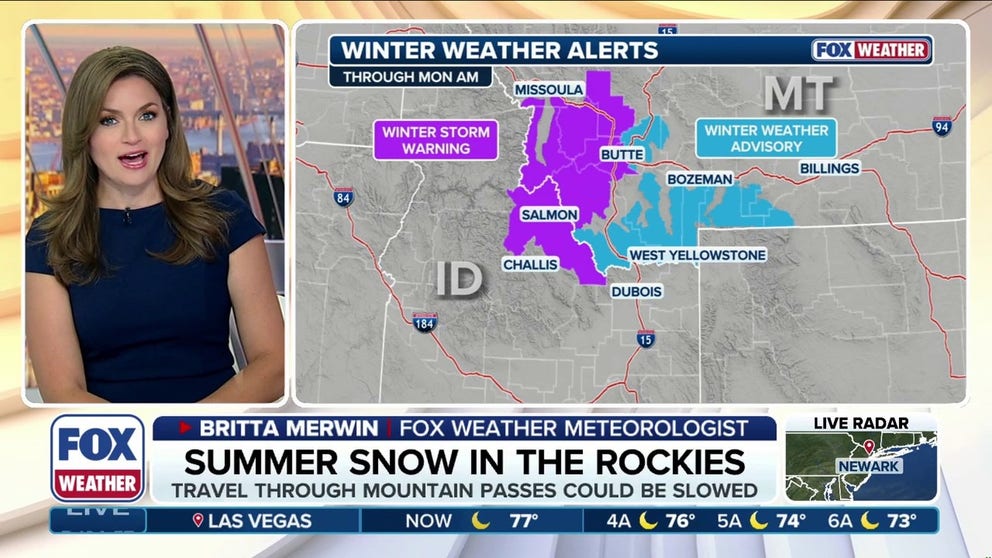
Rare late-June Winter Storm Warnings and Winter Weather Advisories remain in effect as snow falls, even in places like Yellowstone National Park.
Rare winter weather puts summer on hold in the Rockies as snow falls
Snow is back in the Rockies, putting summer on pause as rare late-June winter weather alerts are issued for parts of the region. Higher elevations could see up to 8 inches of snow, with a foot possible at the highest peaks. Full forecast:
ROCKY MOUNTAINS — A matter of days is making a massive difference in the Rockies, where a snow day has interrupted summer.
While towns at lower elevations are getting soaked by a chilly, steady rain, the mountain peaks are experiencing a return to winter weather.

(FOX Weather)
Just days ago, valleys across Idaho and Montana were baking in the 80s and 90s, with severe storms in the forecast — typical for June.
Hiking trails were drying out and peak tourism season kicked into high gear from gateway towns like West Yellowstone and Glacier National Park.
But starting Sunday, all of that changed as snow returned to the region.
An unseasonably cold, slow-moving storm system slamming the region, causing temperatures to plummet by a staggering 20 to 30 degrees.
CHILD HOSPITALIZED AFTER BEING INJURED BY BISON IN YELLOWSTONE NATIONAL PARK

(FOX Weather)
Rare late-June Winter Storm Warnings and Winter Weather Advisories remain in effect as snow falls, even in places like Yellowstone National Park.
On average, Montana typically only sees one Winter Storm Warning in the month of June, while Idaho has only had two such alerts since 2020, according to the FOX Forecast Center.
This system is expected to drop as much as 8 inches of snow above 6,500 feet, with up to 16 inches of heavy, wet accumulation targeting the highest peaks of the Anaconda-Pintler and Lemhi ranges.
To put this in perspective, the historical average snowfall for this area in June is less than 0.5 inches, even at higher mountain passes, the FOX Forecast Center said.

(FOX Weather)
This storm highlights the geographic reality of the American West — a region where a wildfire can ravage one state while a winter storm buries another just a few hundred miles away.
Residents and visitors in Idaho and Montana should put summer gear on standby, respect the mountain passes and remember that winter is never truly gone in this region.