

Steve Bender: Reflecting on Hurricane Helene 2 years later from a place close to home
Helene brought an enormous amount of tropical moisture into the mountains and ultimately became one of those storms that changed the way a region thinks about weather.
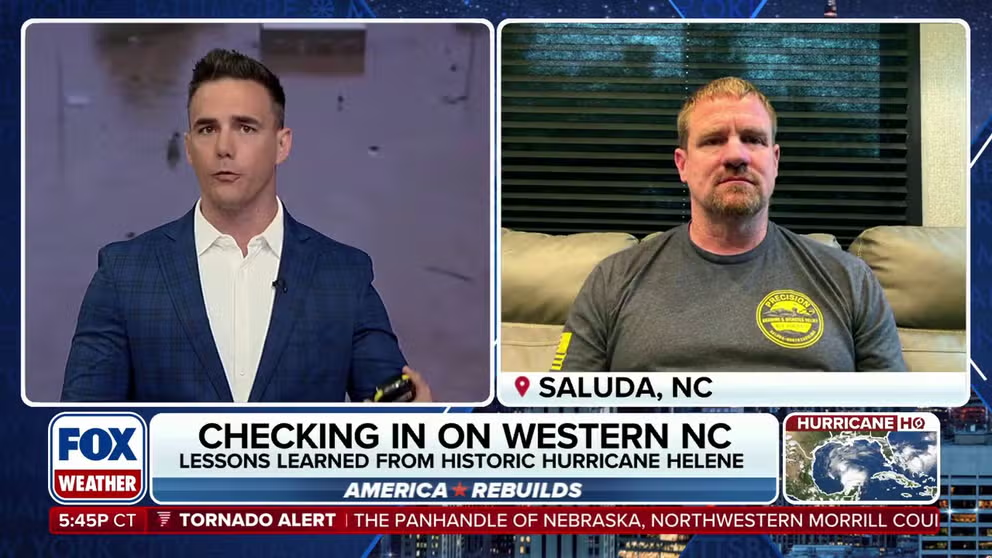
FILE: North Carolina man dedicated to cleanup efforts from Hurricane Helene nearly 2 years later
HEROIC REBUILD ❤️🩹: Member of the Western North Carolina community, Jake Jarvis, joins FOX Weather to share his story and talk about how much time he has spent giving back to others amid the recovery process nearly two years later.
NORTH CAROLINA — There are places you cover as a meteorologist that you know you'll remember. Then there are places that become part of you. For me, western North Carolina is one of those places.
Long before the historic flooding from Hurricane Helene, before the images of homes ripped apart by rushing water, and the piles of debris and roads washed away from muddy landslides, I knew Asheville as a place of adventure. A place I experienced as a kid where I once wandered.
REMAINS BELIEVED TO BE LINKED TO HURRICANE HELENE VICTIM DISCOVERED YEARS AFTER DEADLY STORM
I have fond memories with my family coming up to Asheville to hike, ride bikes and take in the fall foliage. I remember the rows of mountains, the winding roads and that feeling you get when you look out across the Blue Ridge and realize just how small you are.
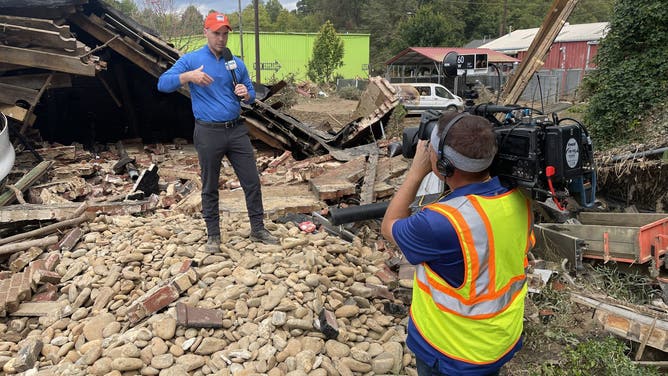
Meteorologist Steve Bender reports on Hurricane Helene from Asheville, North Carolina, in 2024.
(David Rubin / FOX Weather)
It was a place to explore and a place to slow down. A place that, even as a kid, somehow felt different. It was a place that my parents wanted to share with us. It held a special meaning to them because they honeymooned in Asheville and Biltmore Village.
Sadly, I didn't know then that years later, I'd be standing in those same mountains covering one of the worst disasters in the region's history.
NORTH CAROLINA ARTIST CREATES ‘BLUEBIRDS OF HOPE’ FROM GLASS SHATTERED BY HELENE
Even after my childhood trips, my connection to the area continued to grow. In college, while helping one of my buddies move to the Northeast for college, we made Asheville one of our spots to stop during our road trip. A quick trip, but still a memorable one.
It was one of those completely ordinary college road-trip moments. We wandered around, checked out some of the breweries along the river and soaked in what nature had to offer. I think about that moment a little differently now.
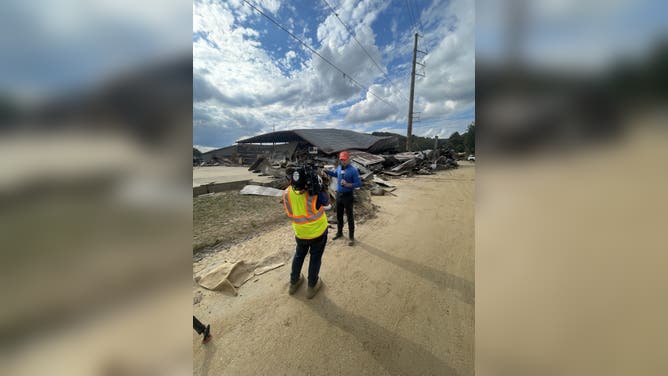
Meteorologist Steve Bender reports on Hurricane Helene from Asheville, North Carolina, in 2024.
(David Rubin)
Because that same river and those same mountains surrounding it would eventually lead to so much devastation.
A couple of years after that college trip, I, once again, found myself back on a road trip to western North Carolina. This time, I was with my brother-in-law picking up his dad's old Shovelhead motorcycle. Back in the mountains, taking in the scenery and enjoying what makes that part of the country feel so special.
HURRICANE IDA: A LOOK BACK AT THE MONSTROUS STORM THAT KILLED OVER 50 PEOPLE
And if you've driven along those roads before, then you know, the mountains seem to pull you in. The curves. The elevation changes. The trees. The rivers cutting through the valleys. The little towns tucked between the hills. The peace you feel out in nature. You don't have to live there to feel connected to it.
So, Asheville wasn't just some place on a map. These were roads I had driven. Mountains I had hiked. A community tied to memories my family had made for generations.
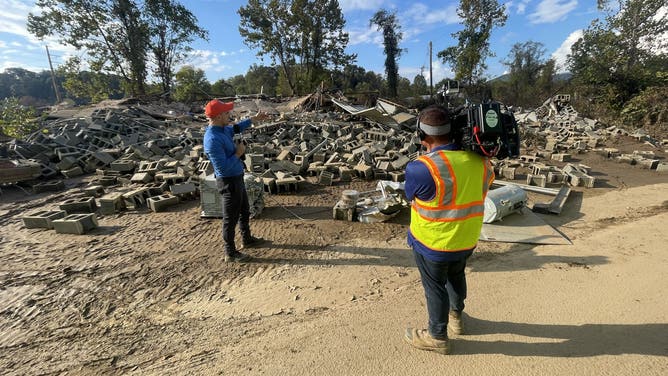
Meteorologist Steve Bender reports on Hurricane Helene from Asheville, North Carolina, in 2024.
(David Rubin / FOX Weather)
At FOX Weather, when talking about the threat before Hurricane Helene made landfall, the concern wasn't just landfall, but what would happen when a tropical system slammed into the Southern Appalachians. Rain was already falling before the storm arrived, leaving the ground waterlogged. Then Helene brought an enormous amount of tropical moisture into the mountains and ultimately became one of those storms that changed the way a region thinks about weather.
WHAT'S THE DIFFERENCE BETWEEN A HURRICANE MAKING A DIRECT HIT AND LANDFALL?
You can talk about rain totals. You can talk about river gauges. You can talk about damage estimates. You can talk about how many homes were destroyed. But the numbers only tell part of the story. I covered the immediate aftermath in Western North Carolina with my producer, David Rubin, as we witnessed firsthand the ground truth of Helene’s hellish forecast. The numbers couldn’t explain what it felt like to stand in a neighborhood and see someone's entire life sitting in a pile at the curb. Or to stand inside what used to be someone's home.
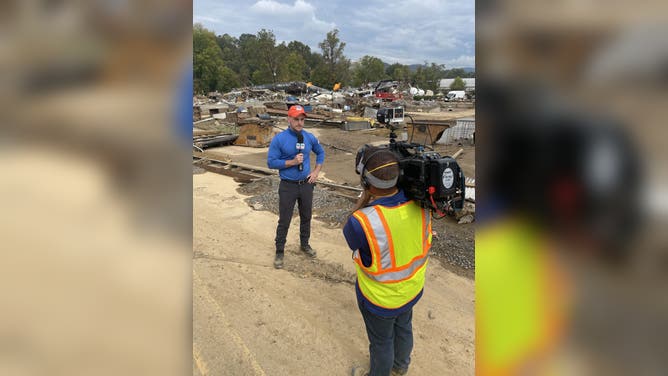
Meteorologist Steve Bender reports on Hurricane Helene from Asheville, North Carolina, in 2024.
(David Rubin)
Then 80 days later, David and I went back to cover a toy drive and saw parents put on a brave face for their kids as they collected donated items ahead of Christmas. Outside, the brutal harsh winter had taken over. Temperatures were dropping below freezing. Months-old debris was still piled up along the roads and now covered in snow.
THE WORST 25 HURRICANES OVER THE LAST 25 YEARS
But the people were still there. Still working and rebuilding. I met Daniel Wright inside what was left of his home. His house had been destroyed, and he was wondering where his wife and two sons would go next. Standing inside that damaged house, he talked about the possibility of a new beginning.
That stuck with me. Because I think that's something you hear over and over again in disaster coverage. People lose almost everything and somehow find a way to keep moving. It doesn't mean recovery is easy, and the loss goes away, but people will resiliently keep pushing forward.
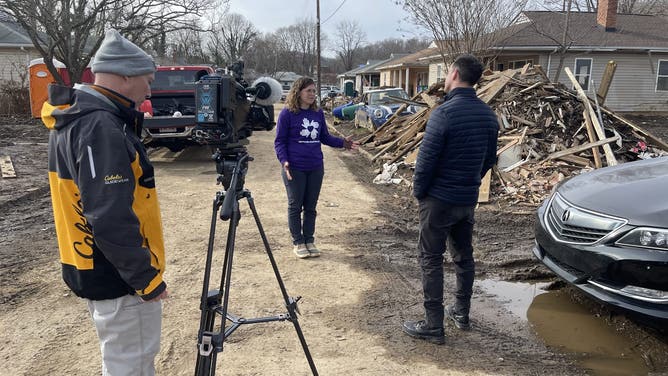
Meteorologist Steve Bender revisits North Carolina in December 2024 to see how communities are reeling after the devastating hurricane.
(David Rubin)
I also met Dellene Holzschuh who was living in an RV donated by Emergency RV. She had her animals and a place to sleep for which she was grateful. Not because things were good, but because she knew how much worse things could have been. That kind of perspective was everywhere.
Then there was Jenica Grooms, who owned a local auto-body shop, but after Helene, she shifted her focus toward something completely different. She began helping build temporary, climate-controlled homes for people who had been displaced because there simply weren't enough places for people to go. Families were still needing homes and people were stuck in an impossible gap between losing their house and being able to rebuild it. So, she started trying to fill that gap.
TOP 5 COSTLIEST HURRICANES IN US HISTORY
That's what I remember most about covering western North Carolina in the immediate aftermath. Not just what Helene took, but what people gave. Their time, equipment, homes, money, energy, etc. Sometimes their entire lives seemed to revolve around helping the person next to them.
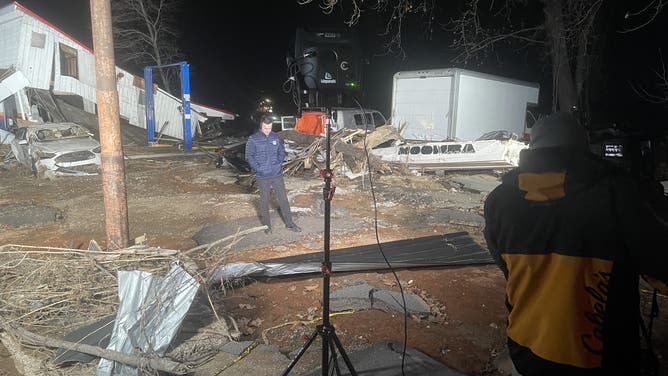
Meteorologist Steve Bender revisits North Carolina in December 2024 to see how communities are reeling after the devastating hurricane.
(David Rubin / FOX Weather)
One of the people who kept showing up was Jake Jarvis. Jake owns Precision Grading, a construction company and, after Helene, his work became something much bigger than a business.
He and his crew have spent countless hours helping clear roads, moving debris and rebuilding parts of the community — all for free. His work wasn't a one-week effort after the storm, but a long-term commitment that hasn’t stopped for more than 700 days in a row. That dedication and desire to help people whose lives had been turned upside down led to Jake being awarded America’s Hardest Worker by ConEquip.
Two years later, Jake is still at it, but he’s not alone. His daughter, Mya, is now homeschooled so she can spend more time helping her dad. Mya, who is 10, sits with families or joins Jake in the cab of the heavy equipment to keep him company during the long hours. I asked Jake what it meant to see his daughter step up and help after such a painful event, and he recalled a story early in the recovery process.
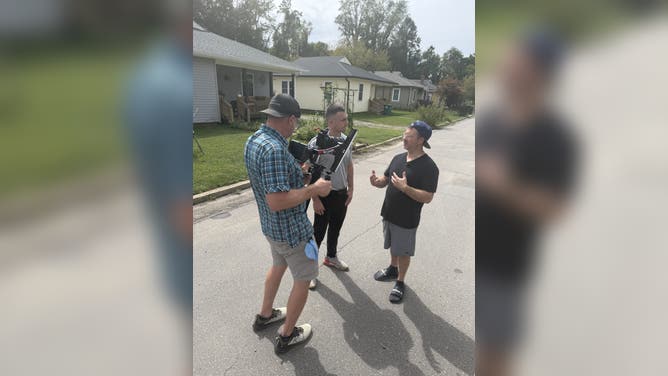
Meteorologist Steve Bender revisits Swannanoa, North Carolina, two years after Hurricane Helene.
(David Rubin / FOX Weather)
Jake said, "We were at the house of a 76-year-old woman who had been born in the home, and it looked like it would collapse at any moment. I wasn’t sure if we could save it, but we were going to try. I was worried about how she was going to react and as I turned around, I saw her and Mya playing catch in the yard laughing. I knew then everything would be alright."
That is why, two years later, Hurricane Helene means something different to me. We're not going back simply to replay the destruction or what happened. The question now is different. What still needs to be done? Which businesses came back? Which homes have been rebuilt? And most importantly, how are people doing?
WATCH: JAW-DROPPING DRONE VIDEO REVEALS STAGGERING SCALE OF INDIANA FLOOD DESTRUCTION
There's also another reason I want to go back. I want to see the mountains not just through the lens of Hurricane Helene, but as the place I knew before the storm. I know I'll see them differently now after standing in the aftermath of Helene. Memories of meeting people who had every reason to be discouraged, but kept showing up anyway.
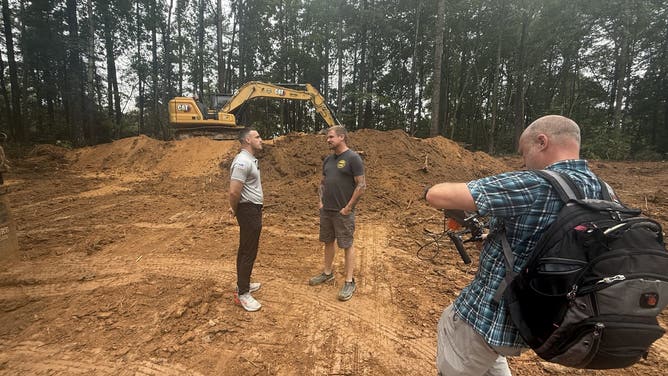
Meteorologist Steve Bender visits a construction site in Hendersonville, North Carolina, two years after Hurricane Helene devastated the area.
(David Rubin / FOX Weather)
That's what makes this story personal for me. It's not just that I covered Hurricane Helene. It's that I covered a disaster in a place that had already been woven into my life for years.
Through this storm, I've gotten to know another side of it. The people. The resilience. The heartbreak. The generosity. The determination to rebuild.
As meteorologists, we're trained to look ahead. What's next? Where is the storm going? How much rain? How strong will the wind get? When will conditions improve? But disasters force you to think differently because the story isn't over when the sun comes out. In some ways, that's when the hardest part begins.
The story of Helene isn't over and for the people who call western North Carolina home, it won't be for a long time. For me, that's why I'll keep going back. Because this isn't just the place I've covered. It's a place I've loved.