

Europe’s scorching summer could give champagne a stronger kick
Deadly summer heat waves scorched Europe, and experts say their effects could make some Champagne wines stronger.
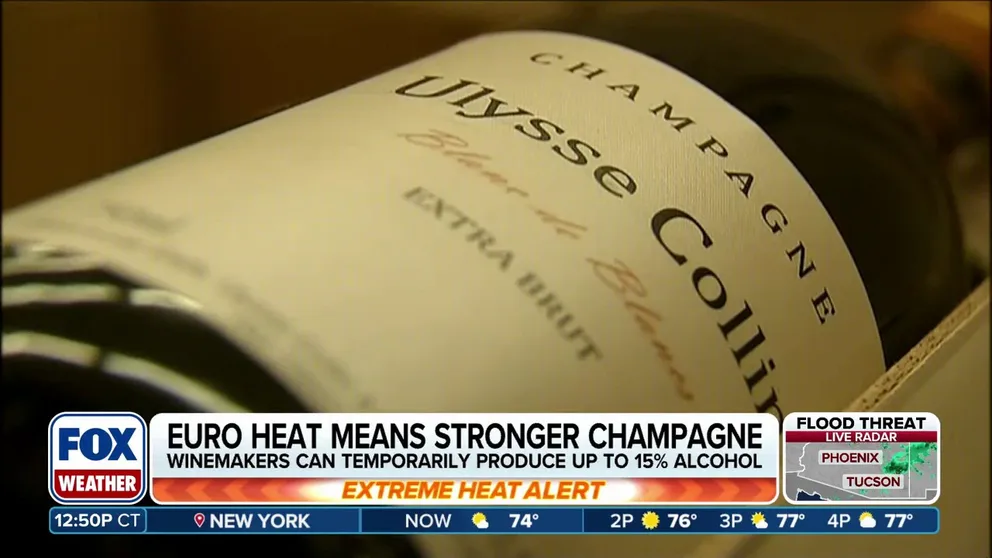
Extreme heat in Europe boosts Champagne's alcohol content
This summer, France experienced a record-breaking heat wave that caused grapes to ripen faster than usual. Now, winemakers may temporarily produce Champagne with an alcohol content as high as 15%. Daniela Garrido, a wine and travel contributor, joins FOX Weather to discuss the impact of extreme heat on Champagne production.
THE TAKEAWAY
- Extreme weather disrupted France’s champagne harvest.
- Heat accelerated ripening and concentrated grape sugars.
- Some 2026 champagne wines could reach higher alcohol levels.
FRANCE - Deadly summer heat waves battered Europe, and in France, their effects could linger long after temperatures cool, all the way into a future glass of champagne.
A combination of extreme weather shaped the 2026 harvest in France’s Champagne region, with severe spring frosts reducing overall production and repeated summer heat waves accelerating ripening and concentrating sugar in the grapes — potentially producing higher alcohol levels in some wines that might make you more tipsy down the line.
EXTREME HEAT SAFETY: RECOGNIZING SIGNS OF HEAT ILLNESS AND HOW TO TREAT IT
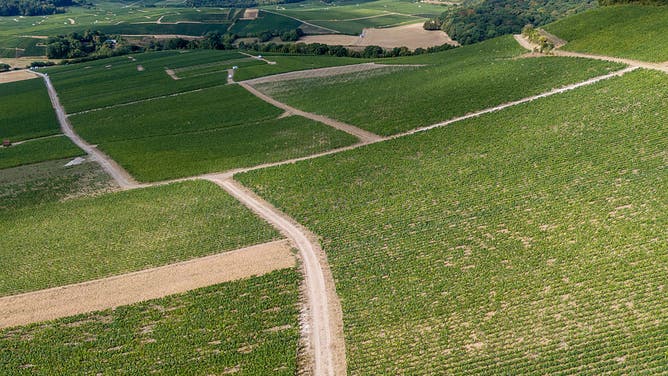
This aerial photograph shows a general view of the Champagne vineyards in Avenay-Val-d'Or, northeastern France, on August 18, 2026.
(Jean-Christophe VERHAEGEN / AFP via Getty Images / Getty Images)
In France’s famed Champagne region, the record-early 2026 harvest produced grapes with unusually high sugar levels, raising the potential alcohol of some finished wines.
As a result, France’s National Institute of Origin and Quality, or INAO, authorized an exception allowing select wines from the 2026 champagne harvest to reach up to 15% alcohol by volume, compared with the traditional 13% ceiling.
CAN CONCERTS AND SPORTING EVENTS CAUSE EARTHQUAKES?
According to experts, the higher limit is not a new standard for champagne, but an exceptional waiver granted because of the unusually hot, dry growing season and the grapes’ elevated sugar concentration.
Repeated rounds of crushing summer heat waves led to an exceptionally hot and dry growing season that concentrated sugar in the grapes in the Champagne wine region of northeastern France.
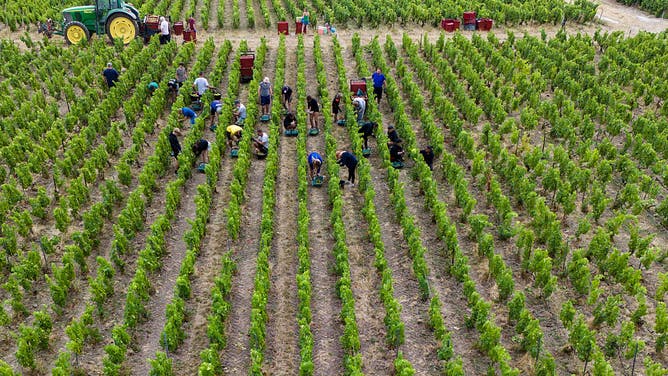
This aerial photograph shows grape pickers harvesting grapes at the Lamiable Champagne House's vineyard in Tours-sur-Marne, northeastern France, on August 17, 2026. Due to the scorching temperatures, the grape harvest is starting extremely early this year.
(Jean-Christophe VERHAEGEN / AFP via Getty Images / Getty Images)
The 2026 harvest began unusually early, with the first grapes picked Aug. 6 — the earliest harvest recorded in Champagne, according to the Comité Champagne.
Harvesting became widespread by Aug. 17, nearly two weeks earlier than in 2025, after the extreme heat accelerated grape maturation.
THE RACE TO SAVE THE WORLD'S MOST ENDANGERED MARINE MAMMAL ISN'T OVER YET
Scott Carney, dean of wine studies at the Institute of Culinary Education, said, while the heat wave boosted maturation of the grapes, these French delicacies still have a lengthy process to go through before they end up on the shelf.
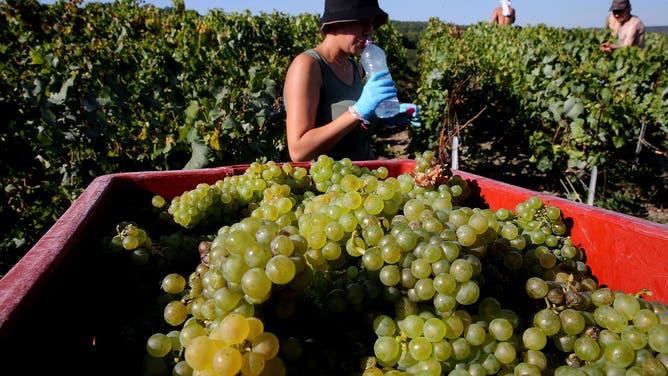
A Harvester cools off during the collect of grapes for Champagne wine in a vineyard during a heatwave on September 8, 2023.
(FRANCOIS NASCIMBENI/AFP via Getty Images / Getty Images)
"These wines don't even start to show until 2028. Curiously though, despite the heat waves they've had, and it's been a tumultuous growing season, people are talking about the quality of the grapes being on a par with some of the legendary vintages of the 20th century," Carney said.
The wines will spend years in cellars during the maturation process before they are eligible for sale, meaning consumers will not taste the 2026 vintage anytime soon.
HURRICANE SWELLS REVEAL FORGOTTEN HISTORY BENEATH ICONIC CALIFORNIA BEACH
The heat did not simply make the champagne more alcoholic. It produced riper, sugar-rich grapes that could give some wines a richer, more concentrated flavor — a value Carney said could ultimately command a higher price.