
Travel alert: Wildfire smoke impacts some of America's most popular national parks
As millions of Americans flock to national parks this summer, the smoke could create hazy skies and unhealthy air quality.
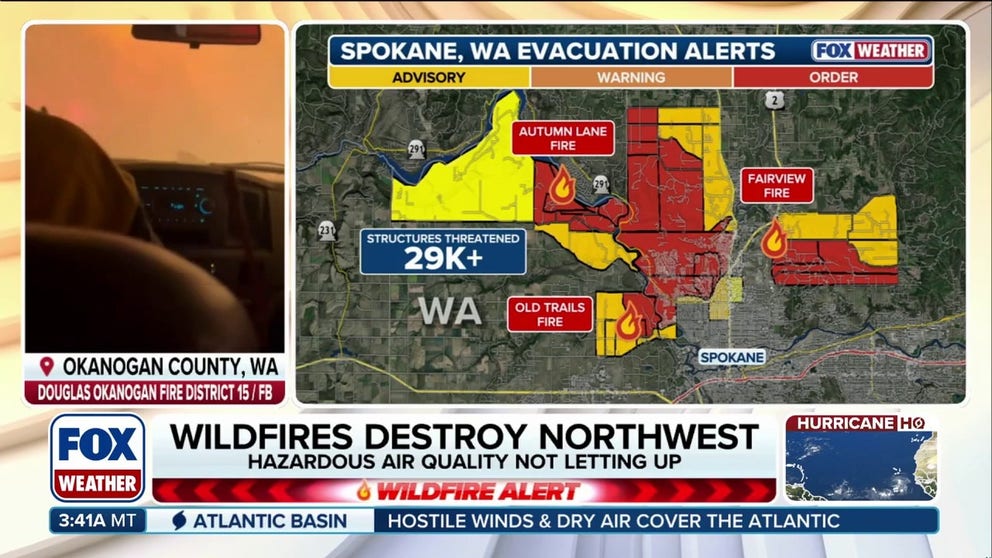
Communities remain threatened as raging wildfires burn in Washington
The Spokane Complex fires continue to burn with zero containment, threatening communities and critical power infrastructure while degrading air quality. FOX Weather Meteorologist Melanie Black breaks down the latest on the ongoing wildfire emergency impacting the Pacific Northwest:
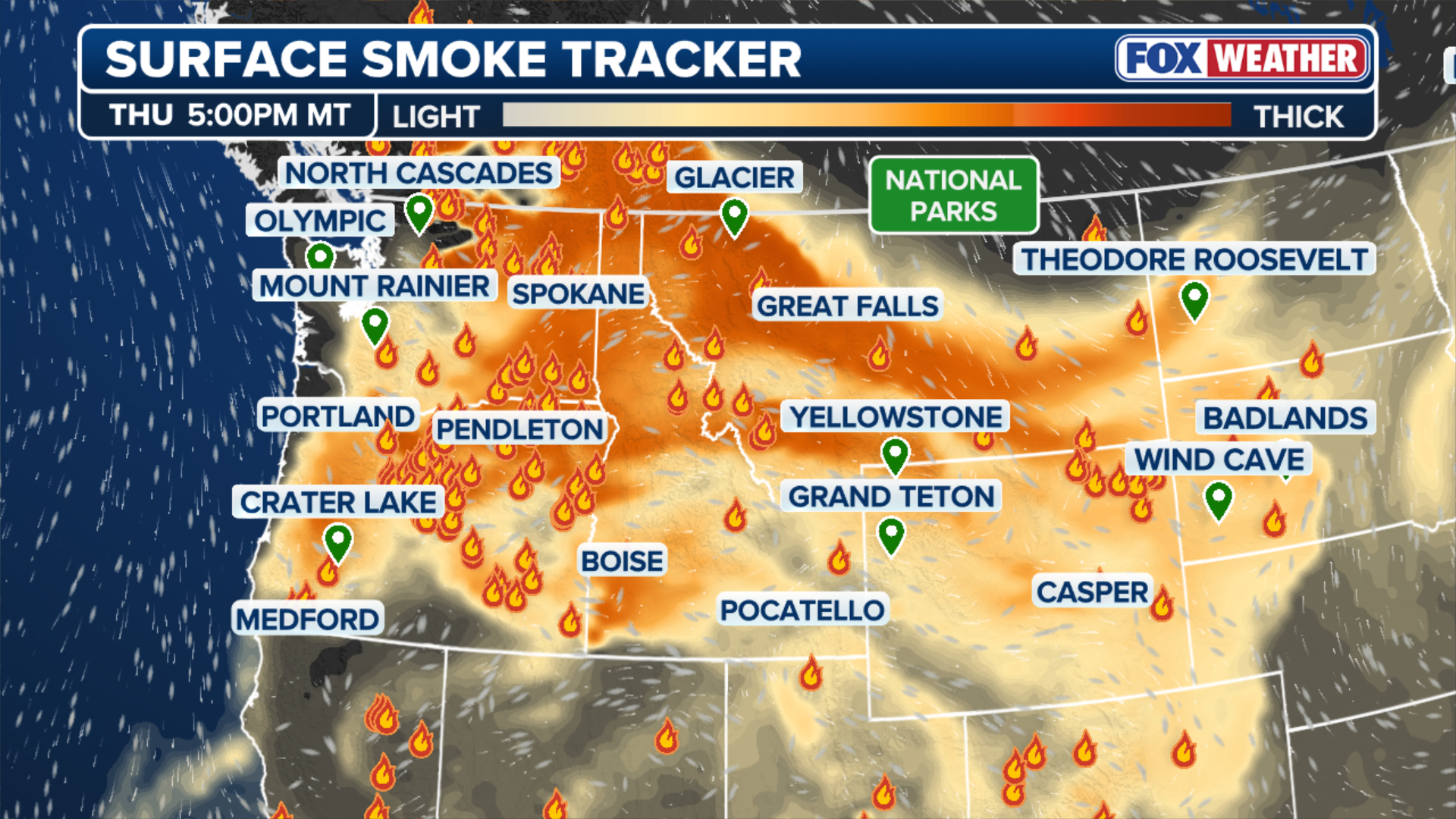
SPOKANE, Wash. - As wildfires rage in Spokane, Washington, you may be wondering where all that wildfire smoke will end up.
By Thursday night, wildfire smoke will have engulfed cities and towns in many states, including Washington, Oregon, Idaho, Nevada, Utah, Wyoming and Montana. Portions of Colorado are also included in Air Quality Alerts, including the city of Denver, for increased amounts of wildfire smoke.
HERE'S HOW THE WILDFIRES IN SPOKANE COMPARE WITH THE MOST DESTRUCTIVE IN US HISTORY
The current Air Quality Index has these states at moderate to unhealthy for sensitive groups, and that will likely continue over the next few days.
(FOX Weather)
There are currently three major wildfires burning around the Spokane area, with a combined footprint of over 10,000 acres. Tens of thousands of residents were evacuated over the weekend and at least 700 structures have been destroyed as a result of the wildfires.
You may remember the recent Canadian wildfires which caused hazy skies in much of the Northeast last month. The smoke returns, but this time, on the other side of the country.
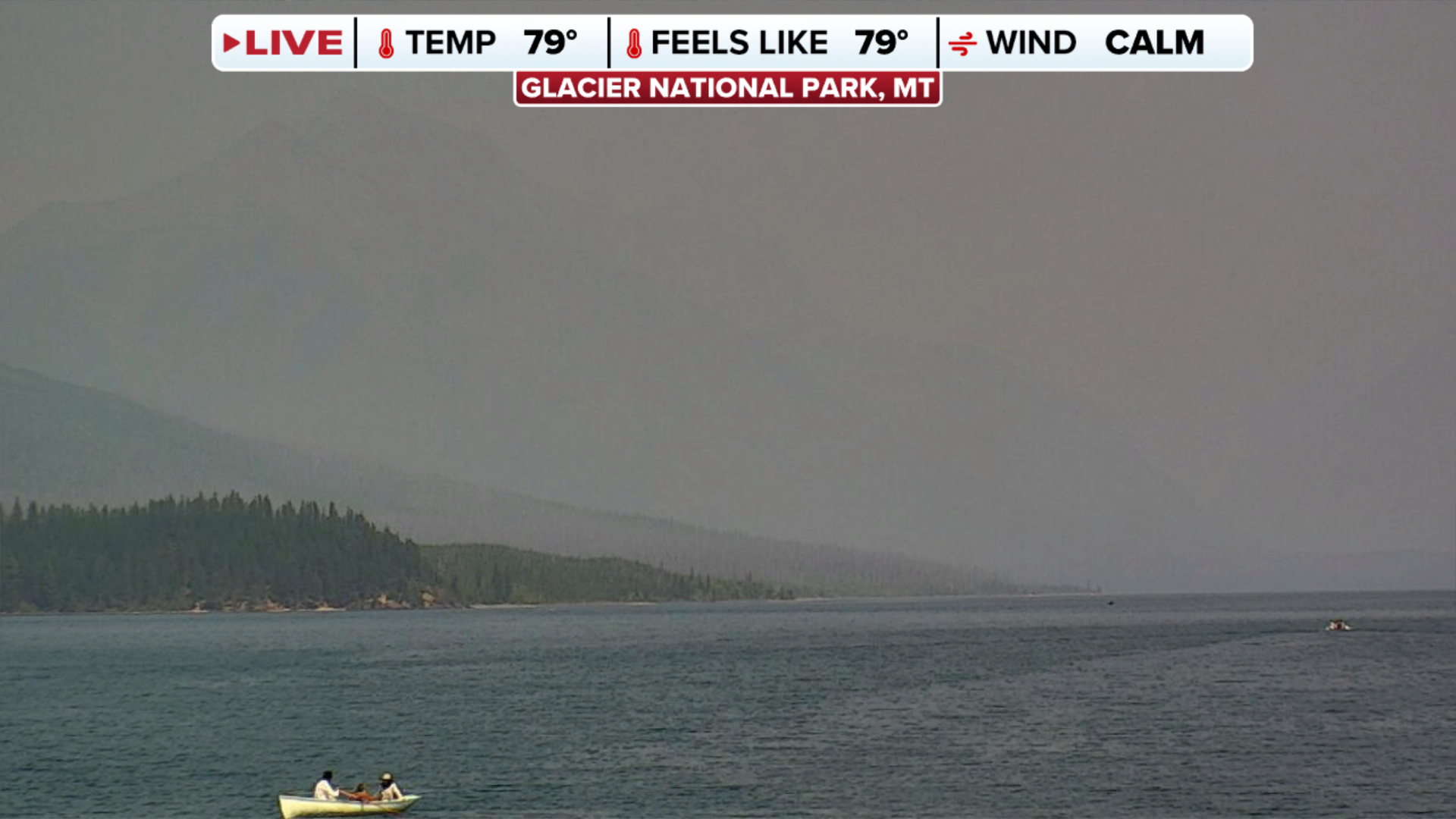
As millions of Americans flock to national parks this summer, the smoke could create hazy skies and unhealthy air quality.
By 5 p.m. MT Thursday, several national parks, including the North Cascades, Mount Rainier, Crater Lake, Glacier, Yellowstone and Grand Teton will see hazy skies due to wildfire smoke.
(FOX Weather)
The National Park Service said more than 100 million people visit U.S. national parks during the summer months, and this seasonal wave represents a large portion of the 323 million total annual recreation visits recorded in all national parks.
Yellowstone National Park alone sees between 4.5 and 4.8 million visitors each year, while nearby Grand Teton National Park averages 3.4 to 3.8 million visitors every year.
WHAT IS THE DIFFERENCE BETWEEN A CONTROLLED AND CONTAINED FIRE?
(FOX Weather)
CAN YOU TASTE WILDFIRE SMOKE? SCIENTISTS SAY IT'S COMPLICATED
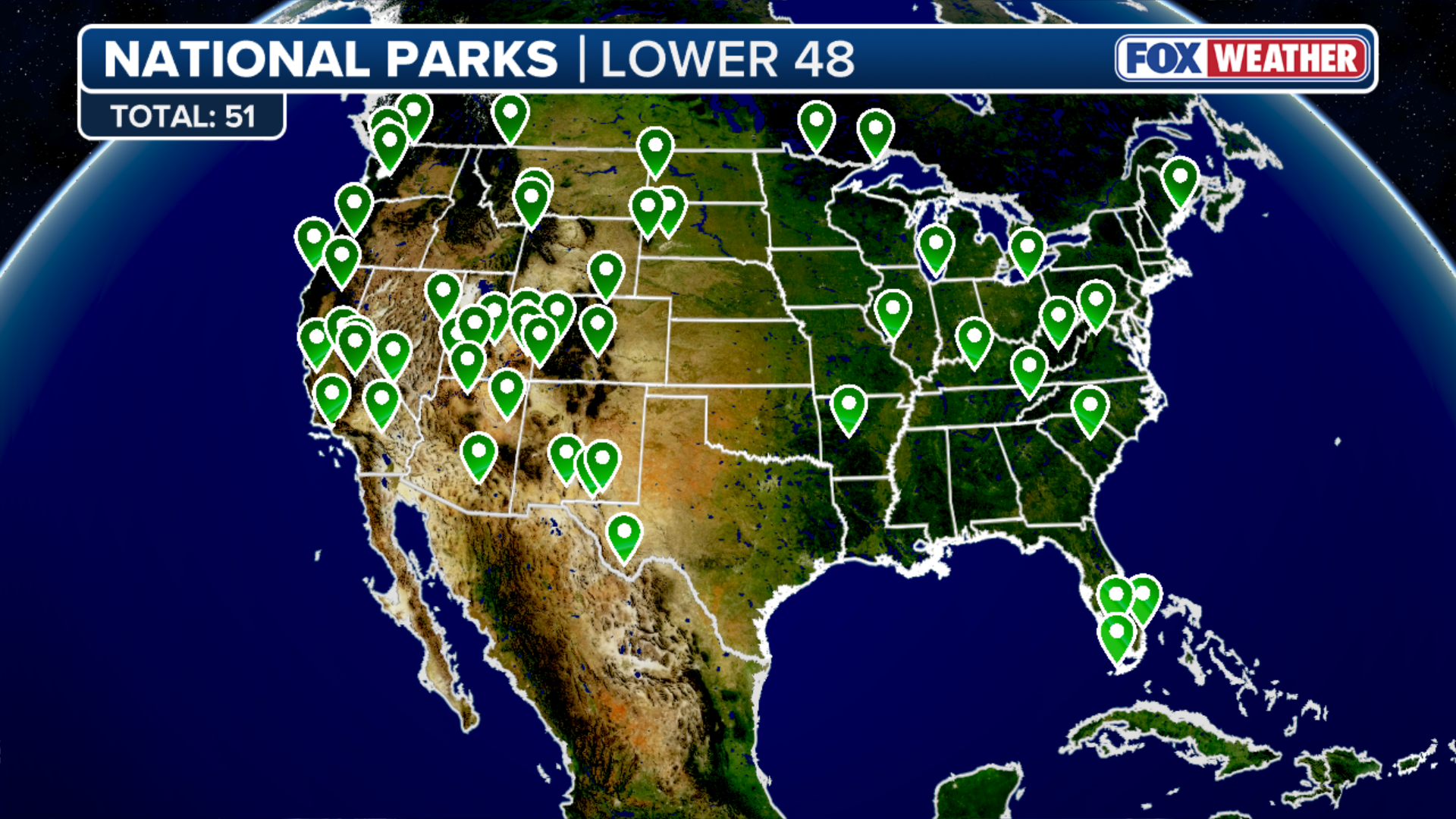
There are 51 national parks in the Lower 48 of the U.S., which are spread across dozens of states.