
Can you taste wildfire smoke? Scientists say it's complicated
When it comes to wildfire smoke people will breathe in the chemicals and the particles in the air that, scientifically, are just a smell, though it might feel like a taste.
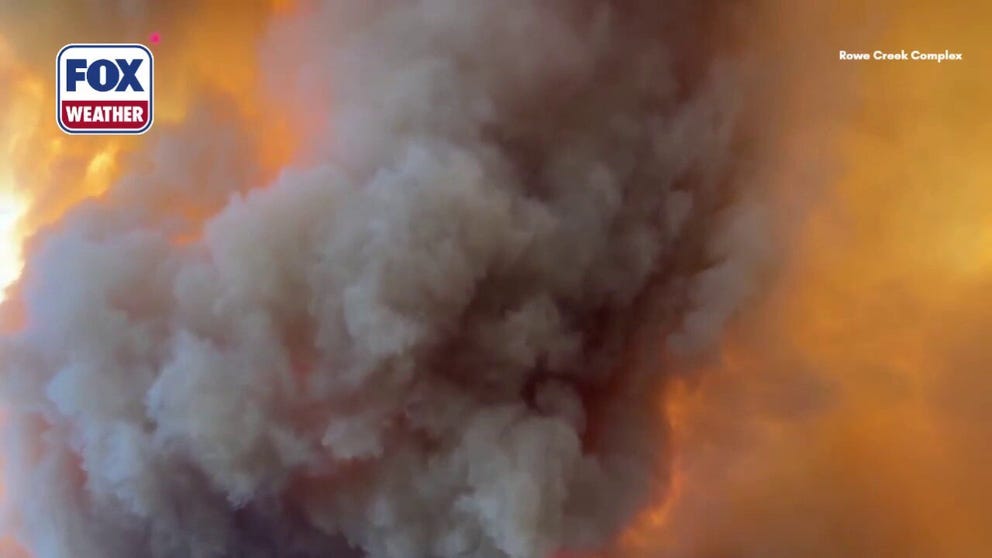
FILE: Rowe Creek Complex Fire sends massive smoke plume over Central Oregon
A massive smoke plume blankets the Oregon sky as the Rowe Creek Complex has grown to more than 200,000 acres after being sparked by lightning earlier this month.
As wildfires rage across America and Canada, wildfire smoke is often pushed into cities.
Some people say they can taste the wildfire smoke, especially when it's extremely thick and hazy.
SURVIVAL EXPERT OFFERS TIPS TO PROTECT YOUR HOME FROM WILDFIRES
When asked if this was actually possible, Derek Daniels, professor of biological sciences at the University at Buffalo, said, "From a scientist hat, it's not really taste, even though we talk about it like taste, it's really smell."
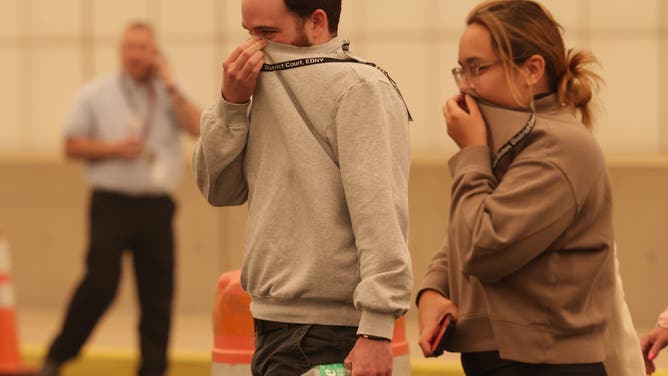
Central Islip, N.Y.: People cover their nose as they walk in Central Islip, New York on June. 7, 2023, due to smoky conditions caused by wildfires in Canada.
(James Carbone/Newsday RM / Getty Images)
He said that a lot of the things we taste as humans are mostly smell.
"There's no such thing as the taste of strawberries or the taste of cherries or pineapple or chocolate," Daniels said. "It's a flavor."
NORTHWEST WILDFIRE SEASON SURPASSES 1 MILLION ACRES BURNED AS MAJOR FIRES CONTINUE TO SPREAD
He said when you taste something like dark chocolate, you'll taste bitterness and sweetness, but everything else is smell.
When it comes to wildfire smoke, he said, people will breathe in the chemicals and the particles in the air that, scientifically, are just a smell, though it might feel like a taste.
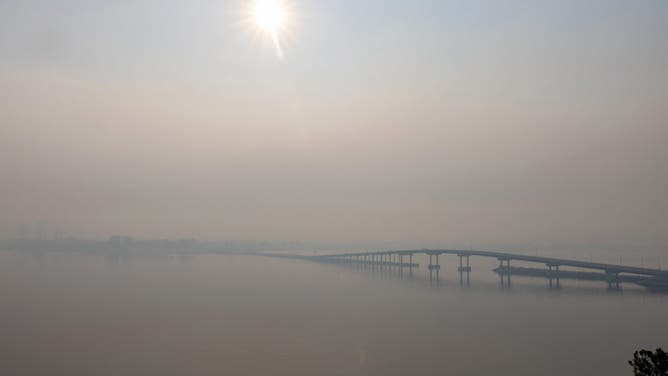
TOPSHOT - Smoke hangs around the William R. Bennett Bridge as the nearby McDougall Creek fire continues to burn in West Kelowna, British Columbia, on August 19, 2023.
(DARREN HULL/AFP / Getty Images)
Daniels said from a brain perspective, people might be tasting something bitter, in this case, which would be caused by the particles in the area from smoke.
He said that those people who are hyper-sensitive to bitter tastes, and those people in particular might be more likely to think they taste smoke, they're often referred to as "supertasters."
WATCH: DRAMATIC VIDEO SHOWS FREIGHT TRAIN, CREW CAUGHT IN CANADIAN WILDFIRES
Daniels said the sensation is different from people who might have the gene that makes cilantro taste like soap.
"You can actually see when you look at the tongues of supertasters that there's a different pattern of the tastebuds," Daniels said.
Former University at Buffalo taste expert Kathryn Medler said something similar in 2023.
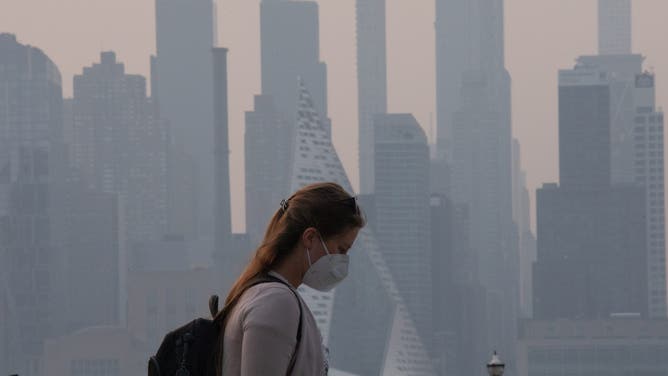
WEEHAWKEN, NJ - JUNE 7: A woman wears a face mask as smoke continues to shroud the sun as it rises behind the skyline of Manhattan in New York City on June 7, 2023, as seen from Weehawken, New Jersey.
(Kena Betancur/VIEWpress / Getty Images)
"Children and some adults tend to have more and, as a result, they can have a more sensitive palette," she said in a news release. "It’s more likely that these people can actually taste smoke particles that are sticking in our mouths, and that taste profile is likely to be bitter or sour."
Like Daniels, Medler agreed that differentiating between "taste" and "flavor" is hard, because flavor is the combination of taste and smell.
Regardless of tasting smoke, it is very harmful to breathe it in. So, next time you happen to be around a campfire or wildfire smoke, don't intentionally try and inhale to see if you are a supertaster who might be able to "taste" elements of the smoke.
Also make sure to wear face protection when in dense smoke, especially for long periods of time.