

See it: Rare Greek coin from 3rd Century BC discovered by 13-year-old in Berlin
It dates to between 281 and 261 BC and was minted at Ilion, otherwise known as the ancient city of Troy.
FILE: Divers discover a 200-year-old shipwreck while exploring Lake Ontario
A group of Canadian diver found a British ship that may have sunk over 200 years ago while exploring the depths of Lake Ontario. The ship appears to be fully intact.
BERLIN– An ancient Greek coin depicting the goddess Athena was discovered by a 13-year-old student in a field in Germany recently.
PETRI Berlin, an archaeological lab, is a collaboration between the Museum of Prehistory and Early History of the National Museums in Berlin and the State Office for the Preservation of Historical Monuments in Berlin, and announced the find.
THESE RARE TITANIC ARTIFACTS SOLD FOR OVER $1 MILLION AT AUCTION
The lab said it's the first archaeological find from Greek antiquity found within the city limits of Berlin-Spandau.
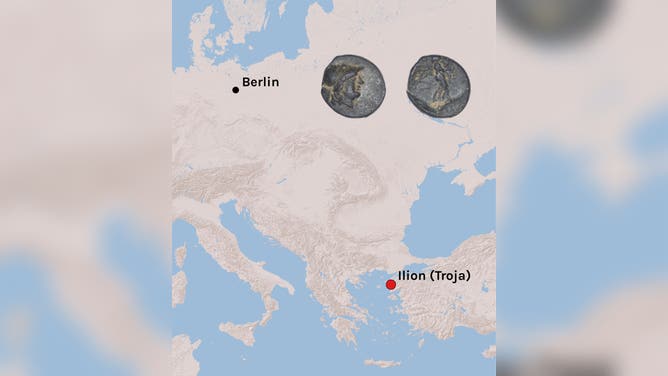
Map showing the origin of the coin and where it was found.
(Map data from ESRI, edited by Gunnar Nath (LDA). Photos of the coin: Staatliche Museen zu Berlin, Museum für Vor- und Frühgeschichte / Ulrike Scheibe / FOX Weather)
The coin is approximately 12 millimeters in diameter, and is made of bronze, PETRI Berlin said. It weighs about 7 grams.
It dates to between 281 and 261 BC and was minted at Ilion, otherwise known as the ancient city of Troy.
It was found by a 13-year-old student in a field.
SEE SOME OF THE MOST UNIQUE ITEMS EVER FOUND ON A SHIPWRECK LOST AT SEA
One side of the coin depicts the head of the goddess Athena wearing a Corinthian helmet. The reverse shows Athena ilias wearing a distinctive headdress, holding a spear in her raised right hand and a spindle in her left.
![Bronze coin with the head of Athena on the obverse. Origin: Ilion. 3rd century BC.]() Image 1 of 3
Image 1 of 3Bronze coin with the head of Athena on the obverse. Origin: Ilion. 3rd century BC. (© Staatliche Museen zu Berlin, Museum für Vor- und Frühgeschichte / Ulrike Scheibe)
![Bronze coin with the image of Athena Ilios on the reverse. Origin: Ilion. 3rd century BC.]() Image 2 of 3
Image 2 of 3Bronze coin with the image of Athena Ilios on the reverse. Origin: Ilion. 3rd century BC. (© Staatliche Museen zu Berlin, Museum für Vor- und Frühgeschichte / Ulrike Scheibe)
![Ancient Greek coin from the 3rd century BC.]() Image 3 of 3
Image 3 of 3Ancient Greek coin from the 3rd century BC. (© PETRI Berlin / Christof Hannemann)
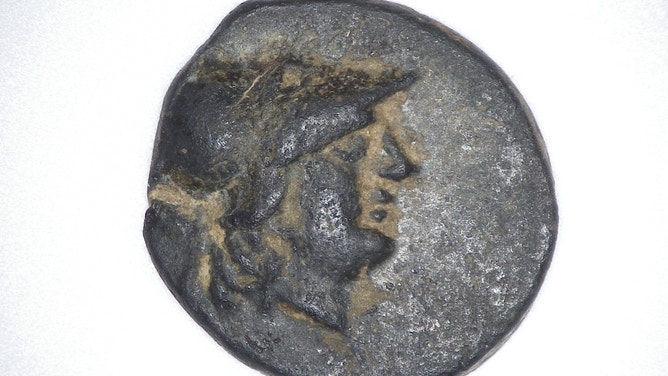
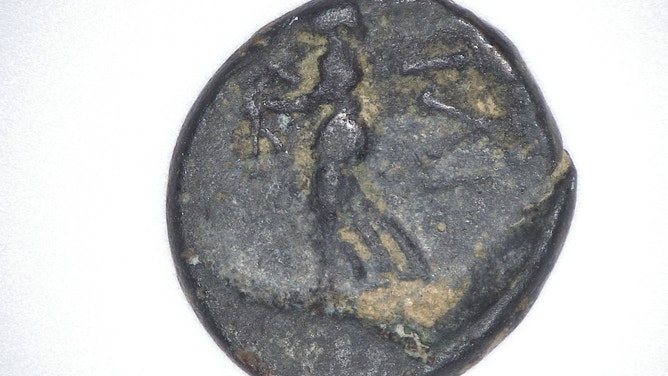
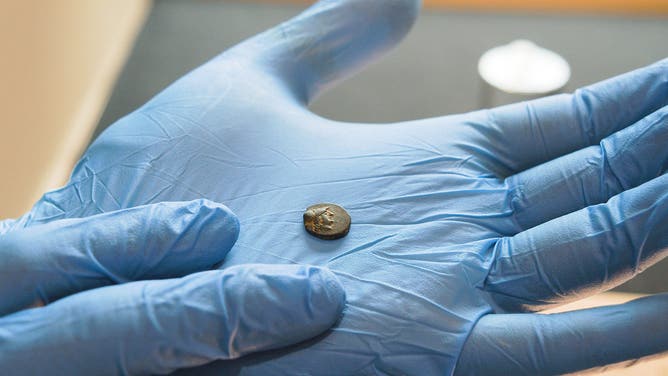
PETRI Berlin said at first, it was unclear if the coin was from an archaeological context or a collector's item lost in modern day, but after experts examined where it was found, clear evidence arose indicating the area was used as a burial ground for a long time.
"Ceramic fragments, cremated human remains, and a double-lobed bronze button point to the existence of a burial ground dating to the Bronze Age or Early Iron Age," the news release from PETRI Berlin said.
TOP 10 BEST BEACHES IN THE WORLD FOR 2026 ANNOUNCED
The lab said finds from the Roman Imperial period and a Slavic knife sheath, provided further evidence that the site was used into later eras.
"Finds dating back to classical antiquity are generally rare in Berlin," PETRI Berlin said. "While Roman objects are occasionally—yet regularly—attested, Greek finds have until now been entirely absent."
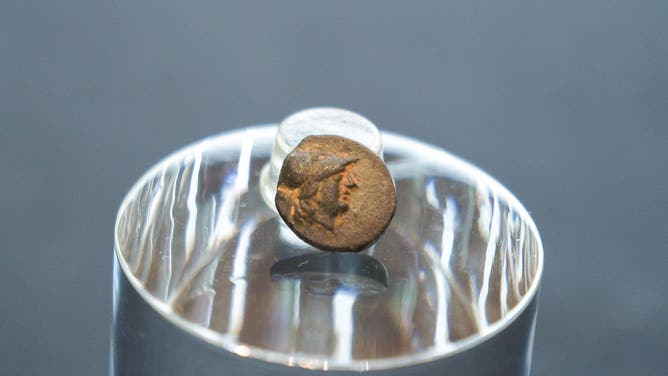
Presentation of the ancient Greek coin at PETRI Berlin.
(© PETRI Berlin / Christof Hannemann / FOX Weather)
The lab said the coin is a significant science rarity.
An investigation is ongoing into how the ancient Greek coin made its way into North-Central Europe. The lab said trade connections between the Baltic Sea region and Mediterranean dated back to early antiquity.
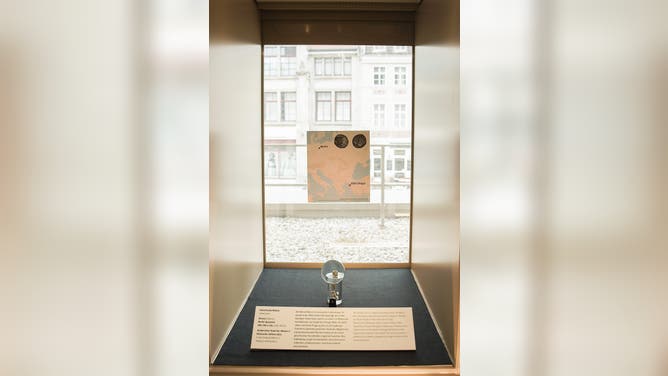
Display case of "Current Finds" at PETRI Berlin with the presentation of the Greek coin.
(© PETRI Berlin / Christof Hannemann / FOX Weather)
However, it is hypothesized that the coin was more symbolic than of economic function.
The coin is on display at PETRI Berlin as of April 15, 2026.