

Ancient dinosaur fossil reveals surprising discovery that has been buried for more than 115 million years
It expands the potential of fossils beyond morphology and allows a new way to study the ancient physiology, oxygen transport and evolutionary biology of dinosaurs under similar circumstances.
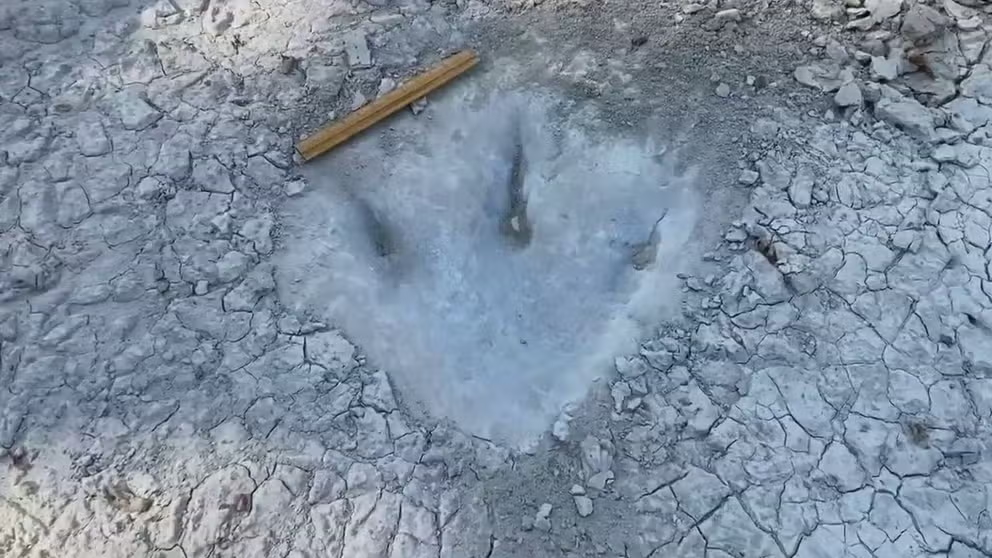
FILE: Dinosaur tracks uncovered in Texas amid drought
Amid a drought, the Dinosaur Valley State Park has discovered dinosaur footprints that have been historically covered by water and sediment. They date back more than 113 million years ago.
THE TAKEAWAY
- Mineralized blood from a 115-million-year-old dinosaur was found in the limb bones of a theropod.
- The discovery provides strong evidence that original biological molecules could survive in dinosaur fossils.
- The dinosaur's well-preserved status is due to rapid burial in a low-oxygen, microbially rich environment shortly after death.
Researchers have made an unbelievable discovery after finding evidence of fossilized red blood cells in the limb bone of a theropod dinosaur.
An international research team led by Curtin University stumbled upon mineralized red blood cells and intact heme biomolecules in the limb bones of a 115-million-year-old theropod dinosaur known as Aratasaurus museunacionali.
This fossil was discovered in Brazil, according to Curtin University.
ANCIENT ROMAN CLOSET FOUND UNTOUCHED FOR NEARLY 2,000 YEARS WITH PERSONAL BELONGINGS STILL INSIDE
The discovery suggests that original biological molecules may survive in dinosaur fossils, challenging assumptions about how long these compounds can remain intact.
It expands the potential of fossils beyond morphology and allows a new way to study the ancient physiology, oxygen transport and evolutionary biology of dinosaurs under similar circumstances.
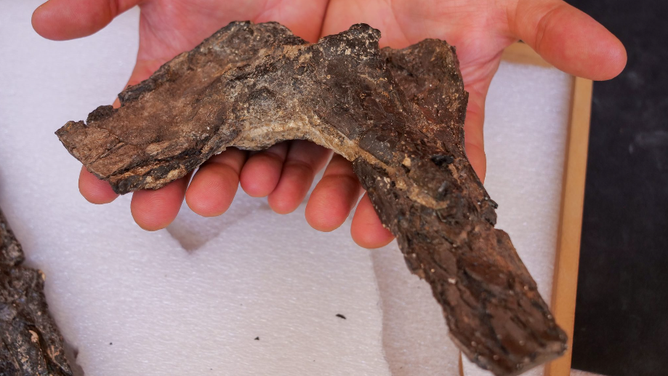
Mineralized red blood cells and intact heme biomolecules were discovered in limb bones of a 115-million-year-old theropod dinosaur known as Aratasaurus museunacionali.
The collected samples contain heme — the oxygen-carrying component of hemoglobin — which confirmed that blood in fact remains inside the fossil.
"It not only extends the known fossil record of blood, but also offers a direct molecular window into the physiology of long-extinct animals so we may better understand them and the world they lived in," the study’s lead author Professor Kliti Grice said.
Researchers believe the dinosaur's well-preserved status is due to it being rapidly buried in a low-oxygen, microbially rich environment shortly after its death.
SECOND MOST VALUABLE DINOSAUR FOSSIL IN THE WORLD IS SOLD FOR OVER $47 MILLION
The red blood cells were mineralized with hausmannite, which acted like a natural time capsule by helping stabilize cellular structures and biomolecular components over time, according to Curtin University.
This allows researchers to investigate the evolution of blood, metabolism and activity levels in these ancient animals.