

Here's how El Niño affects the future of coral reefs
With El Niño conditions emerging in 2026, coral reefs may once again face the threat of widespread bleaching as ocean temperatures continue to rise.
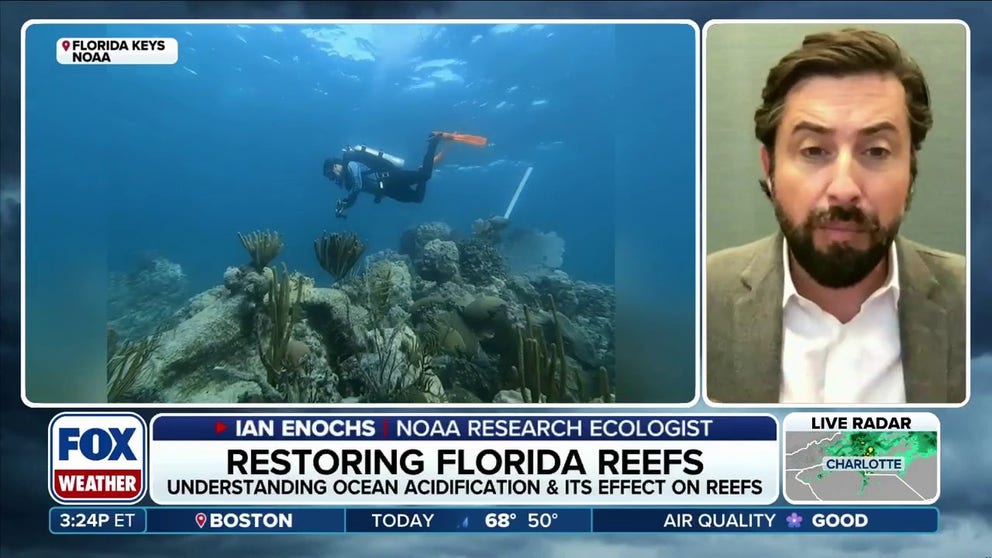
FILE: NOAA researchers working to understand and protect Florida coral reefs
Dr. Ian Enochs is a NOAA Research Ecologist studying ocean acidification and its impacts on coral reefs. New NOAA buoys are monitoring vital coral reef deterioration in Florida Keys to help understand how to protect the reefs moving forward.
Since the late 1970s, global sea surface temperatures have been consistently rising and there are no signs of stopping.
With the current El Niño occurring, forecasters are predicting ocean temperatures to rise anywhere from 2.0 to 3.0 degrees Celsius, making it the strongest El Niño on record, surpassing 1982-83.
THE LARGEST DOCUMENTED CORAL COLONY IN THE WORLD FOUND ON THE GREAT BARRIER REEF
"We're seeing that coral bleaching is occurring more and more often because our waters are getting warmer and warmer," Keisha Bahr, chair of Coral Reef and Ocean Health at Heart Research Institute at Texas A&M Corpus Christi, said.
What is coral bleaching?
Coral and algae are like best friends; they have a mutually beneficial relationship, meaning both organisms help each other survive.
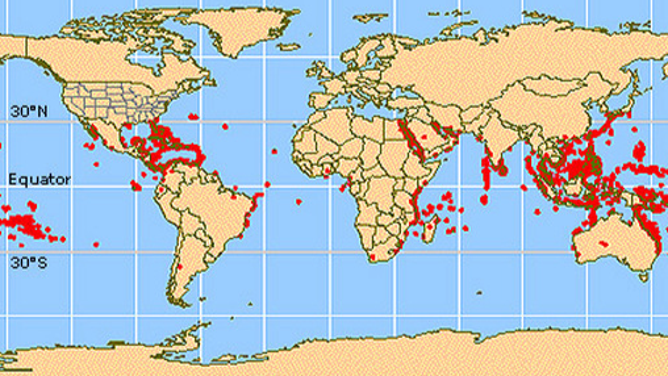
Map of coral reefs, sea surface temperature anomaly map in 1991.
The algae that live inside the coral tissue are called zooxanthellae. Zooxanthellae give coral nutrients and energy to grow. They also give coral their beautiful color.
In return, the coral provides a protected place to live and nutrients from coral waste products.
FLORIDA KEYS LAB RACES TO SAVE THOUSANDS OF CORAL SPECIES FROM UNPRECEDENTED HEAT WAVE
When temperatures rise, the relationship between coral and zooxanthellae breaks apart.
"We don't know who's causing the breakup, but the breakup is happening," Bahr said.
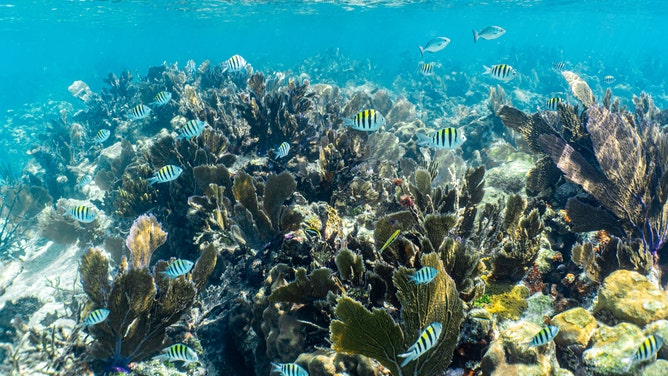
Schools of fish in the pristine water of John Pennekamp Coral Reef State Park off of Key Largo in the Florida Keys, USA
(Bkamprath / Getty Images)
Not only does the coral lose its color, but it also loses its main food source and becomes more vulnerable to disease and starvation.
Past mass coral bleaching events correlating to El Niño
"We have had major massive bleaching events that are more severe, occurring with El Niños," Bahr said.
In fact, the first global coral bleaching event was triggered by an incredibly strong El Niño in 1998. This El Niño produced some of the warmest sea surface temperatures ever observed in the tropical Pacific, with anomalies exceeding 2 to 4 degrees Celsius above average.
HOW CARIBBEAN KING CRABS ARE RESCUING CORAL REEFS IN FLORIDA
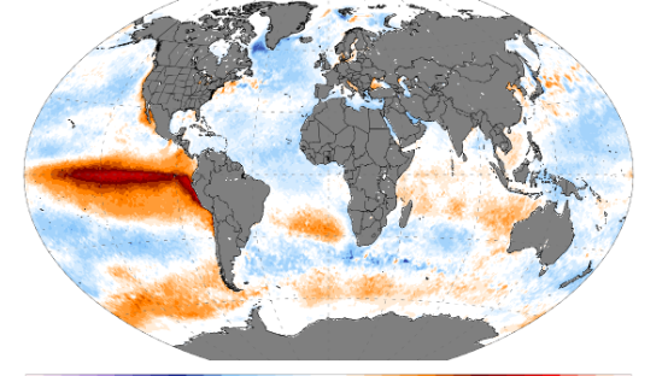
Map of coral reefs, sea surface temperature anomaly map in 2016.
It devastated roughly 16 to 20% of the world's reefs, according to the U.S. Department of State.
Another mass bleaching event occurred in 2016, which was also triggered by a strong El Niño. During this time, the Relative Oceanic Niño Index (RONI) peaked at 2.37 degrees above average in the November-December-January period.
THESE NEW BUOYS ARE MONITORING VITAL CORAL REEF DETERIORATION IN FLORIDA KEYS
The warmest the waters ever got during this period was about 26.8 degrees Celsius, or 80.2 degrees Fahrenheit. This is the second warmest ever recorded since 1950.
The future of coral reefs
For coral bleaching to occur, ocean water temperatures are usually about 2 degrees Celsius, or about 4 degrees Fahrenheit above the summer maximum temperatures. We see these temperatures during El Niño events.
"So it's like a guarantee that you also see bleaching," Bahr said.
FLORIDA COMPANY PROVIDES UNIQUE, ECO-FRIENDLY WAY TO KEEP MARINE LIFE ALIVE AFTER YOU DIE
This El Niño is expected to show us what the next five to 10 years could have in store for coral reefs.
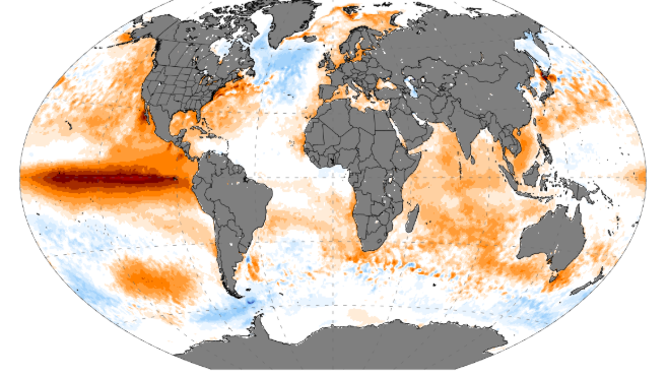
Map of coral reefs, sea surface temperature anomaly map in 2026.
"I don't think the outlook is very good in terms of wild coral," Bahr said.
'SHOCKING': FLORIDA CORAL REEF FOUND COMPLETELY BLEACHED AS MARINE HEAT WAVE CONTINUES
However, research shows corals have changed their temperature tolerance over the past 50 years. So there still is hope, and we need action.
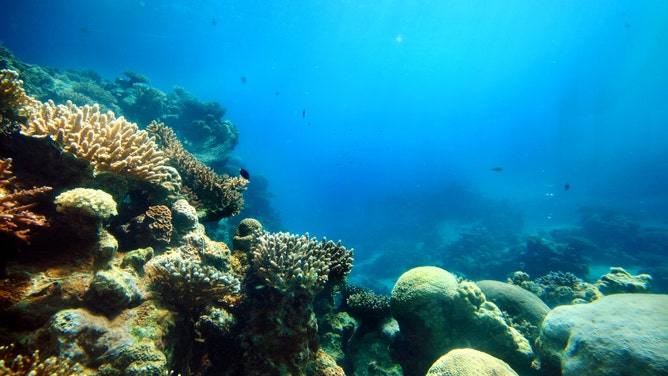
A bleached coral is not a dead coral, but rather a highly stressed and starving living organism. They can recover from being bleached if conditions return to normal.
(skynesher / Getty Images)
Some research projects to help coral reefs include shading, bringing up cool water, removing corals and breeding corals.
But what we all can do is reduce our carbon to help slow down the warming of our ocean temperatures.