

What you need to know as Florida's sea turtle nesting season kicks off
Leatherback turtles are usually the first to lay their eggs, and nests have already been reported in Delray Beach.
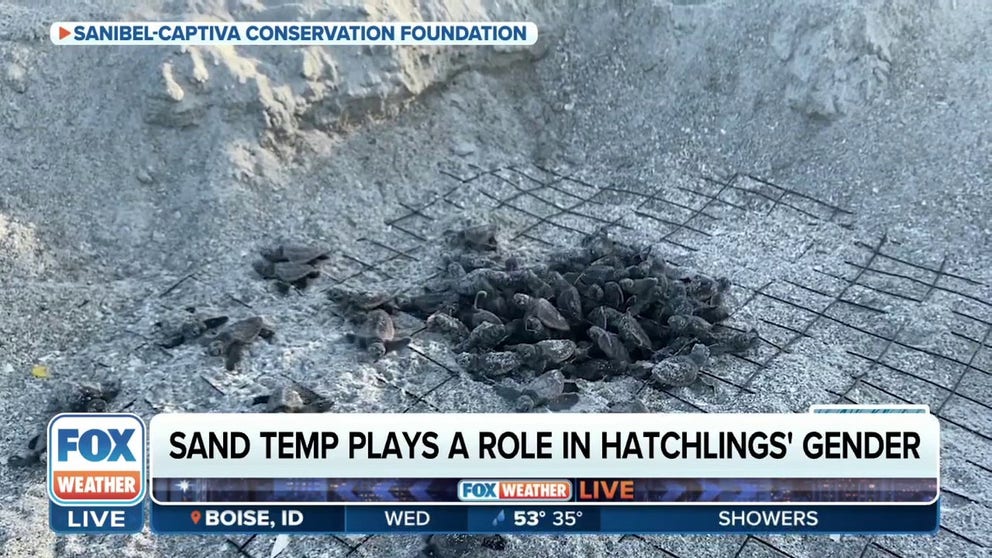
FILE: Hurricane season poses threat to sea turtles
Joseph Widalski, VP for Sea Turtle Trackers, joins FOX Weather to talk about how hurricanes impact sea turtle habitats along Florida beaches.
FLORIDA — March is the official start of nesting season for sea turtles in the Sunshine State and, as a protected species, there are a few things to note about the season and nesting sea turtles.
The majority of sea turtle nesting season runs from March to October in Florida.
Many Florida beaches are home to nesting sea turtles, and organizations around Florida work hard to protect the nests from human threats and natural predators.
TWO ORGANIZATIONS TEAM UP TO SAVE COLD-STUNNED SEA TURTLES
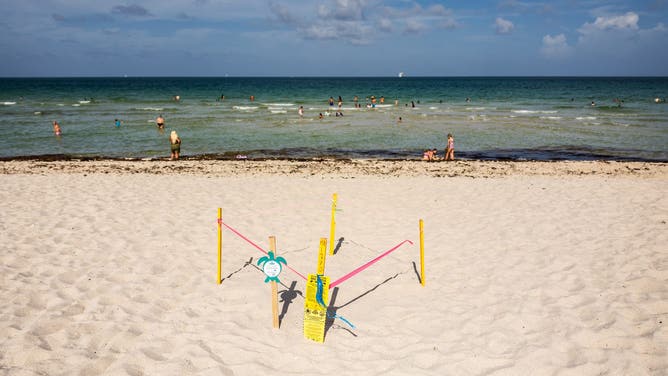
Protection of a sea turtle nest with logo and pink ribbon on the beach facing the Atlantic Ocean in Miami Beach in the state of Florida in the United States of America (USA) on July 27, 2025.
(JC MILHET/Hans Lucas/AFP / Getty Images)
Florida's native sea turtles are Hawksbill Turtles, Kemp's Ridleys, Loggerhead Turtles, Leatherback Turtles and Green Turtles.
Starting in March, all five species of sea turtles native to Florida will go to beaches, dig nests and lay their eggs.
SLEEPY GREY SEAL SHUTS DOWN BUSY STREET WHILE TAKING A NAP IN NEW JERSEY
Sea turtles incubate for around two months, then the eggs hatch.
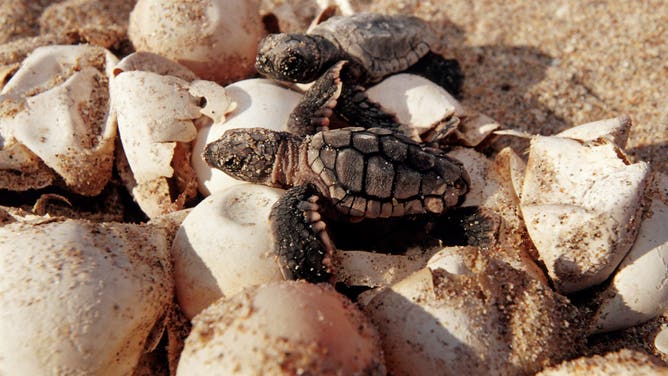
2019: Loggerhead turtle, Caretta caretta, is endangered. A nest contains about 100 eggs. Hatchlings try to avoid many predators during their escape to the open ocean, Florida.
(Mark Conlin/VW PICS/UIG / Getty Images)
Baby sea turtles, called hatchlings, will then dig their way out of their nests all at the same time, and at night, they will make their way from the sandy shores into the ocean, where they will grow up.
According to the Florida Fish and Wildlife Conservation Commission, only about one in 1,000 baby turtles survive to adulthood.
SEE IT: RESPONSE TEAM WORKS TO STUDY AND SAVE HUMPBACK WHALES FROM DISENTANGLEMENT IN HAWAII
Hatchlings can die of dehydration if they don't make it to the ocean and birds, crabs and other animals often prey on small turtles.
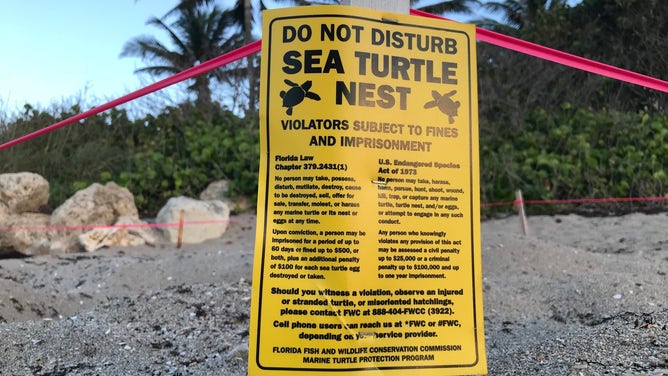
A sign warning people of a sea turtle nest in Deerfield Beach, Florida.
(City of Deerfield Beach, Florida — Government / FOX Weather)
In order to protect sea turtle nests and the hatchlings, Florida State Parks patrol nesting sites to ensure the safety of the nests from predators.
Other local agencies, like the nonprofit Loggerhead Marinelife Center, also work to make sure nests and hatchlings are safe by conducting nest surveys every morning, relocating nests threatened by high tide, erosion or human interference and overseeing hatchling releases to make sure the babies make it to the ocean.
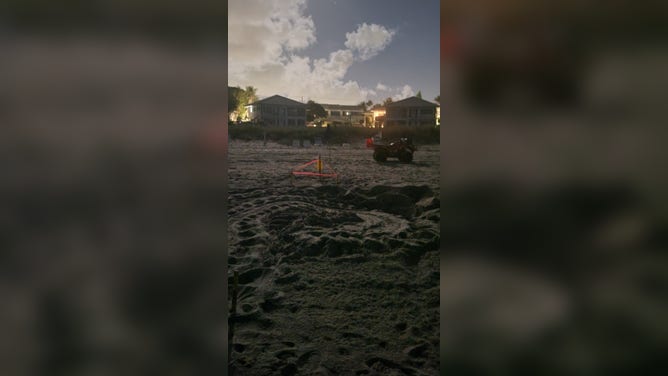
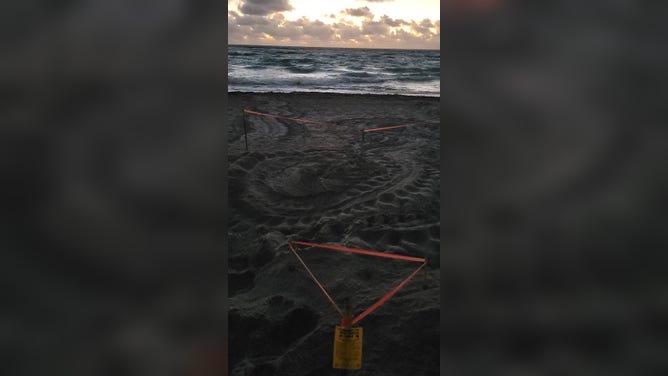
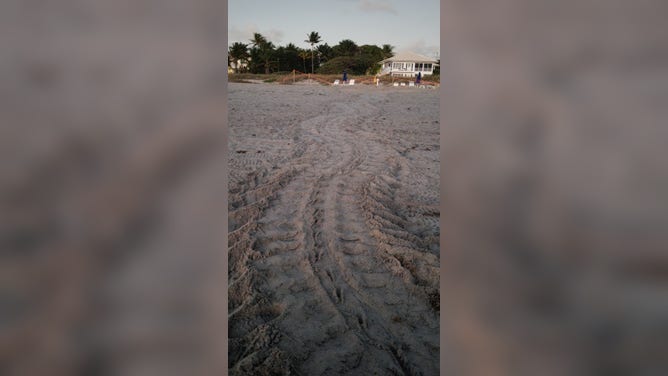
Leatherback turtles are usually the first to lay their eggs, and nests have already been reported in Delray Beach.
1,400-LB WHITE SHARK 'BRETON' PINGS OFF GEORGIA COAST
![A leatherback sea turtle nest marked and barricaded on a beach in Delray Beach, Florida on March 4, 2026.]() Image 1 of 3
Image 1 of 3A leatherback sea turtle nest marked and barricaded on a beach in Delray Beach, Florida on March 4, 2026. (City of Delray Beach, Florida Government)
![The leatherback nest area in Delray Beach, Florida on March 4, 2026.]() Image 2 of 3
Image 2 of 3The leatherback nest area in Delray Beach, Florida on March 4, 2026. (City of Delray Beach, Florida Government)
![Leatherback tracks leading to the nest in Delray Beach, Florida, on March 4, 2026.]() Image 3 of 3
Image 3 of 3Leatherback tracks leading to the nest in Delray Beach, Florida, on March 4, 2026. (City of Delray Beach, Florida Government)
As nesting season kicks off, Florida State Parks and Loggerhead Marinelife Center recommend these things you can do to keep sea turtle nests and hatchlings safer on Florida beaches:
- Give nesting adults and their hatchlings space and do your best not to disturb them.
- Turn off artificial lighting near beaches at night during nesting season since artificial light can disorient hatchlings, drawing them away from the ocean.
- Properly dispose of food items to decrease predation by wildlife.
- Properly dispose of debris like fishing line, netting and plastic, so hatchlings don't get tangled.
- Keep obstacles such as beach furniture off the beach during nesting season.
Local organizations encourage residents to get involved in sea turtle conservation efforts and to avoid buying things made of sea turtles.
For more information on how you can help sea turtles in Florida, visit the Florida State Parks website.