

Section of SpaceX Falcon 9 rocket expected to smash into the moon
The object is expected to strike the moon at roughly 5,400 miles per hour near Einstein Crater, which is a rugged, heavily cratered region on the moon.
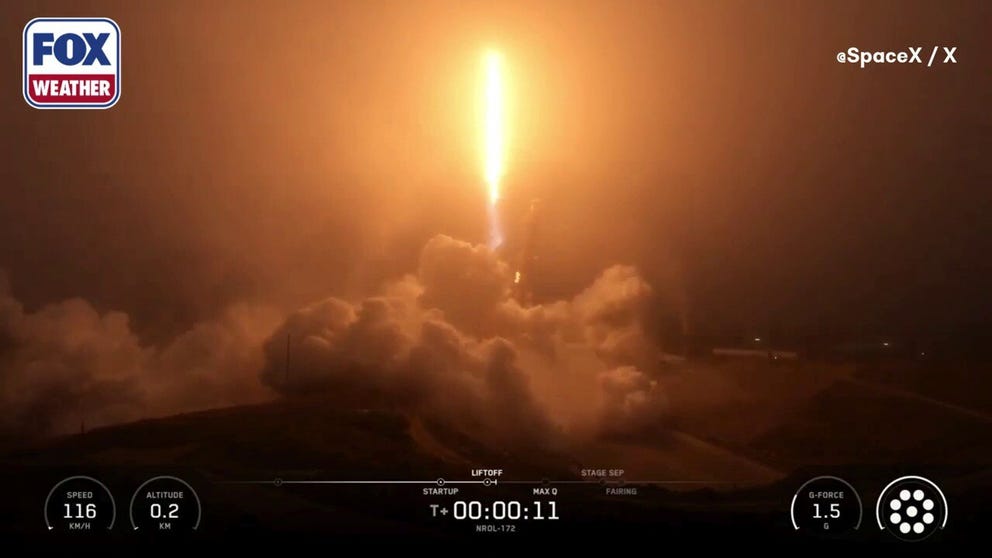
WATCH: SpaceX Falcon 9 Rocket Launch
SpaceX has conducted another rocket launch today in Florida, as this marks the 4th mission so far this month.
A section of a SpaceX Falcon 9 rocket is expected to collide with the moon as soon as August.
HOW MANY SPACEX ROCKET LAUNCHES WILL OCCUR BY THE END OF 2026?
According to Project Pluto, the rocket's upper stage is forecast to impact the lunar surface on Aug. 5, 2026, at approximately 2:35 a.m. EST.
The object is expected to strike the moon at roughly 5,400 miles per hour near Einstein Crater, which is a rugged, heavily cratered region on the moon.
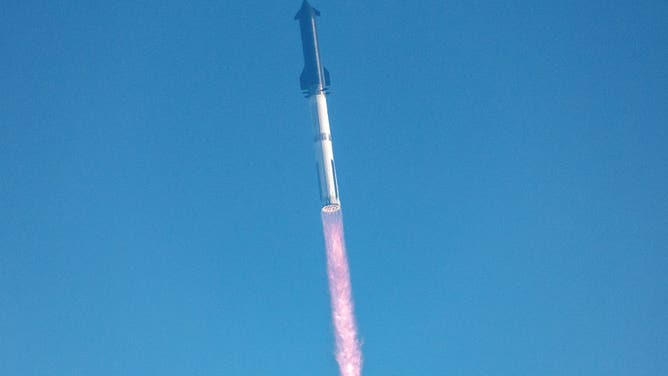
The SpaceX Starship rocket launches from Starbase, Texas, as seen from South Padre Island on May 27, 2025.
(SERGIO FLORES/AFP via Getty Images)
The upper stage, which is the height of a five-story building, originated from a SpaceX mission that launched on Jan. 15, 2025.
Falcon 9 rockets are designed with detachable stages. As the rocket ascends and burns through fuel, the upper stage separates from the lower stage to reduce weight and improve efficiency.
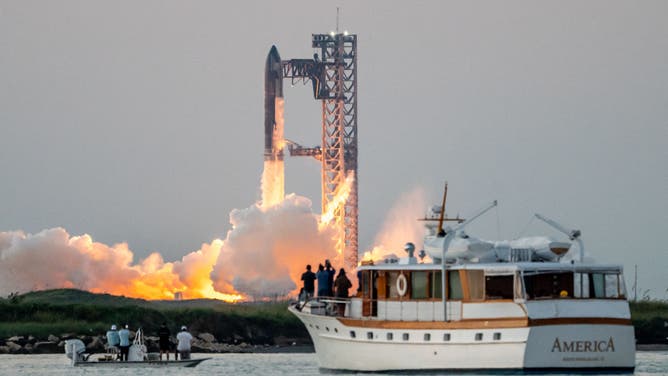
The SpaceX Starship lifts off from Starbase near Boca Chica, Texas, on October 13, 2024, for the Starship Flight 5 test. SpaceX successfully "caught" the first-stage booster of its Starship megarocket Sunday as it returned to the launch pad after a test flight, a world first in the company's quest for rapid reusability.
(Photo by SERGIO FLORES / AFP / Getty Images)
Most rocket stages either remain in Earth orbit for a period of time before re-entering the atmosphere, or are sent into solar orbit.
However, this particular stage has remained in an extended orbit around Earth for more than a year and is now on a journey toward the moon.
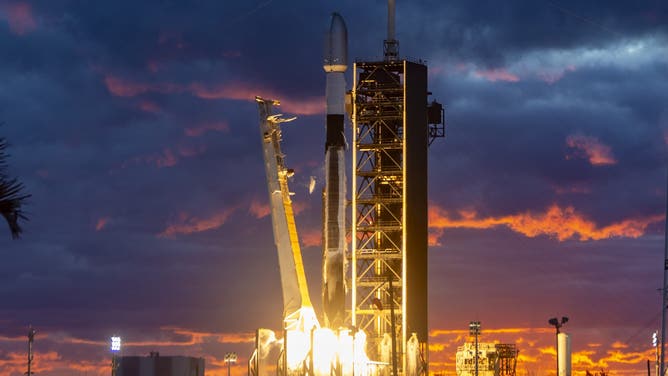
A SpaceX Falcon 9 rocket launches the TD7 mission from Kennedy Space Center launchpad 39A in Florida on Nov. 17, 2024.
(SpaceX)
This will not be the first human-made object to impact the moon. NASA crashed the upper stages of both the Apollo 13 and Apollo 17 missions into the moon.
NASA STARTS PREPARATIONS FOR ARTEMIS III MISSION WITH SPACE LAUNCH SYSTEM ROLLOUT
Experts say the Falcon 9 upper stage poses no danger to Earth or the moon.
While the collision will add to the growing collection of debris on the lunar surface, it is not expected to have any significant effect on the moon.