

Loud sonic boom heard and felt by hundreds across parts of New England
NASA confirmed that the fireball was a 5.6-ton meteor that entered Earth's atmosphere at roughly 42,000 mph before breaking up and producing a meteorite that fell into Cape Cod Bay.
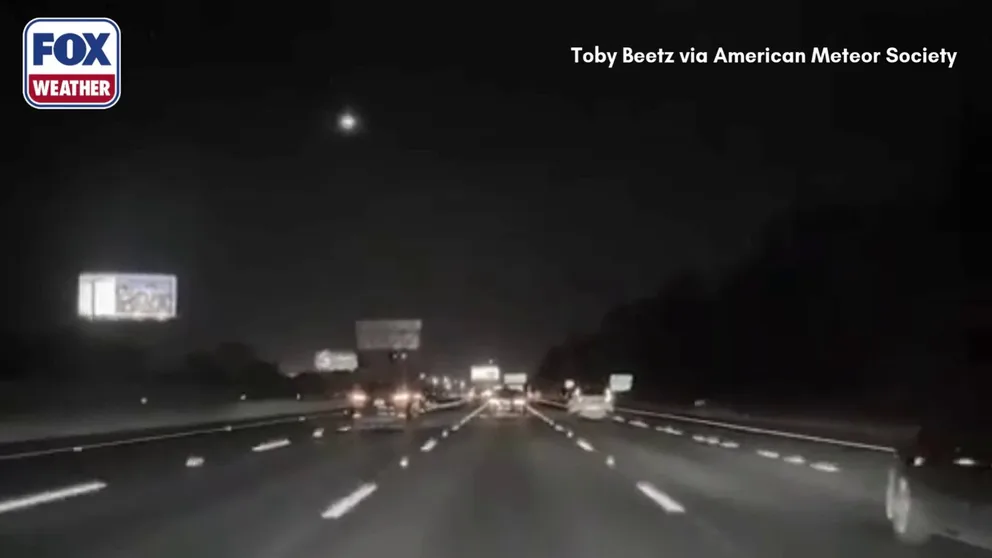
FILE: Meteor streaks across night sky
A meteor lit up the sky over Palo Alto, California, while a driver was on the road on Sunday.
BOSTON, Mass. – A loud, sonic boom echoed across parts of New England on Saturday, just days after an eerily similar event startled people in South Carolina, raising a familiar question: What was that?
While people in at least New Hampshire, Massachusetts and Rhode Island heard a loud noise around 2:05 p.m. local time, the National Oceanic and Atmospheric Administration's Geostationary Lightning Mapper captured evidence of its cause on radar.
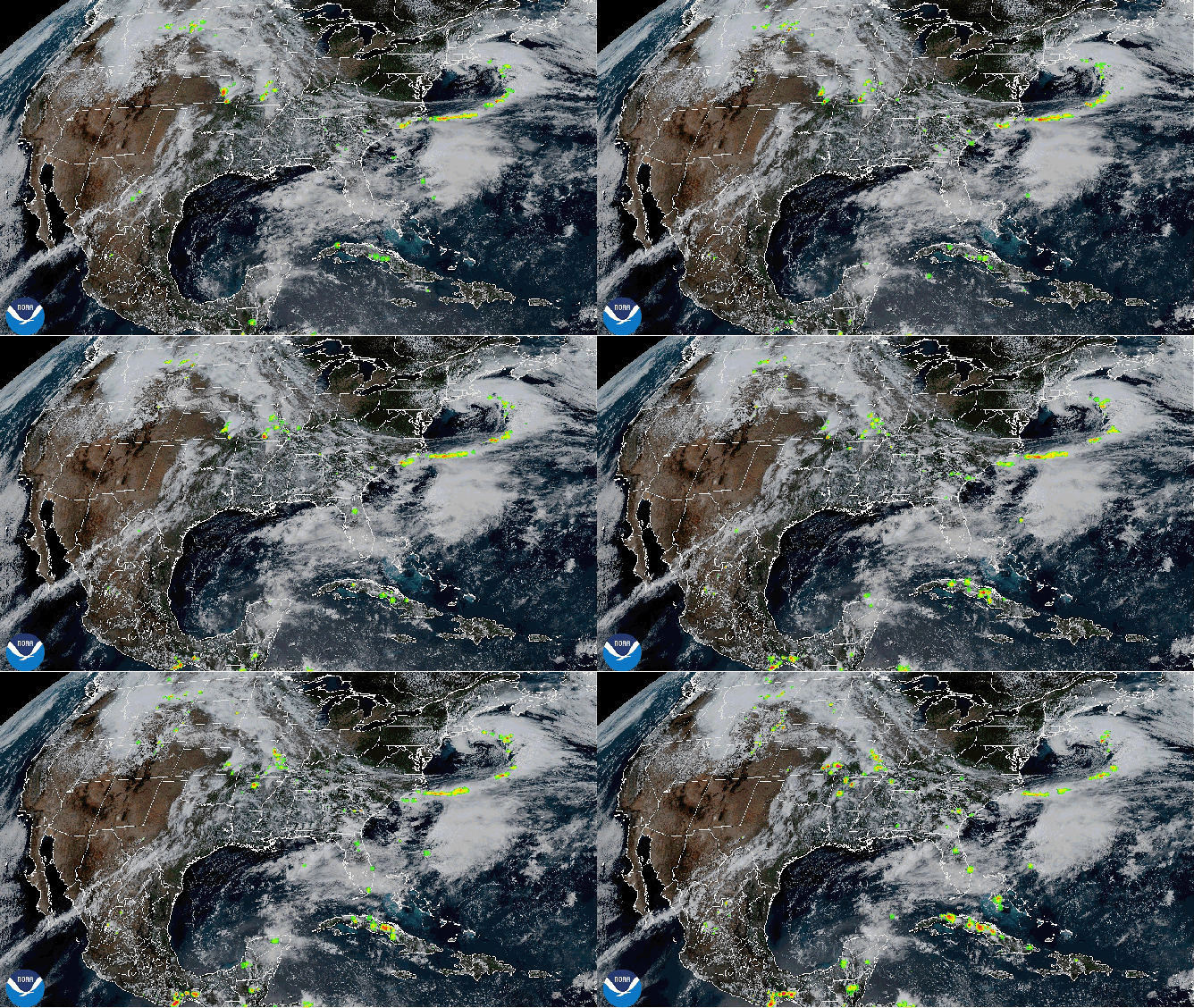
NOAA’s GOES-19 CONUS imagery, including data from the Geostationary Lightning Mapper (GLM), captured an unusual signal at the time the reported boom occurred. In this screen grab, off the coast of Cape Cod on the right side of the image, the largest green marker appears to coincide with the event. The signal may indicate a meteor, though further analysis would be needed to confirm its origin.
(NOAA)
NOAA's GOES-19 Geostationary Lightning Mapper (GLM) detected an unusual signal near the coast of Cape Cod at the time the sonic boom was reported.
The U.S. Geological Survey said the widely felt sonic boom was caused by a "suspected bolide," a meteor that exploded in the atmosphere.
NASA later confirmed that the fireball was a 5.6-ton meteor that entered Earth's atmosphere at roughly 42,000 mph.
At the same time, security cameras across the region recorded the startling boom, while first responders and emergency management officials quickly took to social media to acknowledge residents, with authorities saying there is no indication of a threat to the public.
SEE IT: FIREBALL SPOTTED STREAKING ACROSS NIGHT SKY IN 13 STATES
The U.S. Geological Survey did not report seismic activity or any earthquakes during this event, ruling out one potential explanation.
"Although we do not yet know the cause, there are no known emergency police or fire requests connected to these reports, and we do not believe there is any public safety threat," the Massachusetts Executive Office of Public Safety in a post on X.
According to NASA, four radars, KBOX (Boston, MA), TBOS (Boston Logan airport radar), KOKX (Long Island, NY) and KENX (Albany NY), clearly indicate the signature of a falling meteorite.
NASA said the meteor met a dramatic end about 40 miles above northeastern Massachusetts and southeastern New Hampshire. As it broke apart, it released energy equivalent to nearly 230 tons of TNT that produced a loud enough boom to startle the region.
The event was a daytime bolide that produced a meteorite, which ultimately fell into the middle of Cape Cod Bay, where the water is nearly over 100 feet deep. A meteorite falling into water is informally referred to as a "fishy squisher."
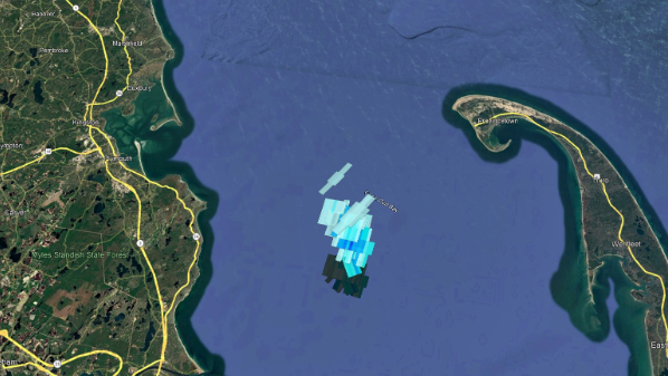
Composite radar image featuring data from three NEXRAD radars and one TDWR radar shows where the meteor fell in the ocean.
(NASA / NASA)
This sonic boom comes just days after a similar incident startled residents across South Carolina's Midlands region.
The U.S. Geological Survey confirmed Thursday's home-shaking sound in South Carolina was a sonic boom, though the source of the event has yet to be identified.
ALASKA LANDSLIDE UNLEASHED ONE OF THE LARGEST TSUNAMIS EVER RECORDED, NEW STUDY SHOWS
While investigators continue to examine what caused Thursday's noise, the latest report adds another chapter to a string of startling booms in the eastern United States.